



Scientists at China Agricultural University have developed OF-AMPS, a scalable platform using ovarian follicles as self-contained units for studying blood vessel formation.
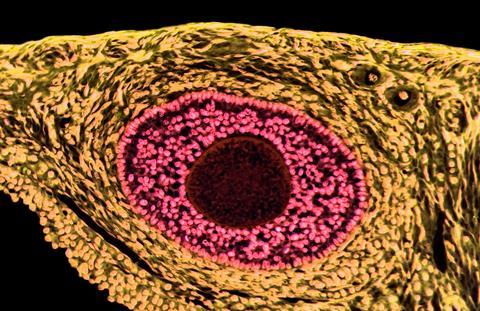
A new study has introduced a novel model for studying angiogenesis, the process by which new blood vessels form, using ovarian follicles as a natural microphysiological system.
Angiogenesis is key to tissue growth and repair but is also involved in diseases including cancer. Progress in this field has been slowed by the lack of laboratory models that accurately replicate the complexity and three-dimensional structure of living tissues while remaining suitable for drug screening.
Moving beyond traditional models
Conventional in vitro systems, such as endothelial monolayers and aortic ring assays, have provided useful insights but often fall short when researchers require physiologically relevant and scalable platforms.
In the new study, researchers led by Hua Zhang at China Agricultural University demonstrate that ovarian follicles naturally contain the key cellular and molecular components needed for angiogenesis. These include endothelial cells, pericytes, extracellular matrix and VEGFA–VEGFR2 signalling pathways.
Ovarian follicles naturally contain the key cellular and molecular components needed for angiogenesis.
Each follicle functions as a self-contained unit capable of supporting both its own development and the growth of surrounding blood vessels. Building on this, the team developed an ovarian follicle-based angiogenesis microphysiological system, known as OF-AMPS, allowing for direct observation and measurement of vascular development.
Rapid and scalable vascular modelling
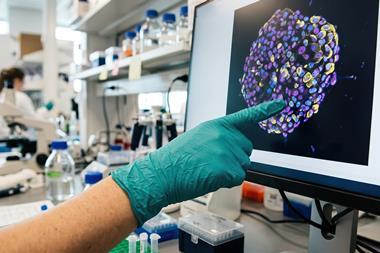
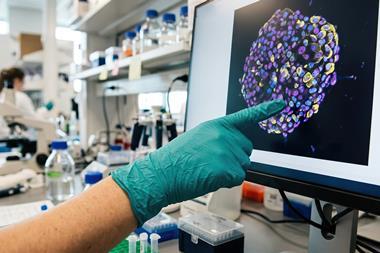
The researchers found that once isolated and cultured, ovarian follicles rapidly form complex three-dimensional vascular networks within 24 hours. Importantly, this process occurs without the need for externally added VEGF, while maintaining features of the native tissue environment.
Each mouse can provide around 50 usable assay units, offering a balance between biological relevance and experimental throughput. The system is also compatible with standard fluorescence microscopy and high-resolution confocal imaging, supporting both large-scale screening and detailed mechanistic studies.
Improved drug screening capability
To evaluate the platform, the team tested its ability to distinguish between genuine anti-angiogenic effects and general toxicity. Known inhibitors such as axitinib and sunitinib showed clear dose-dependent suppression of blood vessel formation without affecting follicle growth. Imatinib behaved similarly.
By contrast, vincristine reduced vascular growth but also damaged follicle viability. This dual readout allows researchers to assess both therapeutic effectiveness and tissue health simultaneously, improving the reliability of drug screening.
Vincristine reduced vascular growth but also damaged follicle viability
The platform was further tested using a library of 406 small molecules predicted to have anti-angiogenic properties. After two rounds of screening, 22 compounds were identified that inhibited angiogenesis without harming follicle viability. Notably, more than 80 percent of these had already entered clinical development, supporting the model’s predictive accuracy.
Among the candidates, Ki8751 stood out for its strong anti-angiogenic activity without negative effects on tissue growth.
Validation in animal models
The team validated these findings in vivo using mouse and human cancer models. In a mouse ovarian angiogenesis model, Ki8751 reduced vascular density to levels comparable to axitinib, while an inactive analogue showed no effect.
In a human liver cancer xenograft model, Ki8751 also significantly reduced tumour growth, demonstrating efficacy similar to established treatments.
Broad potential for research and drug discovery
Overall, OF-AMPS provides a physiologically relevant yet accessible 3D model for studying angiogenesis. By combining native tissue architecture with practical screening capabilities, it provides researchers with a promising tool for both basic research and the development of new therapies.
Overall, OF-AMPS provides a physiologically relevant yet accessible 3D model for studying angiogenesis
“We believe OF-AMPS can be a valuable tool for anti-angiogenic drug discovery. More importantly, we hope this work will encourage researchers and clinicians to look beyond the ovary’s traditional role as a reproductive organ and recognise its broader value as a powerful model for studying fundamental developmental processes,” said Zhang.



No comments yet