



New preclinical research has demonstrated how CAR T-cells remove and attach tumour cell fragments to themselves, reducing their anti-cancer activity over time and potentially addressing the challenge of cancer relapse in blood cancer patients.
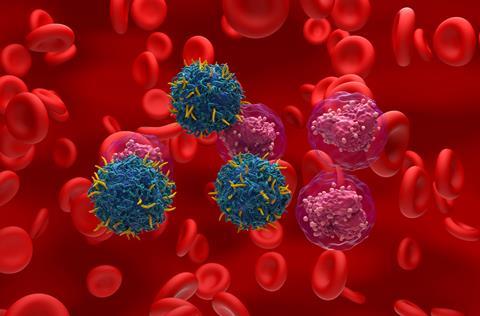
Researchers at the University of Maryland School of Medicine (UMSOM) have identified a potential strategy to improve the effectiveness of CAR T-cell therapy, a breakthrough cancer treatment used to treat patients with recurrent or difficult-to-treat blood cancers.
The findings suggest that blocking a specific protein in engineered immune cells could help them remain active for longer and improve their ability to destroy cancer cells.
CAR T-cell therapy involves collecting a patient’s T cells and genetically modifying them to recognise and attack cancer. The engineered cells are then infused back into the patient, where they seek out and destroy malignant cells.
Although the treatment has transformed outcomes for many patients with blood cancers, long-term disease control remains a challenge. Most patients eventually experience a relapse within five years of treatment, prompting researchers to search for ways to improve the durability of responses.
Investigating why CAR T-cells lose effectiveness
The research team set out to better understand the biological processes that limit the performance of CAR T-cells after they encounter cancer cells.
During the study, researchers discovered that some CAR T-cells remove tiny fragments from the surface of tumour cells and attach those fragments to themselves. This unexpected behaviour appears to reduce the cells’ ability to continue attacking cancer effectively.
“Genetically engineered cells are a promising new way to treat cancer and autoimmune diseases,” said Tim Luetkens, MD, Associate Professor of Microbiology and Immunology at UMSOM and senior author of this study. “However, scientists are still figuring out how these cells work and how to make them better.”
During the study, researchers discovered that some CAR T-cells remove tiny fragments from the surface of tumour cells and attach those fragments to themselves
The phenomenon was identified by Dr Kenneth Dietze, first author of the study and a research fellow in the Luetkens laboratory at UMSOM.
According to the researchers, the process effectively weakens the engineered immune cells, reducing their anti-cancer activity over time.
“This process makes the CAR T-cells less effective at attacking cancer,” said Dr Luetkens, who is also Director of Research and Development at the University of Maryland Marlene and Stewart Greenebaum Comprehensive Cancer Center (UMGCCC) Fannie Angelos Cellular Therapeutics GMP Lab.
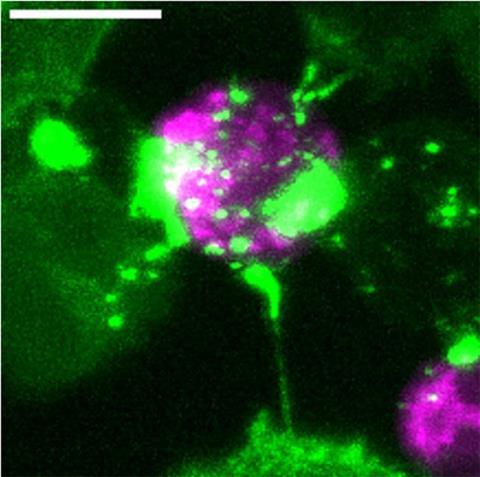
Blocking cathepsin b boosts anti-cancer activity
The team then investigated whether preventing this process could improve the performance of CAR T-cells.
Their experiments identified cathepsin b, a protein involved in cellular processes, as a potential target. When the researchers blocked cathepsin b in laboratory and animal models, the engineered immune cells were no longer able to remove fragments from tumour cells in the same way.
As a result, the CAR T-cells remained active for longer and demonstrated improved tumour-fighting activity.
When the researchers blocked cathepsin b in laboratory and animal models, the engineered immune cells were no longer able to remove fragments from tumour cells in the same way
This suggests that inhibiting cathepsin b could represent a new approach for enhancing CAR T-cell therapy and potentially reducing the likelihood of cancer relapse following treatment.
Researchers believe the discovery may have implications not only for blood cancers but also for the broader development of engineered cell therapies used to treat cancer and autoimmune diseases.
Early findings could lead to future studies
While the results are encouraging, the researchers caution that the work remains at the preclinical stage and further studies will be required before the approach can be tested in patients.
Future research will focus on translating the findings into clinical trials to determine whether cathepsin b inhibition can safely improve outcomes in people receiving CAR T-cell therapy.
“I am proud of UMGCCC’s continued innovation in CAR T-therapy,” said Dr Taofeek K. Owonikoko, MD, Executive Director of UMGCCC and the Kevin Cullen Distinguished Professor in Oncology at UMSOM. “While these findings need to be translated into human clinical trials, this is real progress that could ultimately improve durability and outcomes for our patients.”



No comments yet