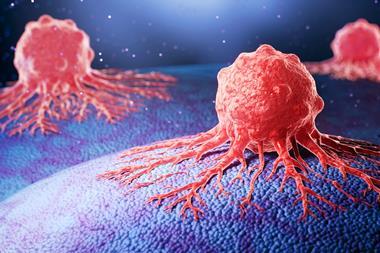
Researchers at Osaka Metropolitan University have developed a novel drug delivery system that improves the solubility of the anticancer drug paclitaxel.
New advances in drug discovery have produced a wide range of promising compounds with strong therapeutic potential. However, many of these candidates present a major challenge: their physical properties make them difficult to deliver effectively within the body.
Scientists are now developing innovative drug delivery systems designed to overcome these barriers, improving the way medicines reach tumours while limiting harmful side effects. New research now suggests one of these strategies could significantly improve the performance of certain anticancer drugs.
Challenges with modern drug compounds
Many newly developed drug candidates have poor water solubility and relatively large molecular weights. These characteristics can reduce how easily medicines are absorbed by the body, making it harder to achieve sufficient therapeutic effects.
Many newly developed drug candidates have poor water solubility and relatively large molecular weights.
In addition, some drugs spread widely through healthy tissues instead of concentrating at the tumour site. This distribution can trigger severe side effects while also reducing treatment efficiency.
Researchers around the world are therefore focusing on drug delivery systems (DDS) that can dissolve difficult compounds and transport them directly to diseased tissue.
Targeting paclitaxel delivery
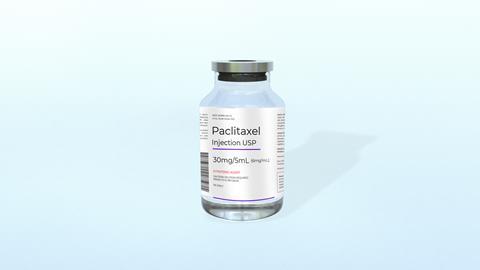
The team at Osaka Metropolitan University set out to design a delivery system specifically for paclitaxel, a widely used anticancer drug. Although effective against several cancers, paclitaxel has extremely poor water solubility and a relatively large molecular weight of 854, characteristics that complicate its administration.
To tackle this challenge the researchers explored the use of the enzyme lipocalin-type prostaglandin D synthase (L-PGDS) as a carrier molecule capable of transporting the drug.
Computer docking simulations and laboratory solubility tests showed that paclitaxel binds primarily through hydrophobic interactions within the upper region of the L-PGDS β-barrel protein structure. This interaction majorly improved the drug’s solubility.
According to the researchers, paclitaxel’s solubility increased by around 3,600 times compared with when the compound was suspended in phosphate-buffered saline.
 Improved solubility through hydrophobic bonds and CRGDK targeting peptides. Credit: Osaka Metropolitan University.[/caption]
 Adding a cancer-targeting mechanism
To enhance targeting of tumour cells, the team attached a targeting peptide known as CRGDK to the C-terminus of L-PGDS, creating a compound called L-PGDS-CRGDK.
This peptide binds to the neuropilin-1 receptor which is commonly expressed on the surface of cancer cells. By exploiting this receptor the modified carrier was designed to deliver paclitaxel more selectively to tumour tissue.
Promising results in laboratory models
The researchers tested the system in mice implanted with MDA-MB-231 breast cancer cells, a commonly used model for aggressive breast cancer.
By contrast both PTX/L-PGDS and PTX/L-PGDS-CRGDK maintained antitumour activity even after dosing ended.
During treatment the commercially available paclitaxel formulation showed antitumour activity. However its effects weakened once treatment stopped.
By contrast both PTX/L-PGDS and PTX/L-PGDS-CRGDK maintained antitumour activity even after dosing ended. Among the tested approaches PTX/L-PGDS-CRGDK produced the strongest tumour suppression.
Potential impact on future cancer therapies
The findings suggest that L-PGDS could serve as an effective carrier for relatively large and poorly soluble drugs, while the addition of targeting peptides may further improve precision in cancer treatment.
“This study demonstrated that L-PGDS can bind relatively large drugs with molecular weights up to approximately 850 and further revealed that introducing a targeting peptide enables the selective delivery of anticancer drugs to cancer cells,” said Professor Takashi Inui from Osaka Metropolitan University’s Graduate School of Agriculture. “The DDS developed in this study is anticipated to significantly contribute to the advancement of future cancer treatments as a novel delivery strategy for poorly soluble anticancer drugs.”
The researchers believe the system could form the basis for future therapies designed to deliver challenging anticancer compounds more safely and effectively.