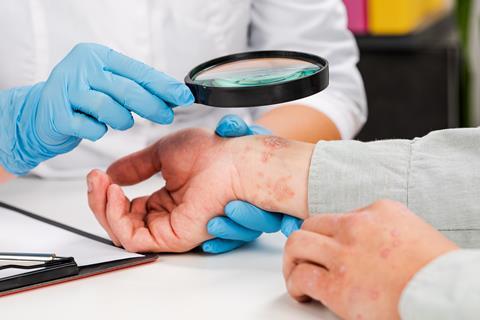
Psoriasis is a chronic, incurable inflammatory skin condition that causes skin cells to multiply too rapidly, leading to scaly, itchy, and sometimes painful patches. It is triggered by an overactive immune system and tends to flare up in cycles, which can last for weeks or months.
A team of scientists from the University of Birmingham has discovered a powerful new treatment for psoriasis. The treatment uses a tripeptide that has shown steroid-level effectiveness in reducing symptoms, offering fresh hope for the long-term management of this chronic skin condition.
Scientists at the University of Birmingham have made a discovery that could transform the treatment of psoriasis. A tripeptide, comprising just three amino acids, was shown to significantly reduce the severity of psoriasis when applied in a standard emollient cream.
Current treatments include emollients and medicated creams containing corticosteroids, vitamin D analogues, or retinoids. These treatments are effective but often limited by side effects when used over long periods.
The new study, published in Pharmacological Research, found that the tripeptide molecule is derived from a naturally occurring anti-inflammatory peptide called PEPITEM, achieving results comparable to strong steroid creams, but without the associated side effects.
Powerful results in preclinical trials
Led by Professor Ed Rainger from the University of Birmingham and Professor Francesco Maione from the University of Naples Federico II, the research team identified the smallest biologically active fragments of the 14-amino acid PEPITEM molecule. They discovered two tripeptides that retained the same, or even enhanced, anti-inflammatory properties of the full-length peptide.
After optimising these tripeptides for stability, the team tested their ability to reduce immune cell activation, which is an essential feature of inflammatory disease.
“While there are a number of therapies for psoriasis, there is a clear need for new agents that can be used continuously without the risk of excessive side effects,” said Professor Rainger. “Our findings raise the possibility of using PEPITEM-derived peptides for the treatment of psoriasis.”
“This could lead to longer-lasting treatments with fewer adverse effects,” said Rainger.
Beyond psoriasis: a platform for inflammatory disease
PEPITEM and its components are part of a wider research programme exploring their use in chronic inflammatory conditions such as rheumatoid arthritis, diabetes, and lupus. The team’s findings show that these peptides not only reduce inflammation but also suppress the production of signalling molecules that drive immune cell recruitment and tissue damage.
In some cases, the tripeptides demonstrated even greater efficacy than the original molecule, potentially simplifying synthesis and formulation for future therapeutics.
Looking ahead
"We have identified the parts of the PEPITEM molecule that are responsible for its biological action, and delivered peptides that mimic PEPITEM, and dramatically influence the skin’s inflammatory processes," Said Rainger "Their significantly smaller size, and higher efficacy should result in substantial advantages in synthesis, formulation, and use in therapeutics.”