



University of Helsinki researchers have shown that breast cancer cells with high MYC oncogene activity develop a dependency on mitochondrial respiration and glutamine metabolism.

Aggressive breast cancers driven by high activity of the cancer-promoting protein MYC may have a metabolic weakness that researchers can exploit, according to a University of Helsinki study.
The research found that breast cancer cells with high MYC activity become unusually dependent on their mitochondria and on glutamine, an amino acid that can be used as a source of energy. Blocking these two processes simultaneously slowed tumour growth in mice.
Their research could lead to new potential strategies for treating MYC-driven cancers, although the work remains at the preclinical stage.
“Although MYC is overactive in over 70 percent of all cancers, it remains among the most challenging targets in drug development,” says Research Professor Juha Klefström of the University of Helsinki.
Cancer cells become dependent on glutamine
MYC is an oncogene, meaning it can promote uncontrolled cell growth when abnormally active. It is involved in regulating processes including cell proliferation and metabolism and is frequently dysregulated across cancers.
Directly targeting MYC is difficult, so the Helsinki team investigated whether the changes MYC creates inside cancer cells could instead provide an indirect route to treatment.
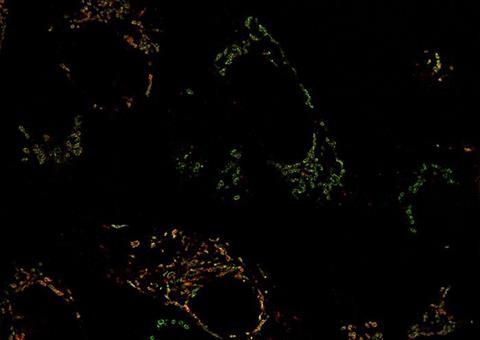
The researchers found that cells with high levels of MYC had increased mitochondrial respiration. Mitochondria are responsible for generating much of a cell’s usable energy, but the heightened activity appeared to create a vulnerability.
MYC-high cancer cells became particularly dependent on glutamine to fuel the tricarboxylic acid cycle, a series of metabolic reactions central to energy production. This dependence meant the cells had fewer options for maintaining their metabolism when glutamine utilisation was blocked.
“Cancer cells set a trap for themselves and we realised that was exactly where we should strike,” said Researcher Johanna Anttila. ”By combining two investigational drugs, one inhibiting energy production and the other blocking glutamine uptake, we were able to significantly slow breast cancer growth in mice.”
A two-pronged attack
The scientists tested a combination approach designed to exploit the metabolic dependence created by MYC.
One drug inhibited mitochondrial respiratory complex I, reducing the cancer cells’ ability to generate energy through oxidative phosphorylation. The second targeted glutamine utilisation.
This combination was particularly effective against MYC-high breast cancer cells because disrupting mitochondrial respiration interfered with the cells’ ability to use glutamine effectively. The study also found that the approach restricted tumour growth and improved survival in a MYC-high triple-negative breast cancer patient-derived xenograft mouse model.
This is important because triple-negative breast cancer lacks three molecular targets used to guide some other breast cancer treatments. Identifying a vulnerability linked to MYC activity could therefore provide a way of selecting patients whose tumours are most likely to respond to a metabolism-targeting strategy.
What next?
The findings do not yet establish that the drug combination will work in people. The research was conducted using cell cultures and animal models and the compounds are described as investigational.
The researchers are now looking towards drug development strategies that could eventually translate the metabolic vulnerability into a simpler treatment.
“The next big step is to find not two drugs but a single drug capable of killing cancer cells that express the MYC protein. That would greatly simplify treatment. The first drug development projects aimed at this are already under way at the University of Helsinki,” says Professor Klefström.
If successful, the approach could also support a more personalised treatment model. MYC activity can be assessed from tumour samples, potentially allowing future therapies to be directed towards patients whose cancers show high MYC activity rather than being given indiscriminately.
For now, however, the study provides preclinical evidence of a metabolic vulnerability, not evidence of a new breast cancer treatment. The next challenge will be to identify drug candidates that can safely exploit this vulnerability and determine whether the biology observed in cells and mice translates to human disease.







No comments yet