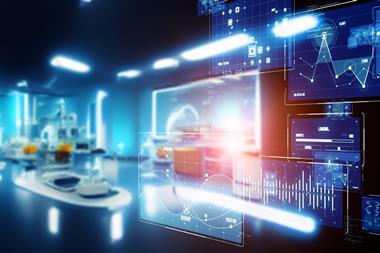
Automation now plays a central role in discovery. From self-driving laboratories to real-time bioprocessing, this report explores how data-driven systems improve reproducibility, speed decisions and make scale achievable across research and development.
Innovation moves quickly, budgets are tighter and data demands are rising. Automation is no longer just an efficiency tool – it now drives discovery. From self-driving laboratories to real-time bioprocessing, automated systems deliver precision, reproducibility and speed that manual methods cannot match.
This expert report gives clear, practical insight into how automation is advancing drug discovery and development – and where the most significant progress is being made.
Inside the report

Discover how leading scientists and organisations are using automation to accelerate discovery. The report explores scalable assay development, automated 3D systems, self-driving laboratories and real-time bioprocessing. It shows how these advances improve reproducibility, strengthen data quality and make scale achievable across research and manufacturing.
Whether you are modernising discovery or tackling translational bottlenecks, this report gives you expert guidance to move from manual to automated – faster and with confidence.
What you will learn:
- Reduce variability and increase data confidence with reproducible, automated workflows
- Advance discovery through miniaturised, high-throughput and animal-free systems
- Integrate AI, robotics and analytics to speed decision-making
- Streamline cell therapy and bioprocess QC for scale and compliance
- Strengthen collaboration by connecting people, data and platform.
Featuring expert insights from:
- Rob Howes, Senior Director, Charles River
- Lukas Gaats, Co-founder and CEO, mo:re
- Stuart R Green, Staff Scientist, Acceleration Consortium, University of Toronto
- Fabian Gerlinghaus, CEO, Cellares
- Dr Hiroaki Yamanaka, Principal Scientist, Yokogawa
- Nick Randall, Senior Director, Repligen
- Dr Nathan Dupertuis, Co-founder, ORYL Photonics
Together, these perspectives show how automation is changing the scale and quality of discovery. The result is faster insight, stronger data and better science.
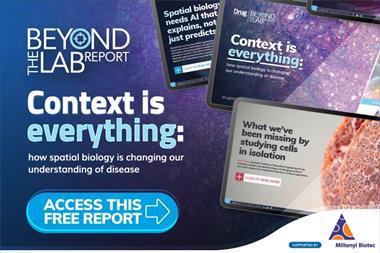
Access the full report >>
Download Now
Lab Automation: Where Discovery Scales



Topics
- Analytical Techniques
- Artificial Intelligence & Computational Tools
- Artificial Intelligence (AI)
- Assays
- Biotechnology & Bioengineering
- Cell & Gene Therapy
- Companies
- Drug Discovery
- Drug Discovery Processes
- Genomics & Sequencing
- High-Throughput Screening (HTS)
- Hit-to-Lead
- Imaging & Diagnostics
- Informatics
- Lab Tools & Automation
- Microfluidics
- Robotics
- Technology
- Tools and techniques
- Translational Science