




A new approach to bi-specific antibody–drug conjugates is unlocking unexplored tumour biology and aiming to improve precision oncology. Dr Michael Hunter, CEO and Co-founder of Promatix Biosciences, explains how his team is enhancing selectivity and reducing toxicity to create safer, more effective cancer therapies.
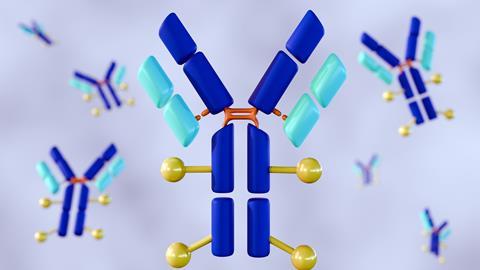
Antibody–drug conjugates (ADCs) have transformed the oncology landscape, yet the field continues to grapple with a fundamental limitation: how to deliver potent cytotoxic payloads to tumour cells without damaging healthy tissue. Many current ADCs are constrained by insufficient tumour selectivity, on-target/off-tumour toxicities and narrow therapeutic indices. Promatix Biosciences is tackling this problem head-on by developing a new generation of bispecific ADCs, powered by proprietary proteomic data designed to unlock previously unexplored tumour biology.
In this interview, CEO and Co-founder Dr Michael Hunter reveals how Promatix is using a mass spectrometry-based membrane proteomics database to identify highly selective target pairings across solid tumours. He explains why many existing bispecific programmes are limited to literature-derived targets, how differential protein expression and copy number drive effective internalisation and why rigorous biological validation is essential to translate computational insights into real therapeutics.
“I’ve got a real passion for making drugs,” says Dr Hunter. “For me, it has always been about making a difference to patients.”
The oncology problem: precision without toxicity
While ADCs have transformed aspects of cancer treatment, significant challenges remain. Many therapies suffer from on-target/off-tumour toxicities, narrow therapeutic indices and limited truly tumour-specific surface antigens.
While ADCs have transformed aspects of cancer treatment, significant challenges remain
As Dr Hunter explains, “There are very few surface proteins that can genuinely be described as tumour specific.” Even established targets often show insufficient differential expression between cancerous and healthy tissue, leading to adverse effects such as skin toxicities seen with some marketed ADCs.
With this in mind, the next question becomes: how do you increase tumour selectivity without compromising efficacy?
The bispecific advantage
Promatix’s answer lies in bispecific ADCs. Rather than relying on single targets – many of which are drawn directly from published literature – the company is mining previously unexplored biology. The field currently includes hundreds of bispecific ADCs in development, but Dr Hunter believes many are constrained by ‘literature-derived’ combinations of known monospecific targets, such pairings are not necessarily optimal.
“Behind that is a massive unexplored target space,” he says.
Promatix’s approach combines two of the most promising modalities in oncology – bispecific antibodies and ADC payloads – to create pairings that improve selectivity and efficacy simultaneously.
The strategy hinges on selecting two membrane proteins that:
- are co-expressed on tumour cells
- demonstrate strong differential expression versus healthy tissue
- localise appropriately for antibody engagement
- enable internalisation and payload delivery.
By ensuring that each individual target may appear in normal tissue solely in isolation – not together – Promatix aims to minimise toxicity while maintaining tumour-specific avidity. Their approach is thus essentially a cis-bispecific ’AND-gate’; where high affinity binding and internalisation is dependent on overlapping expression of two different targets on the same tumour cell.
TXPro: mining the membrane proteome
At the core of the company’s discovery engine is TXPro, a proprietary mass spectrometry-based proteomics database of membrane proteins derived directly from patient tissues. As Dr Hunter emphasises: “You need to start with the patient and to identify optimal targets from patient tissue.”
Unlike transcriptomic approaches based on messenger RNA, proteomics enables direct measurement of protein expression and estimate of copy number on the cell membrane – both critical factors for effective ADC internalisation and cell killing. RNA data alone, he argues, provides limited insight into whether a protein is present on the membrane at sufficient levels.
Unlike transcriptomic approaches based on messenger RNA, proteomics enables direct measurement of protein expression and estimate of copy number on the cell membrane
Using proprietary algorithms to mine TXPro, Promatix has identified:
- around 20 high-quality monospecific targets with strong differential expression
- over 2,000 potential bispecific pairings with promising tumour selectivity.
This dramatic expansion in viable target space supports the company’s confidence in its pipeline.
From data to drug: validating the biology
However, proteomic database mining is only the beginning. Dr Hunter is clear that rigorous downstream validation is essential.
Promatix has established laboratory operations in Cambridge, UK under the leadership of Katherine Vousden, Director of Research, recruiting highly skilled teams to advance target validation and first-in-class medicine development.
Validation involves a series of rigorous downstream steps. These include immunohistochemistry (IHC) and multiplexed immunofluorescence (mIF) staining of patient biopsy tissues, plus fluorescence-activated cell sorting (FACS) analysis across large panels of patient-derived tumour samples to confirm that selected target pairs are coexpressed and colocalised on the membrane of the same tumour cells, along with an assessment of expression homogeneity within and across tumour specimens. The process also incorporates expression and purification of model bispecific ADCs and in vitro characterisation assays to assess internalisation and cell-killing assays using probe bispecific ADCs. This is followed by careful optimisation of antibody binding affinities to ensure selective, high-avidity tumour engagement while minimising binding to healthy tissues.
One critical optimisation challenge is balancing monovalent binding with hybrid avidity – minimising unwanted single-target engagement while preserving strong tumour-specific binding. Promatix has developed mathematical models to predict binding affinities that maximise selective avid tumour engagement.
Copy number prediction, derived from proteomic data, is also important. Adequate antigen density drives internalisation, which is key for delivering cytotoxic payloads into cancer cells.
Building a first-in-class pipeline
Promatix is now emerging with a pipeline of first-in-class bispecific ADC therapeutics designed to deliver:
- superior cancer cell killing
- improved tumour selectivity
- an optimised therapeutic index.
The company is preparing to initiate a Series A fundraising round to advance its lead colorectal cancer asset through Phase Ib proof-of-concept studies.
Backed by Alsa Ventures, Promatix hopes that its scientific ambition, matched with investor support, will deliver real results.
Opening up the target landscape
Perhaps the most compelling aspect of Promatix’s work is its commitment to exploring what others have overlooked.
“There’s a lot of target biology that’s unexplored for bispecific pairings,” Dr Hunter said. “We’re opening up the space into that new target biology. With honest conviction, what we’re doing is extremely compelling and exciting. I believe we will deliver our promise – to bring more efficacious and safer ADCs to patients.”
There’s a lot of target biology that’s unexplored for bispecific pairings
Promatix is now actively seeking strategic R&D partnerships, particularly with companies developing novel linker–payload combinations, reduced systemic toxicity platforms and dual payload approaches that improve durability of response.
In a sector crowded with incremental advances, Promatix believes its technology is disruptive and is aiming to redefine how tumours are targeted, and in doing so, expand the therapeutic potential of precision oncology.
Meet the expert

Dr Michael Hunter is a serial Biotech Entrepreneur, a senior Drug Discovery and Development Executive with over 40 years experience in biotech and pharmaceuticals including biologics and small molecules. He has been directly involved in taking chemicals and biologics from initial concept through research, preclinical and manufacture to clinical proof of principle studies.
He is CEO and founder of Promatix Biosciences which is developing a pipeline of AND gate bispecific ADCs for a range of tumour indications. Built on a proprietary proteomics database of the tumour surfaceome the Promatix platform allows the optimal target identification for enhancing efficacy and safety.
He is a Royal Society Entrepreneur in Residence promoting translation of academic discoveries at Newcastle University into commercial opportunities through biotech spin outs.
Before becoming a start up CEO, he had extensive experience as CSO and Director of Development. He built companies from scratch attracting VC finance and led R&D to discover multiple IND candidates (small molecule and biotherapeutics) across a range of therapeutic indications including the management of process development and GMP biologics production. He held senior R&D executive positions and was the CSO of Atopix, sold to Chiesi, and founder and CEO of Orca Pharmaceuticals, whose ROR gamma program was licensed to AstraZeneca. He was Entrepreneur in Residence at Evotec. He holds a Degree in Biochemistry from the University of Leeds and a PhD in Molecular Biology and Genetics from the University of Nottingham.








No comments yet