



A novel bispecific T cell engager combining precision antibody engineering with an in vivo DNA delivery platform has shown improved tumour-killing activity and extended half-life in preclinical ovarian cancer studies.
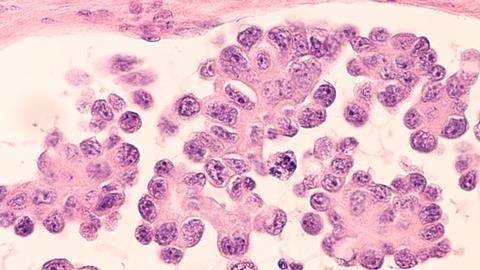
Scientists at The Wistar Institute have developed a new form of bispecific T cell engager (BTE) that has shown strong results against ovarian cancer in preclinical studies.
BTEs have become important in the treatment of blood cancers over the past decade. They work by binding cancer cells to disease-fighting T cells, directing the immune system to attack tumours. However, their success has been limited in solid cancers such as ovarian cancer because existing therapies are rapidly cleared from the body and typically target only a single antigen, allowing tumours to evade treatment.
The researchers have addressed both of these challenges through a new ’knob-into-hole’ platform, which engineers antibody components to fit together precisely, similar to two interlocking puzzle pieces.
DNA platform extends treatment lifespan
The research combined this antibody design with a DNA-based delivery platform that enables a patient’s own muscle tissue to produce BTEs inside the body. This approach improves the treatment’s half-life, allowing it to remain active for longer while potentially reducing the number of doses required.
According to the researchers, the DNA-based system could also lower manufacturing costs, simplify production and remove the need for cold storage, making the therapy more accessible if it reaches clinical use.
“I think it’s a major advancement for the field of bispecific antibodies,” said Dr Pratik Bhojnagarwala, a postdoctoral fellow in the lab of Dr David Weiner, at The Wistar Institute’s Vaccine and Immunotherapy Center and first author of the study. “It’s also significant for ovarian cancer, where there’s a real need for new therapeutic options, but there are likely broader applications for other solid tumours as well.”
Dual-target approach tackles tumour diversity
The researchers also demonstrated that the platform can deliver two different antigen-targeting BTEs in a single dose. This dual-target strategy is designed to overcome one of the biggest obstacles in treating solid tumours, which often contain a diverse mix of cancer cells expressing different surface antigens.
In preclinical models, the new treatment remained in the body for longer and was more effective at slowing tumour growth than existing approaches. Laboratory studies using cells from patients with ovarian cancer also produced positive results. In addition, the therapy showed potential when combined with immune checkpoint blockade, an immunotherapy already widely used to treat solid tumours, improving its effectiveness.
“Showing that we can deliver these really complex molecules in vivo in murine models was a very exciting achievement that demonstrates its potential as a next-generation tool to improve patient outcomes,” Bhojnagarwala said. “The cost of therapy could become less expensive, and we could also require fewer doses, because the body’s muscle cells keep producing it, instead of having to return for multiple doses.”
Next steps towards clinical testing
The researchers are now planning to evaluate the therapy in more advanced human cell models as they move closer to potential clinical trials. They also intend to investigate whether the platform can be adapted to target other forms of solid cancer, broadening its potential impact beyond ovarian disease.









No comments yet