



Scientists have found an unexpected intracellular role for lysyl oxidase in triple-negative breast cancer, using it to expose a metabolic vulnerability that substantially reduces tumour growth across chemotherapy-resistant preclinical models.
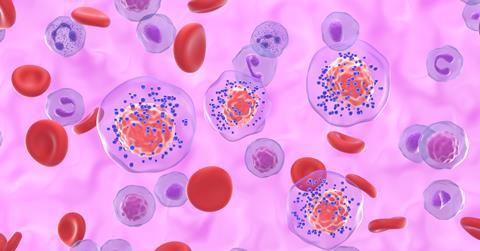
Researchers have identified a potential new way to tackle treatment-resistant triple-negative breast cancer (TNBC) by exploiting the disease’s ability to adapt.
A team at MUSC Hollings Cancer Center found that a protein called lysyl oxidase (LOX) plays an unexpected role inside TNBC cells, helping them produce energy, maintain healthy mitochondria and withstand stress.
The study suggests that blocking LOX could weaken cancer cells and make them vulnerable to a second treatment. In several preclinical models, the two-drug approach significantly slowed tumour growth without the use of chemotherapy.
“It’s a one-two-punch approach,” said Dr Ozgur Sahin, Co-leader of the Hollings Cancer Biology and Immunology Research Program. “First, we block LOX, which weakens the cancer cells. As they adapt and become dependent on a backup survival pathway, we deliver the second punch by blocking that pathway, too.”
Targeting cancer from within
TNBC is an aggressive form of breast cancer that lacks three common molecular targets used to treat other breast cancer subtypes. This leaves patients with fewer treatment avenues, with chemotherapy being their main treatment option.
“Triple-negative breast cancer is one of the most aggressive, deadliest versions of breast cancer,” Dr Sahin said. “Chemotherapy is really the mainstay, and interestingly, this subtype is sensitive to chemotherapy compared to others, but resistance develops quite quickly.”
Sahin’s laboratory has previously studied LOX for its role outside cancer cells, where it can alter the tissue surrounding tumours. However, the new research found that the protein also supports survival inside TNBC cells.
“LOX helps cancer cells keep multiple survival systems running. When we blocked LOX, the cancer cells lost that advantage,” explained postdoctoral fellow Dr Burge Ulukan, the study’s co-first author. “When we inhibit it, we are inhibiting multiple arms. We’re disrupting cells’ energy production and making them much more vulnerable to treatment.”
Turning a weakness into a weapon
The researchers then looked for a way to exploit the weakness created by blocking LOX. They focused on ferroptosis, a form of cell death caused by toxic damage within cells.
Blocking LOX weakened two of the cancer cells’ defences against ferroptosis and the cells responded by becoming more dependent on another defence controlled by Dihydroorotate dehydrogenase (DHODH).
This created an opportunity to attack the cancer on two fronts. The researchers combined an experimental LOX inhibitor with leflunomide, an existing drug approved by the US Food and Drug Administration that blocks DHODH.
The combination significantly restricted tumour growth in several patient-derived preclinical models, including tumours that had become resistant to chemotherapy. The treatment did not cause major weight loss or signs of kidney or liver toxicity and outperformed a combination involving the LOX inhibitor and standard chemotherapy.
“One of the most exciting aspects of this work is that we uncovered an entirely new role for LOX inside cancer cells. That discovery revealed a weakness we could exploit. Rather than attacking cancer cells from just one direction, we first weaken the cells and then target the backup system they rely on to survive – that opens the door to a new treatment strategy.”
Dr Ozge Saatci, Postdoctoral Fellow at MUSC Holings Cancer Center
Looking towards human trials
The findings remain preclinical and further research is needed before the approach can be tested in patients. However, the researchers say the use of an existing drug could potentially speed up development.
“The good thing is when the drug is FDA approved, you know the side effect profile,” Dr Sahin said. “It makes it faster and potentially safer to repurpose it, in other words, adapt it for a different disease condition.”
The researchers also found that higher LOX levels in TNBC tumour samples were associated with increased activity in the energy and survival pathways identified in the study. High levels of both LOX and DHODH were also linked to poorer survival.
“LOX may act as a biomarker of response or resistance to the metabolic targeting of the tumours,” Dr Ulukan said. “If we can identify patients whose tumors depend on this pathway, those may be the patients who benefit most from this type of treatment.”
The team is now developing a newer LOX-blocking drug in collaboration with the University of South Carolina and hopes to complete the studies required for human testing within the next few years.








No comments yet