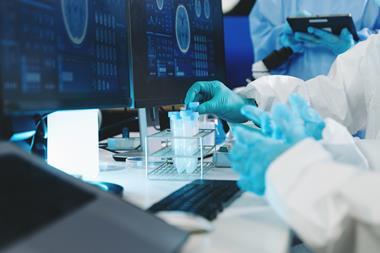
Scientists have developed an automated method to grow lung organoids, with the hope of speeding up drug testing, reducing reliance on animal models and helping to develop new personalised treatments.
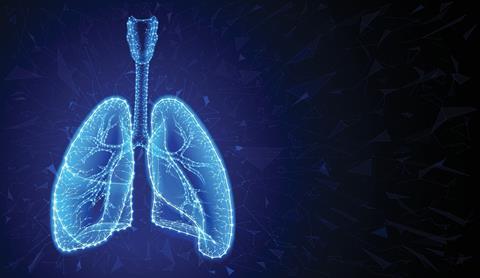
A team of researchers have created a simplified, automated process for producing lung organoids, with the aim of transforming how experimental treatments for respiratory diseases are developed.
The method, designed to reduce manual labour and increase the number of organoids that can be produced at once, may allow clinicians to test therapies on personalised ‘mini lungs’ grown from a patient’s own cells.
Early proof of principle
“The best result for now – quite simply – is that it works,” said Professor Diana Klein of the University of Duisburg-Essen, the study’s first author. “This means that, in principle, lung organoids can be produced using an automated process. These complex structures represent the in vivo situation better than conventional cell lines and thus serve as an excellent disease model.”
It is hoped that the system could also support rapid screening of potential treatments, accelerating the development of specific medications for patients.
Tackling the complexity of lung disease
Respiratory diseases remain among the world’s most deadly diseases and progress in drug development has been hindered by the difficulty of reproducing the lungs’ complex biology in the lab. Although lung organoids have shown promise as research tools, previous methods required precise and time-consuming manual handling, limiting their usefulness for large-scale testing.
Respiratory diseases remain among the world’s most deadly diseases and progress in drug development has been hindered by the difficulty of reproducing the lungs’ complex biology in the lab.
To generate the organoids, the researchers began with stem cells grown in plastic dishes. “You take a starting cell, in our case the stem cell and multiply it – the cells grow in a suitable plastic dish,” explained Klein. “Once the cells have grown sufficiently, you then detach them from the plastic dish and ‘animate’ the cells to form small cellular aggregates. We do this by placing a certain number of cells in an anti-adhesive dish. The cells then float together and form embryoid bodies.”
These embryoid bodies were treated with growth factors normally present in lungs or during lung development, prompting the cells to form different lung-related cell types. The researchers then transferred the developing structures into a bioreactor – a specialised tank equipped with a continuously stirring membrane and a nutrient-rich medium – while a second group of organoids was grown manually as a control.
Comparable ‘mini lungs’, created with less labour
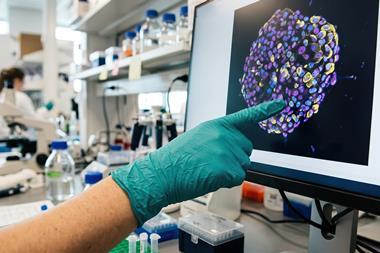
After four weeks, the organoids were analysed using advanced imaging and genetic methods. Both the automated and manually produced organoids showed airway- and alveoli-like features, with RNA sequencing revealing characteristic epithelial and mesodermal lung cells. Although there were some differences – such as a higher number of alveolar cells in the manually grown organoids – both sets produced the same fundamental lung cell types. The bioreactor-grown organoids, however, did tend to be larger, with fewer alveolar spheres.
Towards personalised screening platforms
The ability to produce organoids more efficiently could greatly advance drug discovery, though additional optimisation is required to make the models more lifelike.
The ability to produce organoids more efficiently could greatly advance drug discovery.
“Organoids can’t yet fully recapitulate the lung cellular composition,” said Klein. “Some cells are still missing for the ‘big picture’, such as infiltrating immune cells and blood vessels. But the organoids themselves show very good bronchiolar and alveolar structures! We obviously don't have blood flow, meaning the conditions are rather static. But for a patient-oriented screening platform, this may not be necessary, if important insights into the cells’ fate during a certain treatment can be obtained.”
“There is still a lot of room for optimisation,” she added. “We need robust and scalable protocols for large-scale organoid production. This requires careful consideration of the bioreactor design, the cell types to be used and the conditions under which the organoids are cultivated. But we're working on it!”


Topics
- Analytical Techniques
- Biotechnology & Bioengineering
- Disease Research
- Drug Development
- Drug Discovery
- Drug Discovery Processes
- Drug Targets
- Genomics & Sequencing
- High-Throughput Screening (HTS)
- Imaging & Diagnostics
- In Vitro Testing
- Lab Tools & Automation
- Microscopy
- Molecular Biology
- Organoids
- Organ-on-a-Chip
- Professor Diana Klein (Professor in the Institute of Cell Biology at the University of Duisburg-Essen)
- Rare & Genetic Disorders
- Stem Cells
- Technology
- the University of Duisburg-Essen
- Translational Science