A new study suggests that a low-cost form of non-invasive prenatal screening could help clinicians identify pregnant women at highest risk of transmitting cytomegalovirus to their babies.
A new study by the Association for Diagnostics Laboratory Medicine (ADLM) suggests that a widely used form of non-invasive prenatal screening (NIPS) could help doctors identify pregnant women who require antiviral treatment to prevent cytomegalovirus (CMV) transmission to their babies.
The research shows that NIPS performed using low-pass whole genome sequencing can detect CMV DNA in maternal blood early in pregnancy. This could support more informed treatment decisions at a time when effective antiviral therapy is increasingly available.
A common infection with serious consequences
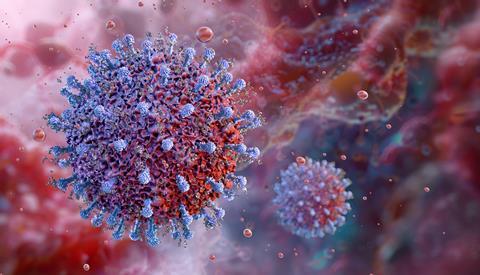
CMV is a common herpesvirus and one of the leading infectious causes of permanent childhood hearing loss. In addition to auditory damage, congenital CMV infection can lead to neurodevelopmental delays and other irreversible complications in up to 20 percent of affected infants. Globally, around one in 150 babies is born with the infection.
CMV is a common herpesvirus and one of the leading infectious causes of permanent childhood hearing loss.
Despite this, routine prenatal screening for CMV is not currently recommended. One reason has been the lack of effective interventions. However, that picture began to change in 2020, when research demonstrated that the antiviral drug, valacyclovir, could reduce mother-to-foetus CMV transmission by more than 70 percent when given during the first trimester. Although the drug has not been formally approved by the US Food and Drug Administration (FDA) for this indication, many clinicians now prescribe it off label to pregnant patients known to have CMV.
Using existing screening to identify risk
The new study indicates that NIPS, already routinely offered to detect chromosomal abnormalities, could also be used to identify CMV infections in both mothers and babies. Researchers in Belgium, led by Dr Geert A. Martens, analysed NIPS data from 22,333 pregnancies between 12 and 14 weeks’ gestation, collected between November 2019 and January 2025.
The new study indicates that NIPS, already routinely offered to detect chromosomal abnormalities, could also be used to identify CMV infections in both mothers and babies.
The screening used low-pass whole genome sequencing, a cost-effective approach that analyses fragments of genetic material circulating in the blood. The researchers examined samples containing non-human DNA for cell-free CMV DNA and compared the results with polymerase chain reaction (PCR) testing.
CMV DNA was detected in 2.1 percent of pregnancies (462 cases). When samples were grouped by increasing levels of viral DNA, higher CMV read counts were associated with a greater risk of both maternal infection and congenital CMV in newborns, confirmed through antibody testing and a systematic neonatal screening programme.
Supporting better treatment decisions
The findings suggest that NIPS-derived CMV data could play a key role in identifying pregnancies most likely to benefit from antiviral therapy.
Overall, the study demonstrates that routine non-invasive prenatal screening can identify CMV infection early in pregnancy and distinguish women at higher risk of passing the virus to their babies.
“Crucially, our study is the first to directly link NIPS-derived CMV read counts to both maternal serostatus and confirmed cCMV [congenital CMV] outcomes from a systematic newborn screening program, in a real-world high-volume setting of first-tier cell-free foetal DNA screening,” the researchers stated.
While further research is needed to decide how best to use the data in practice, the researchers believe the approach could complement existing diagnostic tools and help target treatment more effectively.
Overall, the study demonstrates that routine non-invasive prenatal screening can identify CMV infection early in pregnancy and distinguish women at higher risk of passing the virus to their babies. By pinpointing people most likely to benefit from antivirals during the first trimester, it supports more targeted, timely treatment decisions to help prevent congenital CMV.




Topics
- Assays
- Biomarkers
- cytomegalovirus (CMV)
- Disease Research
- DNA
- Drug Development
- Gene Testing
- Genetic Analysis
- Genomics & Sequencing
- High-Throughput Screening (HTS)
- Infectious disease
- Neurological disorders
- Next-Generation Sequencing (NGS)
- Precision Medicine
- Sequencing
- the Association for Diagnostics Laboratory Medicine (ADLM)
- Translational Science