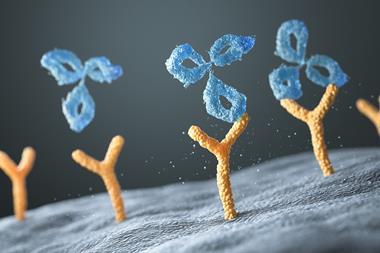
Biotech company, Tubulis, has published preclinical data on its Alco5 antibody-drug conjugate platform, demonstrating the ability to link antibodies with previously inaccessible hydroxy-containing drugs.
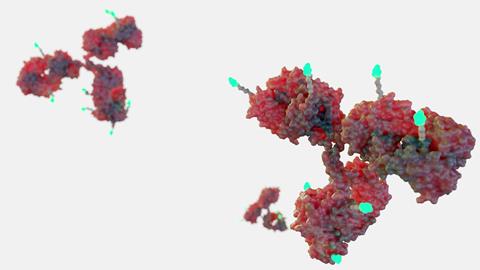
Tubulis, the biotechnology company developing next-generation cancer therapies, has published preclinical proof-of-concept data for its novel Alco5 conjugation platform. The study, published in Nature Communications, highlights the company’s new antibody-drug conjugate (ADC) technology and its ability to link antibodies with a broader set of previously inaccessible hydroxy-containing payloads.
This advancement could open new therapeutic possibilities in oncology and help overcome resistance by expanding the spectrum of payloads available for ADCs. This includes novel modes of action such as protein degradation, while maintaining the favourable properties of existing ADCs.
A step forward in ADC technology
“Our Alco5 linker platform represents a key step forward in unlocking the full potential of ADCs to drive meaningful patient benefit in oncology,” said Dr Jonas Helma-Smets, chief scientific officer and co-founder of Tubulis. “The broad applicability and excellent safety and efficacy profile will enable us to explore novel antibody-drug combinations, further solidifying Tubulis’ position at the forefront of scientific ADC breakthroughs.”
Our Alco5 linker platform represents a key step forward in unlocking the full potential of ADCs to drive meaningful patient benefit in oncology.
The Alco5 linker system was designed to expand the payload spectrum beyond the three mechanisms of action (MOAs) currently used in approved ADCs: tubulin inhibition, topoisomerase-I inhibition and DNA damage induction. The phosphoramidate-based system allows safe and stable linkage to a wide range of structurally diverse alcohols, which are released, without trace, within the cytosol of target cancer cells.
Promising preclinical data
Tubulis reports that ADCs created with the Alco5 platform exhibit a high and homogeneous drug-to-antibody ratio (DAR), superior serum stability, strong in vivo efficacy and antibody-like pharmacokinetic profiles when compared with topoisomerase-I-inhibitor-based ADCs currently available.
The preclinical data show that the Alco5 linker system can be applied to a wide range of hydroxy containing antiproliferative agents, including nucleoside analogues and elongation factor inhibitors.
The preclinical data demonstrates that the Alco5 linker system can be applied to a wide range of hydroxy containing antiproliferative agents, including nucleoside analogues and elongation factor inhibitors, for which this is the first time in vitro potency has been displayed. Payloads with activity below 1 nM in their unconjugated form retained their potency when delivered via an ADC, showcasing the broad applicability of the system.
Additionally, Alco5-conjugated payloads exhibited strong and selective anti-tumour effects both in vitro and in vivo, suggesting the potential to widen the therapeutic window of hydroxy-containing drugs through stable, durable delivery to tumours following a single administration.
Looking ahead
“Publishing our findings in such a highly regarded journal underlines the potential of our novel linker technology to expand the horizons of ADC design,” said Dr Marc-André Kasper, vice president chemistry and early development at Tubulis. “We are highly encouraged by these results and look forward to investigating novel candidates based on the Alco5 technology to provide novel solutions for patients while addressing the growing resistance development to current ADCs.”
The promising results demonstrated by the Alco5 platform could lead to more effective and targeted cancer therapies, overcoming resistance to existing treatments to ultimately provide new therapeutic options for patients in need of new oncology solutions.



Topics
- Biologics
- Cancer
- Cancer
- Dr Jonas Helma-Smets (chief scientific officer and co-founder of Tubulis)
- Dr Marc-André Kasper (vice president chemistry and early development at Tubulis)
- Drug Development
- Drug Discovery
- Drug Discovery Processes
- Drug Targets
- Molecular Biology
- Monoclonal Antibodies
- Neurological disorders
- Oncology
- Protein Expression
- Translational Science
- Tubulis