What can we learn from tumours after they stop responding to treatment? By studying patient tissue directly, researchers are finding new ADC targets that conventional screening often misses.
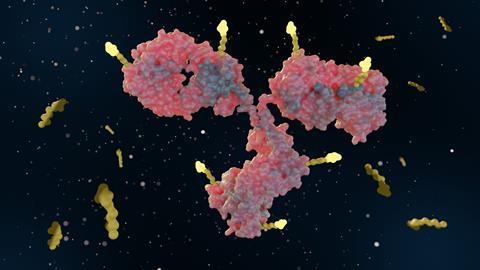
Antibody–drug conjugates (ADCs) have advanced considerably in oncology over the past decade. Early ADCs demonstrated that an antibody linked to a cytotoxic payload can deliver chemotherapy with greater tumour selectivity, although toxicity, limited internalisation and suboptimal target choice restricted clinical impact. More recent generations feature improved linker stability and payload potency and are now approved in breast, lung and gastric cancers. These advances have increased confidence in the modality and driven significant development activity.
Many patients initially respond to treatment, but relapse is common as tumours develop resistance. This may involve downregulation of surface targets, activation of alternative signalling pathways or the emergence of cell populations that are less susceptible to therapy. For ADCs to achieve durable benefit they need to address not only the primary tumour burden but also resistant disease. Addressing resistance requires targets based on patient-derived biology, which is the foundation of Ona Therapeutics’ discovery strategy.
The company was co-founded by Dr Valerie Vanhooren who is now CEO and has steered Ona from concept to a pipeline ready for first-in-human entry. Her background spans antibody engineering and therapeutic protein development at Ablynx and SpliceBio with collaborations that included Merck and AbbVie. Since 2019 she has secured more than 35 million euros in funding and directed the company toward a patient-derived discovery approach using post-treatment samples to study resistance biology.
Ona begins discovery with patient tumour samples, including material collected after treatment where resistance mechanisms emerge. This allows the team to observe biological changes that occur under therapeutic pressure and identify targets associated with resistance. These findings then guide the design of ADCs.
As Valerie explains, “Spain’s position as Europe’s leading hub for investigational clinical research gives us exceptional access to patient samples – not only at diagnosis, but also after treatment, when tissue is typically scarce.” This enables a longitudinal view of tumour biology that conventional screening methods cannot reach.
“This unique resource allows us to track how therapeutic pressure reshapes tumour biology, identify targets that emerge during resistance and study their functional role in cancer progression. These opportunities simply aren’t possible with traditional screening methods, which rely almost entirely on diagnostic biopsies.”
With this approach Ona focuses on identifying resistance-associated targets directly from patients and developing ADCs based on their functional role in tumour biology during therapy.
From biopsy to candidate
When Ona identifies a potential target through Omics analysis, the path to therapeutic development is methodical. As Valerie describes, samples taken at different disease stages enable gene candidates to be flagged not because they are abundant, but because they may influence survival or therapy escape.
Efficient internalisation is essential for any ADC target, so we evaluate this early to ensure the antibody can enter tumour cells effectively and to determine whether expression thresholds might limit uptake.
The team then moves into functional validation. “To validate these targets, we perform unbiased CRISPR knockout studies to determine each gene’s role in tumour growth, survival and therapy resistance. We then further triage the target candidates with the consideration of expression patterns in healthy tissues and potential toxicity risk.” Candidates that fail to meet these criteria stop early.
This avoids the costly problem of advancing markers that cannot internalise, do not express in human tumours or risk high off-target effects.
ADC suitability is assessed at the same early stage. “Efficient internalisation is essential for any ADC target, so we evaluate this early to ensure the antibody can enter tumour cells effectively and to determine whether expression thresholds might limit uptake.” Ona generates its own expression datasets instead of relying heavily on public repositories, recognising that immunohistochemistry from diverse sources varies widely in quality.
Valerie notes the importance of tailoring. “Each of our ADCs is then custom-tailored, taking into account target expression, intended indication and payload accessibility, striking a careful balance between innovation and robust validation.”
The goal is not to produce the highest potency construct on paper, but a drug whose biology, safety profile and delivery method are compatible with clinical use.
ONA-255: pushing beyond current ADCs in breast cancer
Ona’s most advanced programme is ONA-255 for hormone receptor positive HER2-negative breast cancer. This disease setting is often well controlled initially, but relapse increases over time as cancer adapts to endocrine therapy and CDK4/6 inhibitors. ADCs like Enhertu have expanded treatment options, yet resistance emerges here too.
ONA-255 targets an antigen that is not only expressed in HR+/HER2- disease but becomes more abundant after resistance.
ONA-255 targets an antigen that is not only expressed in HR+/HER2- disease but becomes more abundant after resistance. This matters. If a target increases following treatment failure, then selectively killing those cells may reduce the resistant reservoir that fuels recurrence.
Valerie describes this clearly. “ONA-255 targets a newly identified ADC antigen that is highly expressed in HR+/HER2- breast cancer and further upregulated in tumours that have become resistant to CDK4/6 inhibitors and Enhertu. The ADC carries a microtubule-inhibiting payload, a distinct mechanism compared with the topoisomerase-based payloads used in most approved or emerging ADCs for this setting.”
This payload choice is deliberate. A microtubule inhibitor may offer activity where topoisomerase-based ADCs struggle, providing mechanism diversity across treatment lines.
Advanced conjugation chemistry reduces systemic toxicity and widens the therapeutic window, a crucial factor given dose-limiting toxicities remain common in ADC treatment.
ONA-389: addressing two cancers defined by resistance
A second leading programme, ONA-389, targets microsatellite stable colorectal cancer and hepatocellular carcinoma. Both malignancies show strong expression of drug-efflux transporters that pump cytotoxics out of tumour cells, reducing response and making systemic therapies less effective.
Valerie explains the rationale. “ONA-389 is specifically engineered to overcome this barrier: we selected a payload with minimal susceptibility to efflux by these resistance proteins.” The antigen is expressed throughout disease progression which could allow flexibility in clinical trial design.
Preclinical studies show activity in late-stage models including those that have progressed after multiple treatments. If similar patterns hold in patients, ONA-389 may address a space with limited viable options.
Clinical preparation and what success looks like
With clinical entry approaching, Valerie sets out the objectives for ONA-255. Early trials will assess safety, dose level and first signs of efficacy in heavily pre-treated patients. Dose escalation will determine an exposure that balances tumour activity with tolerability.
With clinical entry approaching, Valerie sets out the objectives for ONA-255. Early trials will assess safety, dose level and first signs of efficacy in heavily pre-treated patients.
“For ONA-255 we expect to establish the dose level which is safe to use in the targeted patients population, to characterise the safety profile, as well as capture early signs of clinical efficacy.”
A strong biomarker strategy will accompany the trial with aims to confirm mechanism of action in humans, identify biologically active dose and understand why certain tumours respond while others resist.
The company expects Phase II confirmation once the recommended dose is established, giving scope to expand into broader cohorts and build the clinical dataset needed for partnership or commercial progression.
Leadership for the next phase
A notable milestone for Ona is the appointment of Dr Antoine Yver, whose impact on the field is well recognised. Most striking is his pivotal role in bringing ENHERTU from early clinical stage to global approvals across multiple tumour types and in doing so helped reset expectations for ADC potential.
Valerie summarises the significance: “Antoine Yver offers deep clinical and regulatory expertise, a track record of bringing very fast practice-changing oncology drugs to market and the strategic and scientific credibility to attract both capital and partners, all of which can accelerate and de-risk the development of Ona’s anticancer pipeline.”
His arrival signals readiness not just for clinical development but for strategic positioning in a competitive and fast-moving therapeutic space.
A company built for where ADC science is heading
ADC development has progressed significantly, with several agents now demonstrating clear clinical benefit. However, resistance to treatment remains a major challenge. Ona Therapeutics addresses this by beginning target discovery in patient samples, validating functional relevance and designing ADCs for disease settings where resistance is known to arise.
Ona is now preparing to take ONA-255 into first-in-human studies, supported by biomarker work to understand mechanism, resistance and dose selection. The addition of Antoine Yver brings clinical development experience to guide this transition.
Meet the expert
Dr Valerie Vanhooren, Co-Founder and CEO, Ona Therapeutics

Valerie Vanhooren is Co-Founder and CEO of Ona Therapeutics, a biotech company developing antibody-drug conjugates (ADCs) for hard-to-target cancers. Since 2019 she has guided the growth and development of Ona’s pipeline of ADCs and antibodies securing over 35 million euros from international investors and non-dilutive grants. She has extensive experience in antibody and protein conjugate development for oncology. Prior to Ona she held leading R&D roles at SpliceBio and Ablynx (acquired by Sanofi) where she led drug development collaborations with pharmaceutical partners including Merck and AbbVie. Valerie holds a PhD in Biotechnology from the University of Ghent, Belgium.




Topics
- Ablynx
- Biologics
- Biomarkers
- Biotherapeutics
- Cancer
- Cancer
- Companies
- CRISPR
- Dr Valorie Vanhooren (Co-Founder and CEO of Ona Therapeutics)
- Drug Delivery
- Drug Development
- Drug Discovery
- Drug Discovery Processes
- Drug Targets
- Drugs and therapies
- Efficacy Testing
- Genomics & Sequencing
- Immuno-oncology
- Immuno-oncology
- Industry Experts
- Molecular Biology
- Monoclonal Antibodies
- Neurological disorders
- Ona Therapeutics
- Oncology
- Personalised Medicine
- SpliceBio
- Tools and techniques
- Translational Science