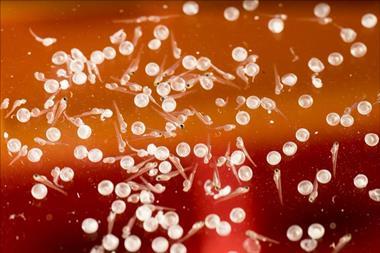
A newly identified protein essential to the survival of trypanosome parasites could offer a highly targeted route for future drug development.
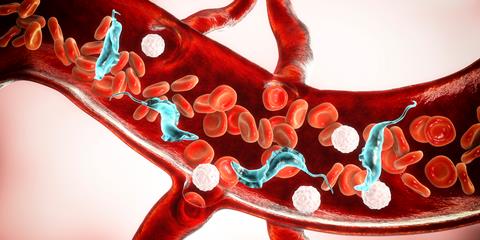
Cells break down sugar to produce the energy they need to survive. In most organisms, this process – known as glycolysis – takes place in the cytosol. Trypanosomes, however, rely on specialised compartments called glycosomes, where glycolysis occurs instead.
Working alongside teams from the University of Würzburg and the Helmholtz Center Munich, Dr Ralf Erdmann and his colleagues Dr Chethan Krishna and Dr Vishal Kalel from the Faculty of Medicine at Ruhr University Bochum have discovered that the protein PEX38 is essential for the formation of glycosomes in trypanosomes.
“Because the parasites rely fundamentally on these organelles for energy production, any disruption of glycosome biogenesis is lethal to them,” says Erdmann. “This makes glycosomes a potential Achilles’ heel new developed drugs could target.”
Mechanism of evolutionary repurposing
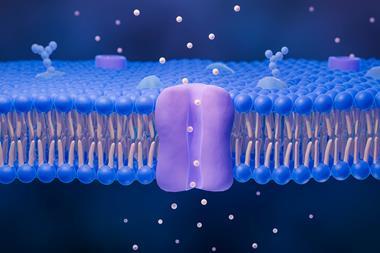
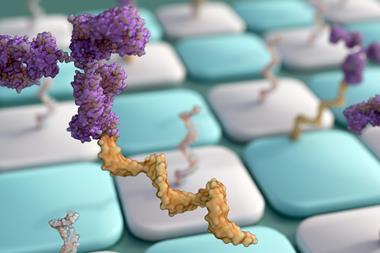
Glycosomes are enclosed by membranes composed of lipids and proteins. These membrane proteins are first formed in the cytosol and must then be transported to the glycosomes, where they are inserted into the membrane. Transport proteins guide the newly synthesised membrane components to their destination and chaperone proteins shield the hydrophobic membrane proteins from the surrounding aqueous cytosol.
The entire process of glycosomal biogenesis depends on a family of proteins known as peroxins, or PEX proteins.
The entire process of glycosomal biogenesis depends on a family of proteins known as peroxins, or PEX proteins. These were first identified in 1991 by Dr Erdmann. While most organisms rely on a conserved set of peroxins, the Bochum research team has now identified PEX38 as a component specific to trypanosomes. Without PEX38, chaperones can no longer be recruited. As a result, newly formed membrane proteins become damaged and glycosomes cannot be assembled. The discovery is particularly significant because PEX38 is the first peroxin to be identified outside yeast and mammals in more than 35 years.
PEX38 is also a compelling example of evolutionary repurposing. In most organisms, an ancestral version of PEX38 forms part of a transport pathway that delivers proteins to the endoplasmic reticulum. During the course of evolution, trypanosomes lost this pathway. However, rather than disappearing, PEX38 was adapted for a new purpose. In these parasites, it now transports membrane proteins to the glycosomes instead.
A species-specific target for global health
Because PEX38 is essential for parasite survival and its specific interactions do not occur in humans, it presents a highly selective molecular target for drug development.
Using advanced proteomics and high-resolution NMR structural modelling, the researchers demonstrated that PEX38 contains distinct domains capable of binding both chaperones and the PEX19 import receptor. “Disrupting this interaction could provide a way to selectively eliminate the pathogen without harming human cells,” said Erdmann.
Scientists believe that targeting this newly identified vulnerability could lead to innovative therapies against diseases caused by trypanosomes.