A new US-based company has launched with the aim of tackling one of the most persistent operational challenges in modern drug discovery – the slow and fragmented handling of physical compounds.
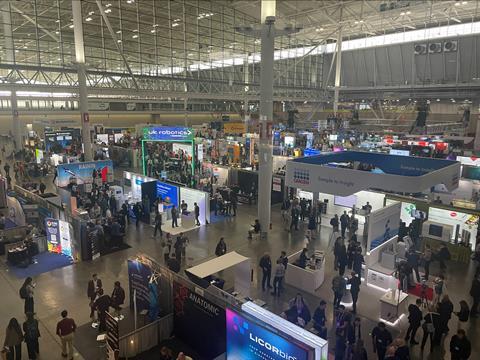
Tangible Scientific, headquartered in Natick, Massachusetts, has launched a technology-enabled compound management platform designed to help discovery teams move faster from computational design to real-world experiments. The company was selected for the SLAS Innovation AveNEW programme, marking its formal debut to the laboratory automation and life sciences community at SLAS 2026 in Boston.
Although drug discovery organisations have invested heavily in artificial intelligence (AI) and advanced computational tools, many still struggle to translate digital designs into physical experiments. Tangible Scientific says this disconnect between rapid design and slower laboratory execution has become a major bottleneck.
Computational design of new molecules can now be completed in days. However, synthesising those compounds, transporting samples between vendors, preparing plates and running assays often takes weeks or even months. As a result, discovery teams are not realising the full benefit of their AI-driven investments.
Tangible Scientific aims to tackle this issue by combining centralised compound operations with purpose-built software orchestration. The platform is intended to provide biotechnology and pharmaceutical research groups with the efficiency of an in-house compound management team without the cost and complexity of building their own infrastructure.
Compound logistics are too fragmented
The company argues that current approaches to compound logistics are too fragmented. In many organisations, orders are still handled through informal email exchanges with multiple contract research organisations (CROs). Inventory information can be inconsistent, status updates slow and accountability unclear.
These issues are particularly challenging for small and mid-sized biotechs with limited discovery teams. Senior scientists frequently find themselves acting as de facto compound managers, spending valuable time tracking shipments and reconciling spreadsheets instead of analysing data or designing experiments.
As compound libraries grow in size and complexity, retrieving material for reuse becomes increasingly difficult and coordination across vendors can turn into a significant operational burden.
Tangible Scientific’s model is built around taking full responsibility for compound management on behalf of customers. Compounds are stored centrally at the company’s facility, while all requests are handled through a structured digital system rather than email.
Real-time inventory visibility
The platform provides real-time inventory visibility, allowing users to see exactly where every compound is in the workflow – whether it has been received, solubilised, plated or shipped. Updates are designed to be immediate, enabling teams to plan experiments based on accurate availability rather than estimates.
An ordering interface with multi-user access allows any authorised team member to request compounds directly through a web portal, removing internal bottlenecks. Tangible also handles routine laboratory operations such as powder weighing, aliquoting, tube-to-plate and plate-to-plate reformatting as standard services.
Chain-of-custody documentation is another key feature. The system records full provenance information from synthesis through every subsequent handling step, providing detailed incident reports if problems arise.
Beyond core logistics, the company integrates complementary services including ADME testing, small-molecule synthesis and analytical support. This approach is intended to enable researchers to move from compound conception to experiment-ready material without needing to coordinate multiple external vendors.
Same-day and next-day delivery options are available for customers in the Boston and Cambridge biotechnology hub, supported by Tangible’s local facility.
Reduce discovery cycle times
According to Tangible Scientific, the platform is already enabling early adopters to reduce discovery cycle times by 20 to 40 percent, while eliminating the fixed costs associated with internal compound management facilities.
By bringing together physical operations and digital workflows, the company hopes to help drug discovery teams achieve the faster, more agile experimentation that modern research demands.
Tangible Scientific describes its mission as bringing the discipline of pharma-scale operations to discovery-stage biotechs, enabling them to focus on science rather than logistics.