



All Digestive disorders articles
-
 News
NewsBacterial enzyme found to weaken gut protective hormone signal
A bacterial enzyme produced by Bacteroides vulgatus has been shown to inactivate the intestinal hormone GLP-2, disrupting gut barrier function and aggravating colitis in a preclinical model — with a natural product inhibitor identified as a potential intervention.
-
 News
NewsPancreas organoids reveal CFTR dysfunction as chronic pancreatitis drug target
Researchers at the Salk Institute have developed a patient-derived organoid platform that identifies distinct biological subtypes of chronic pancreatitis and highlights CFTR as a potential therapeutic target, raising prospects for more personalised treatments.
-
 News
NewsTranexamic acid cuts post-hepatectomy liver failure risk threefold
An international multi-centre study has found that tranexamic acid, a widely available and inexpensive haemostatic agent, could reduce the risk of post-hepatectomy liver failure threefold, offering a potential new preventive strategy for one of liver surgery’s most feared complications.
-
 News
NewsFerroptosis emerges as strategy against treatment-resistant digestive cancers
Researchers are investigating ferroptosis, an iron-dependent cell death pathway, as a potential approach to overcome treatment resistance in digestive cancers.
-
 News
News3D-printed system doubles growth speed of transplantable gut organoids
A novel 3D-printed confined culture system has enabled researchers to generate larger, more advanced human gastrointestinal organoids in half the time of traditional methods, producing transplantation-ready tissues with self-organised enteric neural networks within 14 days.
-
 News
NewsMetal microrobots deliver drugs and biopsies before dissolving
Swallowable metal microrobots that transform shape to deliver drugs and collect tissue samples before safely dissolving could replace invasive endoscopy procedures.
-
 News
NewsRepurposed cancer drugs target root cause of Crohn’s Disease
Researchers at the University of Houston have identified epithelial stress signalling as a key driver of Crohn’s disease and demonstrated that two FDA-approved cancer drugs can interrupt the pathological cycle of cell death and inflammation.
-
 News
NewsNew AI genomics platform targets kidney and cardiorenal disease
Seattle-based biotech company, Variant Bio, have launched Inference, an AI-powered genomics platform designed to accelerate drug discovery and identify genetically supported targets.
-
 News
NewsBlocking PAF receptor could offer new liver cirrhosis treatment
Spanish researchers have discovered a key inflammatory mechanism that could lead to new innovative treatments to reduce liver damage and improve vascular function in cirrhosis.
-
 News
NewsAI-powered CKD drug ISM4808 licensed for kidney disease therapy
Insilico Medicine has partnered with TaiGen Biotechnology to exclusively license its AI-designed PHD inhibitor, ISM4808, for the treatment of CKD-related anaemia in Greater China.
-
 News
NewsFibulin-5 linked to early detection of liver fibrosis
Researchers in Japan have identified a promising blood-based marker that could enable faster, simpler and more accurate detection of liver fibrosis.
-
 News
NewsKidney fibrosis linked to overactive Hippo signalling pathway
Scientists have used human stem cell–derived kidney organoids to uncover how abnormal Hippo signalling drives scarring in nephronophthisis, a rare genetic kidney disease.
-
 News
NewsTargeting p300 may boost immunotherapy in kidney cancer
Researchers have discovered how renal medullary carcinoma cells evade immunotherapy by mimicking immune cells, driving rapid tumour progression.
-
 Article
Mapping the genome in 3D to reveal new drug targets
Find out how a three-dimensional view of the genome is giving scientists a clearer picture of disease biology and revealing new opportunities for targeted therapies.
-
 News
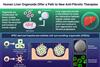
NewsLab-grown liver offers new platform to test fibrosis drugs
Japanese scientists have developed a lab-grown liver organoid that mimics human liver regeneration, offering a new platform to study fibrosis and test therapies.
-
 News
NewsPulmonary fibrosis: new drug slows and reverses lung scarring
Researchers have identified a key cellular mechanism that drives pulmonary fibrosis and successfully blocked it in mice, reducing lung scarring.
-
 News
NewsStem cell liver model reproduces rare immune drug reactions
A new human liver organoid platform could help predict which drugs trigger dangerous immune reactions in susceptible patients.
-
 News
NewsNew UCLA drug could restore heart and organ function
UCLA researchers have developed a monoclonal antibody, AD-NP1, that blocks ENPP1 to enhance heart repair and reduce scar tissue.
-
 News
NewsPemafibrate and telmisartan combo may reverse fatty liver
A new study shows that approved drugs, pemafibrate and telmisartan, when combined, can reduce liver fat and may lower cardiovascular risk in metabolic dysfunction-associated steatotic liver disease.
-
 News
NewsKidney organoids show APOL1 gene’s role in chronic kidney disease
New research using stem cell-derived kidney organoids reveals how APOL1 gene mutations disrupt mitochondrial function in kidney cells – potentially leading to new targeted treatments.