



All Drug Targets articles – Page 6
-
 News
NewsStudy reveals how GLP-1 drugs trigger weight loss in brain cells
NIH researchers have identified the intracellular signalling pathways through which semaglutide and other GLP-1 receptor agonists induce weight loss, revealing why patient responses vary and treatment effects plateau over time.
-
 Article
Turning GWAS signals into drug targets with scalable CRISPR
Genome-wide association studies have linked thousands of genetic variants to disease, yet most remain disconnected from drug-relevant biology. Neville Sanjana, Professor at New York University and Core Faculty Member at the New York Genome Center, explains how scalable CRISPR screens systematically link noncoding variants to causal genes and therapeutic targets.
-
 News
NewsPERM1 protein linked to heart recovery in LVAD patients
A newly identified protein may explain why some failing hearts recover function following mechanical support while others do not.
-
 News
NewsNew study indentifies Golgi apparatus proteins as cancer growth drivers
Researchers at the Harrington Discovery Institute have identified cellular mechanisms involving Golgi apparatus proteins that drive cancer progression by trafficking growth factor receptors to cell surfaces.
-
 Article
AACR 2026 part one: AI design, precision biology and the next wave of oncology innovation
At AACR 2026, industry leaders discussed how oncology R&D is moving beyond isolated technological advances towards integrated discovery systems.
-
 News
NewsOutSee wins Longitude Prize award for ALS target discovery
OutSee has secured a Discovery Award from the Longitude Prize on ALS, providing £100,000 in funding and access to genomic data from 9,000 patients. The company will deploy its AI-driven Nomaly platform to identify novel therapeutic targets for amyotrophic lateral sclerosis over a nine-month research programme.
-
 News
NewsRAGE receptor identified as key driver of age-related metastasis
Georgetown Lombardi researchers have identified RAGE, an inflammatory receptor, as a key mediator of age-related breast cancer metastasis.
-
 News
NewsMYC protein found to repair DNA in cancer cells
Oregon Health & Science University researchers have identified a non-canonical function of the MYC oncoprotein in DNA damage repair, revealing how tumour cells survive chemotherapy-induced stress.
-
 News
NewsMitochondrial fission activation offers new tool in fight against antibiotic resistance
Scientists at The University of Queensland have discovered that activating mitochondrial fission can enhance immune defences against antibiotic-resistant bacteria.
-
 News
NewsCAR T cell therapy eliminates glioblastoma tumours in preclinical study
A next-generation CAR T cell immunotherapy targeting the urokinase receptor has eliminated treatment-resistant glioblastoma tumours in preclinical models.
-
 News
NewsNew malaria drug T111 targets all parasite stages in single treatment
A novel compound developed over 15 years of research has demonstrated unprecedented activity against liver, blood and sexual stages of Plasmodium parasites, possibly positioning it as a potential cure for malaria.
-
 News
NewsMolecular switch discovery could lead to new bone disease treatments
A molecular switch that activates an alternative energy-burning pathway in brown fat has been identified by McGill University researchers, offering potential new approaches to treating bone disease and metabolic disorders through the TNAP enzyme’s glycerol pocket.
-
 News
NewsYAP1 protein found to drive chemotherapy resistance in small cell lung cancer after treatment
University of Texas MD Anderson Cancer Center researchers have discovered that YAP1 protein expression emerges after chemotherapy treatment in small cell lung cancer, enabling resistant cancer cells to survive and proliferate.
-
 News
NewsProtein modifications control drug binding and efficacy in new study
New research reveals that subtle chemical changes to proteins after synthesis play a critical role in determining drug-protein interactions.
-
 Article
Turning CRISPR hits into confident drug discovery decisions
Functional genomics is central to modern drug discovery, yet high attrition rates persist. In this article, Dr Salman Tamaddon-Jahromi, a postdoctoral research associate at the University of Cambridge, discusses how end-to-end CRISPR screening strategies, iPSC-derived neuronal models and layered quality control can convert functional genomics signals into actionable therapeutic hypotheses.
-
 News
NewsOpenBind launches AI model to accelerate drug discovery
Diamond Light Source has launched OpenBind v1, an open-access AI model and dataset designed to address critical data shortages in drug discovery by providing standardised protein-drug binding measurements at atomic resolution.
-
 News
NewsNovel enzyme inhibitors exploits key weakness in malaria parasite
Researchers from the Universities of Bath and Leeds have engineered a novel class of aminopeptidase P inhibitors with enhanced binding affinity and antiparasitic activity against Plasmodium falciparum.
-
 News
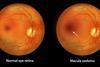
NewsBispecific antibody targets Wnt co-receptors for diabetic macular oedema treatment
Preclinical data presented at ARVO 2026 demonstrate therapeutic potential of targeting Gpr124 and Lrp6 Wnt co-receptors to restore blood-retina barrier integrity in diabetic macular oedema and wet age-related macular degeneration, with trispecific candidate NVQ501 advancing towards IND-enabling studies.
-
 Article
The scale divide: competing strategies in AI drug discovery
Two approaches to AI in preclinical drug discovery are diverging, from multi-thousand GPU systems to models with only a handful of parameters, with early results raising questions about which will deliver.
-
 News
NewsNew SEE-CITE technology maps drug-protein interactions with targeted precision
A UCLA-led research team has developed SEE-CITE, an advanced photo-crosslinking technology that enables direct comparison of drug-protein binding interactions, potentially aiding the discovery of safer, more effective therapeutics across multiple disease areas.