Meet the AI tool that creates proteins that fold better, bind tighter and perform more reliably. Find out why it matters for next-generation medicines.
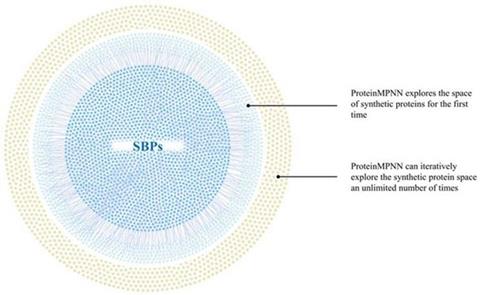
A research team from Chongqing University has demonstrated a new deep learning approach that expands the design space for synthetic binding proteins (SBPs). Their study, published in Frontiers of Computer Science, shows how the ProteinMPNN framework can generate novel protein sequences with improved performance compared to traditional methods.
Designing proteins for therapeutic use is a complex task with several limitations in current approaches. Site-directed mutagenesis depends heavily on the structure and physiological properties of the original protein, which restricts the scope of changes. Directed evolution, while powerful, tends to explore only a narrow sequence space around natural proteins. Physical simulation-based design relies on energy functions to predict folding and stability, but these often fall short in capturing the true complexity of protein interactions in biological systems.
The team, led by Dr Weiwei Xue, applied ProteinMPNN to address these challenges. Unlike classical approaches, ProteinMPNN uses structural data and deep learning to generate protein sequences that are novel and functional. The resulting SBPs outperformed those created by conventional protein engineering in multiple key areas.

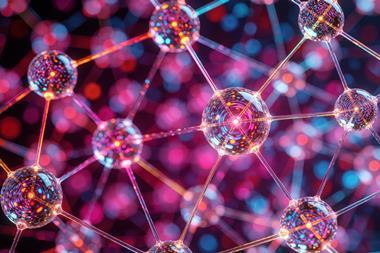
Expanding the sequence space of SBPs by ProteinMPNN. Credit: Yanlin LI, Wantong JIAO, Ruihan LIU, Xuejin DENG, Feng ZHU, Weiwei XUE.[/caption]
Improved solubility, stability and binding energy
The researchers performed a comprehensive bioinformatics analysis of the newly designed sequences. Proteins generated by ProteinMPNN showed increased solubility and stability compared to the original SBPs. Those derived from monomer structures performed particularly well in these categories. In contrast, proteins designed from complex structures exhibited higher predicted binding energies, suggesting different design advantages depending on the structural input.
Sequences derived from monomer structures outperform those from complex structures in terms of solubility and stability.
“Sequences derived from monomer structures outperform those from complex structures in terms of solubility and stability, whereas sequences designed based on complex structures demonstrate superior calculated binding energy.”
After generating many new protein designs using ProteinMPNN, the researchers selected eight types (or scaffolds) that consistently performed better than existing versions. A scaffold is essentially a protein framework or backbone that can be engineered to bind specific targets, such as cancer cells, viruses, or other disease-related molecules.
These eight scaffolds - including Diabody, Fab, and scFv - are widely used in biotechnology and drug development. For example:
- Fab, scFv, and Diabody are commonly used in antibody therapies.
- Affilin and Repebody are smaller synthetic alternatives to antibodies, designed to bind specific targets.
- Neocarzinostatin-based binder is derived from a natural anticancer compound and often used in drug delivery systems.
- CI2-based binder and Evibody are also synthetic designs tailored for stability and binding.
Improving solubility, stability, or binding makes these scaffolds more effective for real-world use. They could support better antibody drugs, targeted cancer treatments or diagnostic tools.
This research highlights the growing influence of deep learning in protein design. By expanding the accessible sequence space and improving functional properties, frameworks like ProteinMPNN may enable faster and more reliable development of protein therapeutics.
The full study was published in Frontiers of Computer Science.