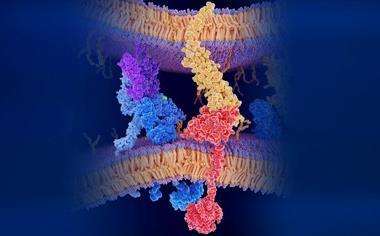
Scientists have developed platelet-inspired nanoparticles that deliver anti-inflammatory drugs directly to brain-computer interface implants, doubling their effectiveness.
Scientists have found a way to improve the performance of brain-computer interface (BCI) electrodes by delivering anti-inflammatory drugs directly to the site of implantation. The study, led by researchers at Case Western Reserve University (CWRU) in collaboration with Haima Therapeutics, has the potential to treat a wide range of inflammatory diseases and improve devices that let people control prosthetic limbs with their thoughts.
Nanoparticles as a Trojan horse
The team used a novel ‘platelet-inspired nanoparticle’ to transport an anti-inflammatory drug directly to the brain where BCI electrodes are implanted, which doubled the effectiveness of the electrodes.
“When we implant devices in the brain, it disrupts the blood-brain barrier, and we knew platelets would be showing up to seal the breach,” said neural engineer Andrew Shoffstall, the Nord Distinguished Associate Professor of Biomedical Engineering in the Case School of Engineering and Case Western Reserve School of Medicine. “We used these nanoparticles that act like platelets as a Trojan horse to target the site where we’re putting the device.”
How brain-computer interfaces work
BCI technology allows people with spinal cord injuries or prosthetic limbs to operate devices or limbs by thinking about them. Electrodes implanted in the brain sense neuronal activity and translate it into commands. However, inflammation around the implants can interfere with signals, limiting the lifespan and effectiveness of the electrodes.
By delivering the drug directly using nanoparticles, the team improved electrode performance.
“The brain recognises the implant as a foreign object – like a splinter – and it responds with inflammation to try to isolate and neutralise it,” Shoffstall explained.
By delivering the drug directly using nanoparticles, the team improved electrode performance, whereas administering the same drug systemically actually worsened results. The team now plans to move the research towards translation, starting with safety studies.
Synthetic platelets enable precision delivery
The approach relies on synthetic platelet technology developed by Anirban Sen Gupta, Wallace R. Persons professor of biomedical engineering, who patented it and licensed it to Haima Therapeutics, a biotech start-up he co-founded with CWRU alumna and COO Christa Pawlowski.
The technology, known as SynthoPlate, could have wider applications, including controlling life-threatening bleeding and targeted drug delivery.
Future clinical applications for different diseases
“Because the particle itself is a platform, you can load it with any drug, as long as you pick a disease or pathology where platelets can accumulate,” Sen Gupta said. “Really, it has potential for treating any disease that involves vascular injury and inflammation, from stroke and heart attack to autoimmune disorders like rheumatoid arthritis or infectious diseases like sepsis.”
Because the particle itself is a platform, you can load it with any drug.
Haima Therapeutics plans to begin human clinical trials of the platelet-inspired nanoparticles in 2027 and recently secured two Small Business Innovation Research Grants from the Defense Advanced Research Projects Agency (DARPA) to advance the technology towards clinical translation.




Topics
- Anirban Sen Gupta (Wallace R. Persons professor of biomedical engineering)
- Artificial Intelligence & Computational Tools
- Autoimmune disease
- Cardiovascular disease
- Case Western Reserve University
- Companies
- Disease Research
- Drug Delivery
- Drug Development
- Drug Discovery Processes
- Drug Targets
- Haima Therapeutics
- Imaging & Diagnostics
- Molecular Biology
- Nanomedicine
- Nanoparticles
- Neurological disorders
- Neurons
- Neurosciences
- Translational Science