



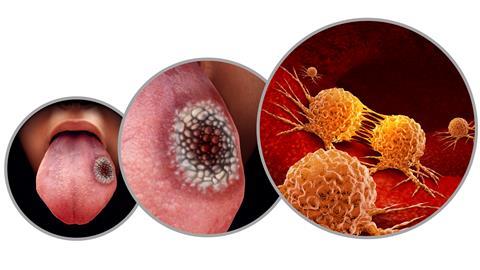
A review examining mucoadhesive films, hydrogels, sprays and in-situ gels for oral squamous cell carcinoma delivery concludes that tumour shape, oral environment dynamics and patient context must drive formulation strategy.
A new review is highlighting a key challenge in the development of local drug-delivery systems for oral squamous cell carcinoma (OSCC): there may be no single formulation that works equally well for every tumour.
The review, conducted by researchers from Indonesia, Japan and China, examines emerging approaches designed to deliver drugs directly to oral tumours. These include mucoadhesive films and patches, oral sprays, in-situ gels and injectable hydrogels.
Rather than treating drug delivery as primarily a formulation problem, the researchers argue that development should begin with the clinical characteristics of the tumour, the drug being delivered and the conditions within the mouth.
“There is a tendency to think of drug delivery as a problem that can be solved by developing a better formulation,” explains Professor Nurhasni Hasan from the Faculty of Pharmacy at Hasanuddin University in Indonesia, “However, the bigger question is whether the formulation is appropriate for that particular clinical situation.”
What is OSCC?
Oral squamous cell carcinoma is a common form of cancer arising from squamous cells lining the mouth. Treatment can involve surgery, radiotherapy, chemotherapy, targeted therapies or combinations of these approaches depending on the disease.
Local drug delivery aims to concentrate treatment at the tumour while potentially reducing exposure to healthy tissues elsewhere in the body.
Why does this matter for early drug discovery?
For researchers developing new cancer medicines, getting a promising drug into the right place can be just as important as identifying the drug itself.
OSCC presents a particularly challenging environment for local delivery as tumours can vary considerably in shape, accessibility and depth. At the same time, the mouth is a dynamic environment where saliva, movement and mechanical forces can remove or disrupt formulations.
A drug that performs well in a laboratory experiment may therefore behave differently once it encounters the conditions of the oral cavity.
The review suggests that this should be considered much earlier in development. For a flat and accessible lesion, for example, a mucoadhesive film could remain attached to the mucosa and release its drug locally. A more irregular or infiltrative tumour could instead require a gel or injectable hydrogel capable of conforming to a complex tissue surface and providing prolonged exposure.
Sprays could offer greater convenience but may have a shorter residence time because of salivary clearance.
This matters for early drug discovery because formulation strategy can influence whether a candidate ultimately becomes a practical treatment. A highly active molecule may have limited clinical value if it can not remain at the tumour, penetrate the relevant tissue or deliver a consistent dose.
How does this fit with what’s already happening in the field?
The review sits within a broader effort to develop more sophisticated local and targeted drug-delivery technologies.
Mucoadhesive films and patches are among the approaches with the clearest near-term translational potential. Their advantage is relatively straightforward in that they can be positioned against the affected mucosa and designed to release a drug over time.
There is also existing regulatory and manufacturing experience with related buccal delivery formats, which could make these systems comparatively easier to translate than more complex technologies.
Hydrogels offer a different proposition. Injectable systems could potentially adapt to irregular lesions and provide sustained drug release, but they introduce additional challenges around manufacturing, gelation, degradation, administration and long-term biocompatibility.
The oral environment also changes during treatment. Radiotherapy and chemotherapy can cause xerostomia, or dry mouth, as well as mucosal damage. Changes in hydration, lubrication and salivary flow can alter how formulations adhere and how quickly drugs are released or cleared.
That creates a translational gap between simplified laboratory testing and actual clinical conditions.
What does it mean for researchers working in this area?
One of the review’s main implications is that testing needs to become more realistic.
Researchers may need to assess whether formulations remain attached under salivary flow and mechanical stress rather than relying solely on static laboratory experiments. Stability under changing pH and exposure to enzymes could also become increasingly important.
Drug distribution at the tumour margins is another consideration. Delivering a drug to the visible surface of a lesion may not be enough if cancer cells extend into deeper or irregular areas of tissue.
The authors therefore advocate a more integrated approach in which the drug, formulation, tumour and patient environment are considered together.
Manufacturing and administration also need to be considered early rather than treated as problems to solve later.
“A sophisticated technology has limited clinical value if it is difficult to manufacture, administer, or tolerate. These practical considerations must guide formulation development from the start,” notes Professor Hasan.
What happens next?
The technologies discussed in the review are not yet established treatments for OSCC, so the next stage is not simply to identify which formulation is theoretically best. Researchers need evidence showing that promising systems can work reliably under clinically relevant conditions and can ultimately be manufactured and administered safely.
The review points towards future studies that reproduce key features of the oral environment, including saliva, mechanical stress and changes associated with cancer treatment.
For developers, the question to answer will be whether improved laboratory models can identify which delivery systems are most likely to succeed before expensive clinical development begins.
Key takeaways
- There is no obvious one-size-fits-all delivery system: tumour shape, location and depth could determine which formulation is most appropriate.
- The mouth presents a difficult delivery environment: saliva, movement, pH and treatment-related changes can all affect performance.
- Translational considerations matter early: manufacturing, administration and tolerability could determine whether an advanced formulation reaches patients.
- Mucoadhesive systems may have an advantage: established buccal delivery experience could support their near-term development.
- Hydrogels remain promising but challenging: their ability to conform to irregular lesions comes with additional technical and clinical hurdles.
- The field remains preclinical and translational: these approaches are not yet established OSCC treatments.
The broader lesson extends beyond oral cancer. As drug-delivery technologies become more sophisticated, the challenge may be less about creating the most advanced formulation and more about identifying the formulation that makes sense for a particular drug, tumour and clinical setting.








No comments yet