



All Artificial Intelligence (AI) articles – Page 2
-
 News
NewsAI and genetics identify WNK2 inhibitor for osteoarthritis treatment
Researchers at University of Utah Health have used artificial intelligence and human genetic data to identify a promising early-stage drug candidate targeting WNK2, a protein linked to inherited osteoarthritis, with the lead compound reducing inflammatory gene activity and supporting cartilage cell health in laboratory models.
-
 News
NewsWhat Google’s AI talent exodus could mean for future drug discovery
The departure of leading AI researchers from Google to found Discovery Loop raises important questions about the future direction of artificial intelligence in scientific research and drug development.
-
 News
NewsInsilico Medicine launches AI drug discovery benchmarking platform
Insilico Medicine has unveiled a benchmarking platform designed to assess whether AI models can perform genuine drug discovery tasks, using decontaminated real-world datasets and proprietary validated programmes to move beyond inflated benchmark scores.
-
 News
NewsResearchers develop AI system to accelerate tuberculosis drug discovery
Researchers at Texas A&M have developed AI-driven platforms to help scientists navigate the bottlenecks of tuberculosis drug discovery, from eliminating nuisance compounds to unlocking years of archived research data.
-
 Article
AI’s promise and practical limits in drug discovery
From ChatGPT to AI agents and world models, where is AI really heading in drug discovery? Dr Raminderpal Singh explains what researchers should focus on now.
-
 News
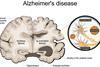
News3D genome reorganisation identified as Alzheimer’s disease molecular hallmark
An international study combining single-cell genomics, spatial transcriptomics and artificial intelligence has identified large-scale changes in three-dimensional genome organisation in Alzheimer’s-affected brain cells, establishing chromatin architecture as a previously overlooked component of the disease’s molecular pathology and a potential framework for future therapeutic targeting.
-
 News
NewsInsilico Medicine nominates ISM9528 non-opioid chronic pain candidate using AI
Insilico Medicine has nominated ISM9528, an orally available, brain-penetrant non-opioid candidate targeting a previously unrecognised pain mechanism, as its 31st AI-generated preclinical compound since 2021, with efficacy exceeding morphine in some preclinical models.
-
 Article
Making historical toxicology data work harder in safety assessment
Historical toxicology data is often underused. Find out how Virtual Control Groups and AI could help researchers strengthen safety assessment while making better use of existing data.
-
 Webinar
Meeting ethical & regulatory requirements when using human biological specimens
Whether you source, purchase or work with human biospecimens, understanding today’s ethical and regulatory expectations is essential. Join this webinar to explore informed consent, privacy and the principles that support responsible research.
-
 Article
How AI and human biology data led to a new addiction drug candidate
How can human biology data improve target selection? Learn how one discovery programme identified a potential new treatment for opioid use disorder.
-
 News
NewsInsilico Medicine launches Phase III trial of AI-designed Rentosertib drug
Insilico Medicine has advanced its AI-discovered TNIK inhibitor Rentosertib into a 320-patient Phase III trial for idiopathic pulmonary fibrosis, marking a landmark moment for generative AI drug discovery.
-
 Article
AI’s real value in drug discovery may be choosing the right experiment
AI is becoming more capable, but its value still depends on the data, questions and decisions behind it. Where is it genuinely improving drug discovery and where do the limitations remain?
-
 News
NewsAI and lab techniques accelerate tuberculosis drug discovery
Researchers at UMass Amherst have combined high-throughput laboratory screening with an AI neural network to identify compounds capable of breaching the protective outer membrane of Mycobacterium tuberculosis, potentially accelerating the search for new TB therapeutics.
-
 News
NewsLargest chemical reactions database launched to boost AI drug discovery
Researchers at the University of Michigan have assembled a database of more than 50,000 chemical experiments, offering AI systems an unprecedented resource to accelerate drug discovery and reduce reliance on scarce precious metal catalysts.
-
 News
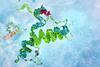
NewsAI uncovers antimicrobial peptides hidden within prion proteins
Researchers at the University of Pennsylvania have used artificial intelligence to identify a new class of antimicrobial peptides within prion proteins, traditionally associated with neurodegenerative disease. The discovery reveals 1,179 potential antibiotic candidates, with laboratory and animal studies confirming activity against drug-resistant bacterial strains.
-
 News
NewsLabGenius and LG Chem partner on AI-driven cancer antibodies
LabGenius Therapeutics has partnered with LG Chem to develop next-generation multispecific antibodies targeting solid tumours. The collaboration combines AI-driven drug discovery with oncology development expertise to identify therapeutics with improved selectivity and reduced toxicity.
-
 News
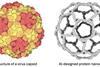
NewsAI-designed proteins self-assemble into virus-like drug delivery structures
An international collaboration has developed AI-designed protein structures that self-assemble into virus-like nanocages using quasisymmetry principles, offering new possibilities for targeted drug delivery, vaccine development and genetic material transport without relying on modified viral proteins.
-
 News
NewsResearchers develop automated DESI-MS platform for faster cancer drug discovery
Scientists at Purdue University have created an automated ultrahigh-throughput platform that integrates chemical synthesis, biological testing and mass spectrometry into a single workflow, potentially reducing the time needed to identify promising cancer drug candidates from weeks to hours.
-
 News
NewsAI-powered $6M project targets new Alzheimer’s treatments
A $6 million NIH-funded collaboration between Indiana University School of Medicine and Luddy School of Informatics aims to deploy AI and machine learning to identify promising Alzheimer’s drug candidates, screening billions of compounds to overcome traditional discovery bottlenecks.
-
 Report
Context is everything: how spatial biology is changing our understanding of disease
Discover how spatial biology is revealing disease mechanisms with implications for biomarkers, immunotherapy and drug development.