




As drug developers pursue increasingly complex therapies, traditional bioanalytical approaches are being put to the test. How is the field adapting to meet these new demands?
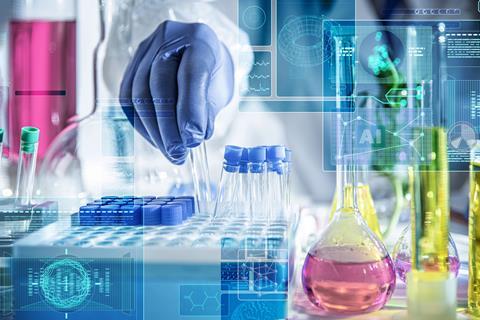
Bioanalysis underpins critical quantitative decision making across the entire drug development continuum, playing an essential role in dose selection, safety evaluation and exposure response characterisation. Generating reliable measurements of drug concentration and relevant biomarkers in biological matrices, bioanalytical methods directly inform go/no‑go decisions and shape preclinical and clinical development strategies.
For decades, the discipline has been anchored in targeted liquid chromatography tandem mass spectrometry (LC–MS/MS) platforms, optimised primarily to support small‑molecule pharmacokinetics and bioequivalence assessments. A strong emphasis on sensitivity, selectivity, accuracy and reproducibility has enabled regulated bioanalysis to mature into a rigorous, well‑defined scientific discipline, supported by harmonised regulatory guidance and standardised validation practices.
As pharmaceutical research and development has evolved, however, the scope and demands placed on bioanalysis have expanded considerably. Contemporary discovery and development pipelines increasingly comprise biologics, synthetic peptides, oligonucleotides (ASOs, siRNA), antibody–drug conjugates (ADCs) and other complex or hybrid therapeutic modalities.
As pharmaceutical research and development has evolved, however, the scope and demands placed on bioanalysis have expanded considerably.
These drug classes differ fundamentally in molecular size, structural heterogeneity, stability and biological distribution, often challenging the assumptions and workflows established for traditional small-molecule analysis. Consequently, bioanalytical scientists must now deploy a broader toolkit that spans ligand‑binding assays, hybrid immuno‑affinity LC-MS/MS approaches and novel sample preparation strategies to accurately characterise drug exposure and disposition.
In parallel, development timelines have compressed and adaptive study designs have become more prevalent, particularly in early development. These trends place increasing pressure on bioanalysis to deliver high‑quality data with faster turnaround times, reduced sample volume requirements, and the flexibility to support both exploratory and regulated endpoints. Early discovery and translational studies frequently demand multiplexed or information-rich analyses to guide candidate optimisation, while later-stage programmes still require highly qualified, fit-for‑purpose methods suitable for regulatory submission. Balancing these divergent needs has become a defining challenge for modern bioanalysis.
Collectively, these shifts are driving a fundamental rethinking of how bioanalytical strategies are designed, implemented and integrated into development decision making. Rather than serving solely as a downstream support function, bioanalysis is increasingly embedded within translational frameworks, linking molecular pharmacology, pharmacokinetics and pharmacodynamics across stages of development.
Shift one: from method‑centric to question‑centric bioanalysis
For decades, regulated bioanalysis has been dominated by a method‑centric paradigm, in which success was defined by the development and qualification or validation of a highly optimised assay for a single analyte and purpose. In practice, this typically involved triple quadrupole LC-MS/MS methods operating in selected reaction monitoring (SRM) mode for small molecules, or ligand‑binding assays (LBAs) for biologics, qualified or validated against predefined regulatory criteria for accuracy, precision, sensitivity, selectivity and stability. This paradigm provided a strong foundation for regulatory confidence and reproducibility but often imposed rigidity on analytical workflows.
Modern drug discovery increasingly demands rapid, iterative decision making, requiring bioanalysis to address multiple interconnected questions in parallel, such as exposure–response relationships, metabolic stability, tissue distribution and biomarker modulation. This has driven a shift towards question-centric bioanalysis, in which analytical strategies are designed around scientific and translational questions rather than a single endpoint or analyte. Datasets are designed to be reinterrogated as new hypotheses emerge, maximising sample utility and improving learning efficiency across discovery and development.
Modern drug discovery increasingly demands rapid, iterative decision making, requiring bioanalysis to address multiple interconnected questions.
High‑throughput bioanalysis has been a critical enabler of the question‑centric approach. Advances in laboratory automation, standardised sample preparation, multiplexed chromatography and rapid mass spectrometric acquisition have dramatically increased analytical capacity, supporting large pharmacokinetic (PK) and toxicokinetic (TK) studies early in development. In parallel, bioanalysis has become increasingly data driven.
The evolution of drug discovery and development has seen a fundamental shift in bioanalytical strategy from targeted selected reaction monitoring (SRM) workflows towards high‑resolution mass spectrometry (HRMS)-based platforms. This transition reflects a change in mindset among drug developers, who increasingly seek more comprehensive, information-rich data from limited sample volumes.
Traditional SRM assays are highly sensitive and specific but inherently hypothesis-driven and narrow in scope, requiring predefined analytes and offering limited visibility beyond the target molecule. In contrast, HRMS enables broad, untargeted or semi-targeted data acquisition, allowing simultaneous measurement of the drug, its metabolites, biotransformation products and relevant endogenous biomarkers within a single experiment.
This shift is motivated by several converging needs:
- Maximising information from small sample amounts, particularly in preclinical studies, paediatric populations, rare diseases and longitudinal clinical trials
- Achieving a complete picture of molecular turnover, including drug metabolism, degradation, conjugation and clearance pathways
- Understanding drug‑induced perturbations of endogenous pathways, moving beyond exposure alone to mechanism‑ and systems‑level insight.
HRMS‑based bioanalysis supports these goals by enabling retrospective data mining, discovery of unexpected metabolites or biomarkers, and integration with metabolomic and proteomic workflows. Consequently, bioanalysis is evolving from a purely quantitative support function into a strategic tool for holistic PK, pharmacodynamic and mechanistic understanding.
The shift towards question-centric bioanalysis has important strategic and operational implications for drug developers. Integrated, information-rich datasets enable earlier and deeper scientific insight, supporting faster and more confident go/no‑go decisions across discovery and early development.
The ability to retrospectively interrogate data as development questions evolve reduces the need for reanalysis and minimises the risk associated with narrowly defined, single‑purpose assays. At the same time, this shift necessitates an evolution in regulatory strategy, as developers must increasingly justify the use of HRMS‑based approaches, implement robust data integrity and governance frameworks, and ensure that informatics systems are validated and compliant with emerging global expectations, including ICH M10.
Shift two: from small molecules to new therapeutic modalities
The therapeutic landscape has expanded far beyond traditional small molecules and monoclonal antibodies to encompass a diverse range of advanced modalities, including oligonucleotides, mRNA‑based therapeutics, gene and cell therapies, bispecific antibodies, antibody–drug conjugates (ADCs) and multidomain fusion proteins.
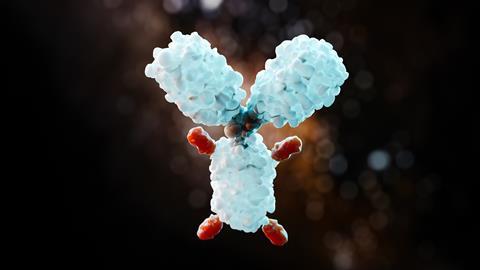
These emerging modalities exhibit increased structural and functional complexity, challenging long‑standing assumptions about pharmacokinetics, metabolism, biodistribution and the nature of bioanalytical measurement itself.
Unlike small molecules, many novel therapeutic modalities cannot be comprehensively characterised using a single bioanalytical assay.
Unlike small molecules, many novel therapeutic modalities cannot be comprehensively characterised using a single bioanalytical assay. Instead, multiple complementary measurements are often required to capture distinct and clinically relevant attributes, such as the relative abundance of intact versus functional drug, the formation and release of active metabolites or cytotoxic payloads, tissue distribution and persistence, and the development of immunogenic responses, including anti‑drug antibodies. Consequently, bioanalytical strategies are increasingly based on hybrid and integrated approaches that combine ligand‑binding assays, LC-MS/MS-based methods, quantitative PCR, flow cytometry and functional assays, selected and tailored according to the modality, mechanism of action and stage of development.
Distinct therapeutic classes impose unique bioanalytical requirements. For example, oligonucleotide therapeutics often rely either on highly sensitive hybridisation‑based assays or reversed-phase ion-exchange solid-phase extraction approaches for quantitative measurement, complemented by LC-MS/MS methods to characterise metabolic pathways and chain-shortened species.
In contrast, gene and cell therapies shift the bioanalytical focus away from conventional circulating PK towards assessment of biodistribution, cellular persistence and functional activity, frequently using PCR‑based and phenotypic assays. Importantly, regulatory guidance for many of these advanced modalities remains in flux, necessitating that bioanalytical scientists establish and justify best practices in parallel with product development – often through close and early engagement with regulatory authorities.
The emergence of new therapeutic modalities necessitates a fundamental rethinking of how bioanalysis is integrated into drug development strategies. Bioanalytical considerations must be incorporated early. Successfully supporting these complex therapies requires cross-functional expertise that spans bioanalysis, molecular biology, immunology and bioinformatics, enabling the integration of diverse datasets into a coherent understanding of drug behaviour. In parallel, proactive and early engagement with regulatory authorities is increasingly important to align assay strategies, assay qualification/validation scope and data expectations, particularly in light of evolving guidance such as ICH M10.
Shift three: operational transformation through automation, digitalisation and globalisation
Automation and digitalisation are rapidly transforming discovery bioanalysis, fundamentally reshaping how drug developers generate, interpret and act on analytical data. As drug discovery increasingly contends with greater molecular complexity, compressed timelines and the need for data-driven decision making, bioanalysis is evolving from a predominantly manual, assay-centric activity into a high‑throughput, digitally integrated and strategically enabling capability. This transformation is redefining the role of bioanalysis from a support function to a central contributor to early discovery strategy and execution.
Several converging pressures are accelerating this transformation. The emergence of complex therapeutic modalities introduces unstable intermediates, heterogeneous analytes and multifaceted analytical questions. At the same time, early discovery demands higher study throughput, often with limited material availability and smaller sample volumes. Under these conditions, traditional manual and sequential bioanalytical workflows are no longer sustainable, necessitating scalable and digitally enabled solutions.
Automation is now being implemented across the full bioanalytical lifecycle. Key applications include:
- Automated sample preparation workflows such as protein precipitation, solid‑phase extraction and enzymatic digestion
- Robotic liquid handling for assay setup, automated LC-MS/MS system operation and performance monitoring
- Unattended analysis during overnight and weekend runs.
Together, these capabilities reduce manual variability and operator bias, improve reproducibility and data quality and substantially increase throughput while reducing hands‑on time. Enhanced automation also enables more efficient use of high‑value analytical instrumentation. For drug developers, these advances translate into more consistent datasets and faster experimental turnaround, which are particularly critical during hit‑to‑lead and lead optimisation phases.
Digitalisation extends beyond automating physical laboratory steps to encompass end‑to‑end data connectivity and integration. Modern discovery bioanalysis increasingly relies on direct capture of raw analytical data into centralised data systems, automated data processing and peak review, and structured integration of experimental metadata such as compound identity, dose, time point and formulation. Seamless linkage of bioanalytical data with DMPK, biology and chemistry datasets eliminates fragmented data silos and enables context‑rich interpretation across disciplines.
The combination of automation and digitalisation has led to the generation of large, information-dense datasets that require advanced computational tools to fully realise their value. These capabilities facilitate early identification of exposure–response relationships and improve understanding of structure–exposure behaviour linkages. For drug developers, this translates into earlier detection of potential liabilities – such as metabolic instability or pathway perturbations – and greater confidence in candidate prioritisation.
Global drug development requires harmonised bioanalytical practices across regions. The implementation of ICH M10 represents a landmark step towards global alignment of bioanalytical method validation and study sample analysis expectations. Rather than pursuing region‑specific validation strategies, organisations are increasingly adopting a ‘right‑first‑time’ approach, standardising methods, documentation and data governance from the outset.
Global drug development requires harmonised bioanalytical practices across regions.
Collectively, automation and digitalisation are enabling a fundamental shift from single‑endpoint readouts to data‑rich, integrative decision‑making frameworks in drug discovery. By shortening design–execute–analyse cycles and improving both the quality and contextualisation of analytical data, these advances support more robust, evidence‑based decisions earlier in the discovery pipeline. Organisations that successfully integrate automation, digitalisation and regulatory harmonisation are therefore well positioned to reduce long‑term costs, minimise compliance risk, and accelerate global development and submission timelines.
Future outlook
The scientific, technological and operational shifts reshaping bioanalysis are deeply interconnected and collectively redefining its role in drug development. Bioanalysis is no longer a purely technical function but a strategic discipline that directly informs decision making, mitigates risk and accelerates innovation.
For drug developers, success in this evolving landscape requires early and sustained investment in analytical strategy, data infrastructure, cross‑disciplinary expertise and proactive regulatory alignment. As therapeutic complexity continues to rise, bioanalysis will play an increasingly central role in delivering safe, effective and innovative medicines to patients worldwide.
References
- Son AWK, et al. (2024). Mass Spectrometry Advancements and Applications for Biomarker Discovery, Diagnostic Innovations, and Personalized Medicine. International Journal of Molecular Sciences, 9880.
- Pereira AJ, de Campos LJ, et al. (2024). Peptide-based therapeutics: challenges and solutions. Medicinal Chemistry Research, 1275–1280.
- Cui Y. (2024). Understanding the Science of Bioanalysis: From Drug Discovery to Development in Pharmaceuticals. Research & Reviews: Journal of Pharmaceutical Analysis, Volume 13, Issue 2, 4-6.
- Sirtori FR, et al. (2025). Evolving bioanalytical strategies in the wake of pioneering biotherapeutics. Bioanalysis, 979-996.
- Haigney S. (2025). Enhancing Bioanalysis and Drug Development with Advanced Tools and Technologies. Pharmaceutical Technology 49(8): 10-13, 10-13.
- ICH. (2022). M10 Bioanalytical method validation and study sample analysis.
- Gertsman I, et al. (14). Validation of a dual LC-HRMS platform for clinical metabolic diagnosis in serum, bridging quantitative analysis and untargeted metabolomics. Metabolomics, 312-323.
- Shi J, et al. (2021). Bioanalysis in the Age of New Drug Modalities. The AAPS Journal, 64.
- Vereyken L, et al. ( 2019). High-Resolution Mass Spectrometry Quantification: Impact of Differences in Data Processing of Centroid and Continuum Data. Journal of the American Society for Mass Spectrometry, 203-212.
- MacNeill R. (2019). Instrumental and technical evolution over the past decade in bioanalysis. Bioanalysis, 601-606.
- Ewles M, et al. (2024). Observations from a decade of oligonucleotide bioanalysis by LC-MS. Bioanalysis, 615-629.
- Ramanathan R, et al. (2011). It is time for a paradigm shift in drug discovery bioanalysis: from SRM to HRMS. Journal of Mass Spectrometry, 595-601.
- R Xu RN, et al. (2007). Recent advances in high-throughput quantitative bioanalysis by LC–MS/MS. Journal of Pharmaceutical and Biomedical Analysis, 342-355.
- Pandey S, et al. (2010). Bioanalysis in drug discovery and development. Pharmaceutical Methods, Volume 1, Issue 1, 14-24.
- Kaareddy S, et al. (2023). Dried Blood Spot Sampling in Protein and Peptide Bioanalysis: Optimism, Experience, and the Path Forward. International Journal of Peptide Research and Therapeutics, 97.
- Londhe V, et al. (20). Opportunities and obstacles for microsampling techniques in bioanalysis: Special focus on DBS and VAMS. Journal of Pharmaceutical and Biomedical Analysis, 113102.
- Vishnoi V, et al. (2025, Volume 3, Issue 1). Importance of Bioanalysis in Drug Discovery & Development: A Comprehensive Review. INTERNATIONAL JOURNAL OF PHARMACEUTICAL SCIENCES, 62-68.
- Korfmacher W, et al. (2016 (16)). HRMS in DMPK. Bioanalysis, 1635-1637.
- Li Y, et al. (2026). Recent advances in high-throughput automated sample preparation technologies in bioanalysis. Talanta, 129171.
- Yuan L. (2026). Hybridization liquid chromatography-mass spectrometry for quantitative bioanalysis of oligonucleotides: The upcoming paradigm shift. Journal of Chromatography A, 466575.




No comments yet