


Scientists at the National Cancer Institute have developed an induced cDC1 culture system capable of generating highly enriched populations of conventional type 1 dendritic cells at yields 75 times greater than existing methods.
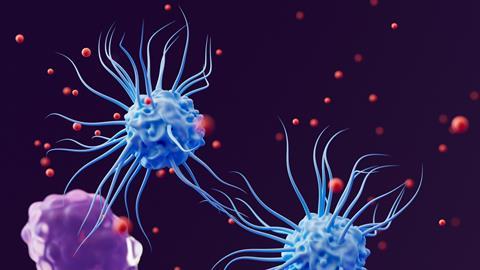
Researchers have developed a new laboratory culture system that can generate large numbers of specialised immune cells, potentially improving research into cancer immunology, vaccines and immune responses.
The team from the National Cancer Institute, National Institutes of Health, developed a method to produce highly enriched populations of conventional type 1 dendritic cells (cDC1s) from mouse bone marrow.
Published in Myeloid Cells, the study describes the approach, called induced cDC1 (iDC1) cultures, which generated an estimated 1.5 billion CD103-positive cDC1 cells from the bone marrow of a single mouse.
More than 95 percent of the resulting cells belonged to the target population, representing a yield at least 75 times higher than previously available approaches using recombinant cytokines.
Improving dendritic cell production
cDC1 cells play an important role in initiating immune responses against intracellular pathogens and tumours. They are particularly important because they can cross-present antigens from cells to CD8-positive T cells, helping these immune cells recognise and attack infected or cancerous cells.
However, cDC1 cells are naturally rare, making it difficult for researchers to obtain sufficient quantities of consistent cell populations for laboratory investigations and preclinical studies.
To address this limitation, the researchers developed a 23-day culture protocol using three cytokines: FLT3L, low-dose granulocyte-macrophage colony-stimulating factor (GM-CSF) and Kit ligand. The resulting cultures contained fewer unwanted cell types, including conventional type 2 dendritic cells (cDC2s), plasmacytoid dendritic cells and macrophages, than other bone marrow-derived dendritic cell methods.
Transcriptomic analyses further supported the identity of the generated cells, showing that iDC1 cultures most closely resembled the cDC1 lineage and were clearly distinct from macrophages.
Retaining key immune functions
The researchers also investigated whether the cultured cells retained the biological characteristics needed to perform their immune functions.
Following stimulation of their innate immune pathways, iDC1 cells increased their expression of co-stimulatory molecules and secreted IL-12p40 alongside several chemokines.
Functional experiments demonstrated that the cells could also cross-present cell-associated antigens to CD8-positive T cells, an essential process for initiating targeted immune responses.
To investigate whether this activity could be maintained in vivo, the researchers transferred iDC1 cells into mice lacking cDC1 cells. The treatment helped restore antigen cross-presentation responses in two of the four recipients, demonstrating biological activity in vivo, although the researchers said that further work is needed to improve these responses.
Understanding how cDC1 cells develop
The team also investigated the mechanisms underlying the production of iDC1 cells. These experiments revealed that Kit ligand and GM-CSF work together during the early stages of cDC1 generation. During later stages, GM-CSF supports cell proliferation and survival.
The researchers also identified contributions from the +32 kb Irf8 enhancer, STAT5 and BRD4-associated regulatory programmes, which help support efficient iDC1 generation.
The new culture system is promising, and could provide researchers with a more consistent and abundant source of cDC1 cells for investigating antigen processing, dendritic cell biology, vaccine development and tumour immunology.
However, the method has so far only been demonstrated using mouse bone marrow cells, so researchers will be need to establish whether a comparable system can be developed using human cells and whether it could support future translational or clinical applications.







No comments yet