



News – Page 4
-
 News
NewsCD4+ T cells identified as key to hepatitis B clearance
University of California, San Francisco researchers have identified a crucial immune mechanism involving CD4+ T cells that explains why some chronic hepatitis B patients successfully clear the virus after stopping antiviral treatment.
-
 News
NewsAI system transforms weak antibiotics into powerful treatments
University of Pennsylvania researchers have developed ApexGO, an AI system that refines imperfect antibiotic candidates through calculated modifications rather than database screening.
-
 News
NewsNew malaria drug T111 targets all parasite stages in single treatment
A novel compound developed over 15 years of research has demonstrated unprecedented activity against liver, blood and sexual stages of Plasmodium parasites, possibly positioning it as a potential cure for malaria.
-
 News
NewsAI system reduces animal testing in drug discovery by 50 percent
German researchers have developed genESOM, a generative AI system that could reduce animal numbers in preclinical drug testing by 30 to 50 percent.
-
 News
NewsMolecular switch discovery could lead to new bone disease treatments
A molecular switch that activates an alternative energy-burning pathway in brown fat has been identified by McGill University researchers, offering potential new approaches to treating bone disease and metabolic disorders through the TNAP enzyme’s glycerol pocket.
-
 News
NewsTwo antimicrobials show efficacy against drug-resistant pneumonia pathogen
A preclinical study from Osaka Metropolitan University demonstrates that levofloxacin and cefiderocol both show therapeutic potential against severe hemorrhagic pneumonia caused by the multidrug-resistant pathogen Stenotrophomonas maltophilia.
-
 News
NewsASGCT 2026 Annual Meeting opens in Boston this week
The American Society of Gene & Cell Therapy’s 2026 Annual Meeting opens in Boston on 11 May, bringing together thousands of researchers, clinicians and industry leaders for five days of scientific programming.
-
 News
NewsYAP1 protein found to drive chemotherapy resistance in small cell lung cancer after treatment
University of Texas MD Anderson Cancer Center researchers have discovered that YAP1 protein expression emerges after chemotherapy treatment in small cell lung cancer, enabling resistant cancer cells to survive and proliferate.
-
 News
NewsProtein modifications control drug binding and efficacy in new study
New research reveals that subtle chemical changes to proteins after synthesis play a critical role in determining drug-protein interactions.
-
 News
NewsOpenBind launches AI model to accelerate drug discovery
Diamond Light Source has launched OpenBind v1, an open-access AI model and dataset designed to address critical data shortages in drug discovery by providing standardised protein-drug binding measurements at atomic resolution.
-
 News
NewsNew framework evaluates AI reliability in immune system prediction
Researchers at the University of South Florida have developed a comprehensive framework to test how accurately AI systems can predict immune responses, addressing critical questions about the reliability of computational tools in drug discovery.
-
 News
NewsNovel enzyme inhibitors exploits key weakness in malaria parasite
Researchers from the Universities of Bath and Leeds have engineered a novel class of aminopeptidase P inhibitors with enhanced binding affinity and antiparasitic activity against Plasmodium falciparum.
-
 News
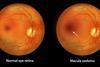
NewsBispecific antibody targets Wnt co-receptors for diabetic macular oedema treatment
Preclinical data presented at ARVO 2026 demonstrate therapeutic potential of targeting Gpr124 and Lrp6 Wnt co-receptors to restore blood-retina barrier integrity in diabetic macular oedema and wet age-related macular degeneration, with trispecific candidate NVQ501 advancing towards IND-enabling studies.
-
 News
NewsMetal microrobots deliver drugs and biopsies before dissolving
Swallowable metal microrobots that transform shape to deliver drugs and collect tissue samples before safely dissolving could replace invasive endoscopy procedures.
-
 News
NewsMachine learning identifies five distinct Parkinson’s disease subtypes
A new study from VIB and KU Leuven has revealed that Parkinson’s disease comprises five distinct molecular subtypes, each requiring tailored therapeutic approaches.
-
 News
NewsSafer diazo compound synthesis advances medicinal chemistry capabilities
Researchers at Tokyo University of Science have developed a safer synthetic route to β-heteroatom-substituted diazo esters, eliminating the need for toxic diazomethane. The azide-to-diazo conversion method uses mild conditions and readily available starting materials, potentially streamlining early-stage drug discovery and compound library synthesis.
-
 News
NewsNew SEE-CITE technology maps drug-protein interactions with targeted precision
A UCLA-led research team has developed SEE-CITE, an advanced photo-crosslinking technology that enables direct comparison of drug-protein binding interactions, potentially aiding the discovery of safer, more effective therapeutics across multiple disease areas.
-
 News
NewsNew dual-action drug candidate extends survival in pancreatic cancer models
Researchers have developed a dual-mechanism compound that significantly extended survival in preclinical pancreatic cancer models by simultaneously activating immune responses and blocking suppressive pathways.
-
 News
NewsAI tool reveals DNA exists in partially open states
Researchers have discovered that DNA wrapped around nucleosomes exists in multiple partially open states rather than simply locked or accessible configurations.
-
 News
NewsHybrid molecule shows enhanced metabolic effects in obesity study
A novel hybrid molecule combining incretin therapy with targeted intracellular delivery of a PPAR agonist has demonstrated strong weight loss and glucose control compared to existing GLP-1/GIP therapies in preclinical studies.