Researchers have identified a key cellular mechanism that drives pulmonary fibrosis and successfully blocked it in mice, reducing lung scarring.
Researchers at the University of California, San Francisco (UCSF) have discovered a critical cellular mechanism that drives pulmonary fibrosis and demonstrated a potential way to block it in mice. Their findings could lead to new therapies for the condition, which currently has very limited treatment options.
“Pulmonary fibrosis has long been one of the most devastating lung diseases, with very limited treatment options,” said Dr Feroz Papa, MD, a professor of medicine at UCSF and co-senior author of the study. “We’re excited to have a new molecular target and begin the work to move this closer to clinical trials.”
Understanding the disease
Pulmonary fibrosis is characterised by thickening and scarring of the lungs, gradually impairing their ability to deliver oxygen. It affects roughly one in 5,000 people, primarily older adults. The condition can appear suddenly or follow environmental exposure, infection, or chemotherapy. With a median survival of about five years after diagnosis, it is as lethal as advanced lung cancer, but far less treatable.
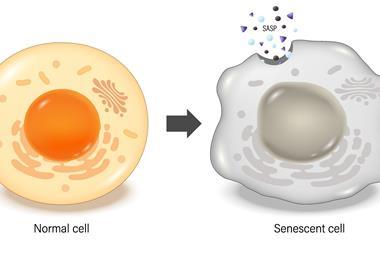
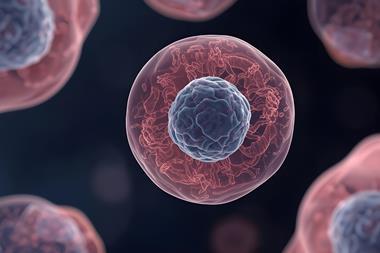
The disease is driven by abnormal lung repair processes. Normally, alveolar type 2 (AT2) cells help maintain healthy air sacs and can transform into other cell types to repair damage. In pulmonary fibrosis, many AT2 cells become stuck in a transitional state, releasing signals that make scarring worse instead of restoring lung function.
A molecular culprit: IRE1α
The UCSF team identified the protein IRE1α as a central component in this process. IRE1α detects misfolded proteins in cells – a signal of stress – and activates a pathway called RIDD, which destroys certain genetic instructions.
IRE1α detects misfolded proteins in cells – a signal of stress – and activates a pathway called RIDD, which destroys certain genetic instructions.
“One of the genes targeted by RIDD is FGFR2, a receptor that normally tells AT2 cells to hold on to their identity,” explained Dr Vincent Auyeung, MD, an assistant professor of medicine at UCSF and first author of the study. “When IRE1α cuts up FGFR2’s instructions, the cell loses its bearings, it stops being the cell it was, but it doesn’t become the cell it’s supposed to be either. And that transitional state itself drives fibrosis.”
The researchers suggest that a similar process may occur in other diseases where cells lose their normal function, including diabetes, neurodegeneration and chronic liver disease.
Blocking the switch in mice
To test a potential therapy, the team treated mice with pulmonary fibrosis using PAIR2, a drug designed to selectively inhibit IRE1α’s harmful RIDD activity while preserving its normal stress-response functions.
It was important that we didn’t completely shut off IRE1α in all the cells of the body, because we don’t want to stop its normal, healthy job.
“It was important that we didn’t completely shut off IRE1α in all the cells of the body, because we don’t want to stop its normal, healthy job,” said Auyeung. “We only wanted to block the RIDD process.”
In treated mice, PAIR2 slowed the progression of lung scarring and partially reversed existing fibrosis. The drug maintained AT2 cell identity, reduced the number of transitional state cells and significantly reduced the accumulation of scar tissue.
Implications for human therapy
The findings provide a proof-of-concept framework for new pulmonary fibrosis treatments, although further research is required to assess safety, delivery and effectiveness in humans.
“This work is the result of many years of basic research on what cell types and molecular pathways are going awry in pulmonary fibrosis,” said co-senior author Dean Sheppard, MD, a professor of medicine at UCSF. “It highlights the importance of fundamental science in leading us to new treatments for diseases that, until now, have seemed untreatable.”



Topics
- Analytical Techniques
- Dean Sheppard (Professor of Medicine at UCSF)
- Digestive disorders
- Disease Research
- Dr Feroz Papa (Professor of Medicine at UCSF)
- Dr Vincent Auyeung (Assistant Professor of Medicine at UCSF)
- Drug Development
- Drug Discovery
- Drug Discovery Processes
- Drug Targets
- High-Throughput Screening (HTS)
- In Vivo Testing
- Molecular Biology
- Molecular Targets
- Stem Cells
- the University of California San Francisco (UCSF)
- Translational Science