



All Artificial Intelligence (AI) articles
-
 Article
Scientists are already using AI agents. Most of what they learn goes unpublished.
Dr Raminderpal Singh speaks to Dr Srijit Seal about how AI agents are changing computational drug discovery, the impact on scientists’ daily work and why valuable findings remain unpublished.
-
 Article
What will it take to trust human-relevant models in drug discovery?
Could organ-on-a-chip technology help identify drug failures before clinical trials? Jim Corbett of Emulate discusses the evidence needed to make human-relevant models reliable tools in drug discovery.
-
 News
NewsSelf-driving labs and advanced cell models feature at ELRIG 2026
From self-driving laboratories to advanced cellular models, ELRIG Drug Discovery 2026 showcases technologies helping researchers generate better data, evaluate drug candidates and improve early discovery.
-
 News
NewsPacBio and TychoBio partner to advance AI-driven RNA therapies
PacBio and AI drug discovery company TychoBio are generating full-length RNA datasets from more than 10,000 samples to train AI models and accelerate the development of RNA therapies for rare diseases.
-
 Article
Finding drug targets through the noise of complex disease
The strongest disease signal may not point to the best drug target. AI could help researchers identify what matters within complex biological networks.
-
 News
NewsSpeakers announced for Protein Sciences in Drug Discovery 2026 in Stevenage
Three leading scientists in protein science, structural biology and AI will headline the Protein Sciences in Drug Discovery conference at GSK Stevenage in November 2026, exploring advances in AI-driven drug design, native mass spectrometry and membrane protein folding.
-
 News
NewsWhiteLab Genomics raises $26m to advance AI-designed genomic medicines
TechBio firm WhiteLab Genomics has closed a $26 million Series B round to expand in vivo validation of its AI-designed genomic medicines across viral and non-viral delivery platforms.
-
 News
NewsELRIG Drug Discovery 2026 celebrates 20th anniversary at ExCeL London
ELRIG Drug Discovery 2026 returns to ExCeL London for its 20th year, with AI, automation and advanced cell models among the technologies set to feature across the two-day programme.
-
 Interview
A sceptical guide to AI agents in drug discovery
AI agents promise to transform drug discovery, but where do they really add value? Dr Eric Ma examines search, model choice, vendor lock-in and why scientific expertise matters more than ever.
-
 News
NewsInsilico Medicine nominates AI-designed ISM1354 GIPR antagonist for obesity
Insilico Medicine has nominated ISM1354, an AI-designed small-molecule GIPR antagonist, as a preclinical candidate for obesity and related metabolic disorders.
-
 Article
Drug discovery in Q3 2026 – what changed and why it matters
Agentic AI, ultralarge virtual screening, molecular glues and human-relevant models were among the key developments in early drug discovery during Q3 2026. Drug Target Review examines what changed, why it matters and what to watch heading into Q4.
-
 Article
AI agents vs scientists: what should we automate in drug discovery?
AI agents can search, analyse and plan across drug discovery workflows, but where should scientists hand over control? We examine what to automate, what to check and where human judgement matters most.
-
 News
NewsInsilico Medicine launches open-source AI longevity research toolkit
Insilico Medicine has published a Cell cover study introducing LongevityBench, a suite of specialised AI models and an autonomous agentic discovery platform.
-
 News
NewsBig Picture Bio raises £2.2m to develop AI cancer combination therapies
UK-based cancer drug discovery company Big Picture Bio has closed £2.2 million in funding to advance AI-designed combination therapies into laboratory validation, using a generative world model to map complex tumour biology across disease sites and patient subgroups.
-
 Article
Fast-tracking AI-designed binders with cell-free expression and SPR
AI can rapidly generate new protein binders, but wet-lab validation remains a major bottleneck. Combining cell-free protein synthesis with surface plasmon resonance (SPR) enables AI-designed antibody binders to be screened directly from crude extracts, bypassing lengthy cell culture and purification steps.
-
 News
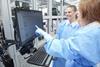
NewsUK’s first AI-robotic organoid lab opens in Liverpool
A £20 million high-security facility in Liverpool is set to accelerate drug and vaccine discovery by integrating artificial intelligence, robotics and human organoid technology within a Category 3 containment environment.
-
 News
NewsOutSee secures £50k innovate UK grant for AI target validation
UK genomics and drug discovery company OutSee has received £50,000 in Innovate UK funding to develop an agentic AI sub-system designed to automate the initial triage of drug targets identified by its Nomaly genomics engine.
-
 Article
Why depression needs a different drug discovery strategy
What if depression is not one disease, but many biologically distinct conditions? A major research programme is investigating what this could mean for biomarkers, drug targets and treatment.
-
 News
NewsInsilico launches specialist AI models for drug discovery chemistry
Insilico Medicine has unveiled a suite of compact, domain-trained AI models targeting ADMET prediction, retrosynthesis and target activity across GPCR and kinase panels, claiming state-of-the-art results on more than 70 benchmarks.
-
 Report
Building biomarkers that drug developers can rely on
Discover how integrated technologies, multiomic approaches and AI are helping researchers translate complex biological signals into actionable tools for drug development and patient care.