



All Bioinformatics articles
-
 Article
Scientists are already using AI agents. Most of what they learn goes unpublished.
Dr Raminderpal Singh speaks to Dr Srijit Seal about how AI agents are changing computational drug discovery, the impact on scientists’ daily work and why valuable findings remain unpublished.
-
 Article
Finding drug targets through the noise of complex disease
The strongest disease signal may not point to the best drug target. AI could help researchers identify what matters within complex biological networks.
-
 Interview
A sceptical guide to AI agents in drug discovery
AI agents promise to transform drug discovery, but where do they really add value? Dr Eric Ma examines search, model choice, vendor lock-in and why scientific expertise matters more than ever.
-
 News
NewsAI consortium targets antibody developability prediction with 10,000-sequence dataset
A new industry consortium led by Ginkgo Datapoints and Apheris is assembling a 10,000-antibody dataset to train AI models that can flag developability problems earlier in the drug discovery pipeline.
-
 News
NewsInsilico Medicine launches open-source AI longevity research toolkit
Insilico Medicine has published a Cell cover study introducing LongevityBench, a suite of specialised AI models and an autonomous agentic discovery platform.
-
 News
NewsMicroproteins emerge as potential new Alzheimer’s targets
Scientists at the Salk Institute have constructed a comprehensive atlas of previously uncharacterised microproteins in the human frontal cortex, identifying over 1,000 novel candidates.
-
 News
NewsWhole-genome sequencing delivers actionable biomarkers in 73 percent of cancer patients
A large real-world study demonstrates that whole-genome sequencing can identify actionable biomarkers in nearly three-quarters of solid cancer patients.
-
 News
NewsOutSee secures £50k innovate UK grant for AI target validation
UK genomics and drug discovery company OutSee has received £50,000 in Innovate UK funding to develop an agentic AI sub-system designed to automate the initial triage of drug targets identified by its Nomaly genomics engine.
-
 Article
Why depression needs a different drug discovery strategy
What if depression is not one disease, but many biologically distinct conditions? A major research programme is investigating what this could mean for biomarkers, drug targets and treatment.
-
 Article
How rare genetic variants could uncover new drug targets
What if extreme levels of common traits have a different genetic basis? New research suggests rare, large-effect variants could help explain the extremes and identify potential drug targets.
-
 Article
How AI-driven systems biology will reset the starting line for drug development
AI is making drug discovery faster, but can it make it more successful? Discover why combining AI with systems biology could help researchers tackle the biological complexity behind drug failure.
-
 News
NewsMulti-target screening refines ADC development for cervical cancer
A large-scale transcriptomic study has pinpointed distinct cell-surface targets for antibody-drug conjugate development across cervical cancer subtypes, revealing how tissue-of-origin comparisons and subpopulation analysis can uncover targets missed by conventional screening approaches.
-
 Article
Why single-cell foundation models have underdelivered and what drug discovery needs instead
Foundation models have delivered breakthroughs in protein biology, but single-cell models have struggled to match them. What is holding them back?
-
 News
NewsWhat Google’s AI talent exodus could mean for future drug discovery
The departure of leading AI researchers from Google to found Discovery Loop raises important questions about the future direction of artificial intelligence in scientific research and drug development.
-
 News
NewsInsilico Medicine launches AI drug discovery benchmarking platform
Insilico Medicine has unveiled a benchmarking platform designed to assess whether AI models can perform genuine drug discovery tasks, using decontaminated real-world datasets and proprietary validated programmes to move beyond inflated benchmark scores.
-
 News
NewsFullscope-seq maps transcript isoforms with spatial single-cell resolution
Researchers have developed Fullscope-seq, a long-read spatial transcriptomics platform that maps alternative transcript isoforms within intact tissues at single-cell resolution – opening new possibilities for target identification and precision biomarker discovery.
-
 Article
AI’s promise and practical limits in drug discovery
From ChatGPT to AI agents and world models, where is AI really heading in drug discovery? Dr Raminderpal Singh explains what researchers should focus on now.
-
 News
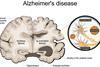
News3D genome reorganisation identified as Alzheimer’s disease molecular hallmark
An international study combining single-cell genomics, spatial transcriptomics and artificial intelligence has identified large-scale changes in three-dimensional genome organisation in Alzheimer’s-affected brain cells, establishing chromatin architecture as a previously overlooked component of the disease’s molecular pathology and a potential framework for future therapeutic targeting.
-
 News
NewsInsilico Medicine nominates ISM9528 non-opioid chronic pain candidate using AI
Insilico Medicine has nominated ISM9528, an orally available, brain-penetrant non-opioid candidate targeting a previously unrecognised pain mechanism, as its 31st AI-generated preclinical compound since 2021, with efficacy exceeding morphine in some preclinical models.
-
 News
NewsSpatial map reveals hidden complexity of bladder cancer tumours
Researchers at MD Anderson Cancer Center have used spatial transcriptomics to chart the internal architecture of muscle-invasive bladder cancer, revealing that luminal and basal cancer cell programmes coexist within single tumours – a finding with significant implications for treatment stratification.