



All Translational Science articles – Page 4
-
 Article
Designing targeted assays for clinical success from the start
Why do some targeted assays move smoothly from discovery to clinical practice while others stall? The answer often lies in the earliest design decisions, where choices about samples, platforms and data determine what is possible later.
-
 News
NewsLight-driven chemistry offers faster, greener drug design
Scientists at the University of Cambridge have developed a light-powered method to modify complex drug molecules without toxic chemicals, enabling faster, cleaner and more efficient drug development.
-
 News
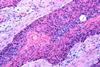
NewsScientists develop cream that triggers skin’s anti-cancer defence
A topical cream that activates the skin’s immune defences has been shown to suppress tumour growth in early models of cutaneous squamous cell carcinoma.
-
 Article
Discovery is changing – and automation leads the way
Automation is helping drug discovery teams screen faster, cut costs and run complex assays at scale – but its real value lies in what happens next.
-
 News
NewsSimple amino acid mix dramatically improves gene therapy delivery
Scientists have discovered that adding a simple cocktail of three common amino acids to lipid nanoparticle injections can dramatically improve the delivery of mRNA and CRISPR therapies.
-
 News
NewsDeep-sea compound yaku’amide B shows new cancer-fighting mechanism
Japanese researchers have discovered how yaku’amide B, a rare compound from deep-sea sponges, targets aggressive cancer cells.
-
 News
NewsLab-made lncRNA could lead to new anti-inflammatory drugs
Scientists at the University of Toronto have created long noncoding RNA outside living cells for the first time, a breakthrough that has already produced experimental anti-inflammatory molecules.
-
 Article
Navigating IND delays: strategic options for early-phase biotech development
As IND timelines lengthen, early-stage biotechs face growing uncertainty in early clinical planning. This article explores how sponsors are increasingly diversifying their development strategies and why New Zealand represents an attractive option.
-
 News
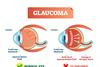
NewsNew target found for glaucoma treatment
Scientists have discovered that specialised immune cells in the eye help keep its drainage system clear and regulate pressure, which could inform new treatments for glaucoma.
-
 Article
World ADC 2026: where antibody-drug conjugates are heading
At World ADC London 2026, experts highlighted how advances in payload design, targeting strategies and AI-driven discovery are changing antibody–drug conjugate development.
-
 News
NewsNew AI tool could accelerate drug discovery and cut lab costs
Scientists have developed a machine learning system that can predict how complex chemical reactions will produce the correct molecular form for medicines.
-
 News
NewsBlocking FAK protein may help to overcome resistance in ovarian cancer
A new preclinical study has demonstrated that locking the focal adhesion kinase (FAK) protein may help the immune system better detect and attack ovarian tumours.
-
 Interview
How self-driving labs are changing drug development
Automation and artificial intelligence are changing how scientists design, test and refine new molecules. At the University of Toronto, Stuart R Green and the Acceleration Consortium are building a self-driving lab that could change the pace of early drug discovery.
-
 Article
International Women’s Day: digital pathology in early drug discovery
For International Women’s Day, Dr Amanda Hemmerich, Global Director of Digital Pathology & Innovation at IQVIA Laboratories, describes how digital pathology is being applied in early drug development and what it takes to build credibility in a multidisciplinary technical field.
-
 News
NewsGut drug boosts liver health in mice after small bowel surgery
Researchers at Washington University have developed a gut-specific drug that protects the liver and improves nutrient absorption in mice after small bowel surgery.
-
 News
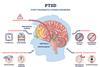
NewsPsychedelics may repair brain myelin to aid PTSD recovery
Psychedelic drugs such as psilocybin and MDMA may help repair the brain’s insulating myelin layer, according to new research.
-
 Article
How brain donation is driving autism research
To study the biological underpinnings of autism, researchers must examine the human brain itself. This article explores how Autism BrainNet supports this work through coordinated tissue donation and preservation.
-
 Article
Why most labs are not ready for AI: Cenevo shares what must change
Most labs want to use AI, but few have the digital foundations to support it. Cenevo’s leaders explain why progress is slow and what laboratories must fix before AI can deliver real value.
-
 News
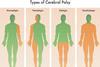
NewsStem cells from baby teeth could treat cerebral palsy
Japanese researchers have shown in a rat study that stem cells derived from naturally shed baby teeth may improve motor and cognitive impairments in chronic-phase cerebral palsy.
-
 Article
Preclinical takeaways from the World ADC Conference London
Experts from the World ADC Conference in London highlight how patient-centric, predictive preclinical tools and innovative ADC designs are improving safety, efficacy and clinical translation.