



All Translational Science articles – Page 5
-
 News
NewsBlocking growth hormone may improve resistant lung cancer treatment
Ohio University researchers have discovered that blocking the growth hormone receptor could make lung cancer treatments more effective, offering potential new treatments for patients with therapy-resistant tumours.
-
 Article
Drug discovery integration takes centre stage at SLAS Boston 2026
Drug discovery has no shortage of powerful technologies, but the challenge now is making them work together. At SLAS Boston 2026, researchers and technology developers revealed how laboratories are connecting the entire experimental pipeline.
-
 News
NewsWater interaction key to smarter nanomedicine design
Scientists at Arizona State University have discovered that the way nanoparticles interact with water determines how they behave inside the human body, providing a new thermodynamic framework that could lead to more effective nanomedicines.
-
 Article
Making immunotherapy safer and more accessible through continuous digital monitoring
Immunotherapies such as CAR-T are extending survival, yet reliance on inpatient monitoring for cytokine release syndrome continues to restrict access. This article explores how continuous digital monitoring and AI-driven analysis could enable safer outpatient delivery and support more scalable immunotherapy adoption.
-
 News
NewsNew molecular pathway links liver congestion to fibrosis
Japanese researchers have identified a molecular pathway linking chronic liver congestion to fibrosis and tumour formation, offering a potential new target for therapies to prevent serious liver disease.
-
 News
NewsPEX38 protein identified as drug target for trypanosome parasites
A newly identified protein essential to the survival of trypanosome parasites could offer a highly targeted route for future drug development.
-
 Article
Integrated proteo-transcriptomics reveals multiple therapeutic targets in Candida auris
Scientists at the Medical University of Vienna identify multiple mechanisms of multidrug resistance in Candida auris, revealing new therapeutic opportunities.
-
 News
NewsNew precision GLP-1 agonist could reduce side effects in patients
Researchers have developed a novel GLP-1 receptor agonist that preserves blood sugar control while reducing nausea and vomiting, offering a potential safer approach to treating diabetes and obesity.
-
 News
NewsARK1 identified as target for future malaria drugs
Scientists have identified Aurora-related kinase 1 (ARK1) as a vital protein in malaria parasite development, a breakthrough that could enable future drugs designed to block transmission.
-
 Interview
Why PDE4B matters in the search for better IPF and PPF therapies
Could targeting a single enzyme play a role in slowing lung fibrosis? Boehringer Ingelheim’s research into PDE4B is offering promising clues.
-
 News
NewsCircular RNA drives 50-fold boost in eye gene therapy
New in vivo data show a circular RNA platform can deliver up to a 50-fold increase in gene expression in the eye compared with conventional mRNA-based AAV approaches.
-
 News
NewsBispecific EGFR/EphA2-targeting ADC shows promise in colorectal cancer
Promatix Biosciences Ltd has announced positive preclinical data for its first-in-class bispecific antibody–drug conjugate, PBS293-MMAE, demonstrating enhanced tumour selectivity, improved suppression and reduced toxicity in colorectal cancer models.
-
 News
NewsHow tuberculosis bacteria outsmart human immune cells
Scientists have discovered how tuberculosis bacteria stiffen immune cell membranes to survive inside the body, a breakthrough that could lead to the development of new TB treatments.
-
 News
NewsMessy lipid nanoparticles deliver RNA more effectively
New research shows that lipid nanoparticles used in mRNA vaccines may deliver RNA more effectively when their structure is disorganised.
-
 News
NewsCamel-derived peptides target multidrug bacteria
Researchers at Sultan Qaboos University have identified three antimicrobial peptides from dromedary camels that demonstrate potent activity against multidrug-resistant bacteria.
-
 News
NewsCat cancer study reveals targets for human drugs
A major international study has discovered genetic similarities between cancers in cats and humans, potentially helping to inform future drugs that could benefit both species.
-
 Article
Advancing drug discovery with reproducible, animal-free 3D systems
Lukas Gaats and his team at mo:re are using automation to bring consistency to 3D cell culture and move drug discovery beyond animal models. Read on to find out how.
-
 Article
The map and compass: integrating BD&L early to de-risk drug discovery
In drug discovery, great science alone is not enough because commercial viability ultimately decides which programmes survive and attract partners. This Q&A explores how integrating Business Development and Licensing (BD&L) from the earliest stages can guide R&D strategy, sharpen decisions and de-risk the path to market.
-
 News
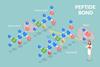
NewsNew method boosts production of non-natural amino acids for peptide assembly
A team of researchers has developed a faster, simpler method for creating non-natural amino acids and assemble them into peptides, a breakthrough that could accelerate peptide research and provide new tools for designing drugs.
-
 News
NewsLario raises $2.4m for neurological drug development
Lario Therapeutics has secured $2.4 million in funding from The Michael J. Fox Foundation for Parkinson’s Research and Wellcome to accelerate development of its neuronal calcium channel platform.