



The Liverpool Accelerate Laboratory will deploy AI-driven robotics alongside human organoid models to advance infectious disease research at scale.
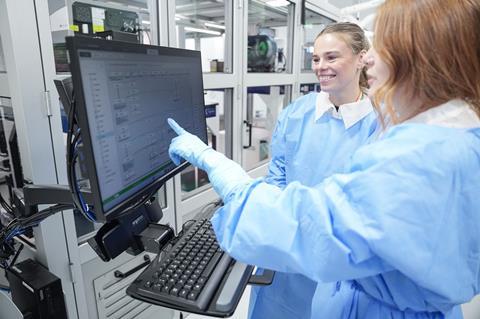
A new £20 million high-security robotic laboratory designed to accelerate research into deadly infections and diseases has officially opened in Liverpool.
The Liverpool Accelerate Laboratory is the first facility of its kind in the UK. Developed through the LSTM-led iiCON: Infection Innovation Consortium and supported by funding from the Liverpool City Region Combined Authority, it will combine artificial intelligence, robotics and human organoid technology to advance the development of drugs and vaccines.
AI and robotics meet human organoids
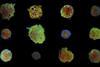
The lab will allow researchers to use lab-grown human organoids to investigate infectious diseases and test potential treatments, helping the industry speed up drug discovery while reducing reliance on animal testing.
Professor Giancarlo Biagini, Pro Vice-Chancellor for Research and Innovation at Liverpool School of Tropical Medicine, said: “The Liverpool Accelerate Laboratory is an advanced facility that builds on years of pioneering organoid research at LSTM and partner organisations.
“It harnesses the potential held by this exciting technology to accelerate the development of advanced human infection models for emerging and high-consequence diseases.
“By incorporating machine learning, AI and robotics in a highly secure Category 3 facility, we are automating the development and commercialisation of these advanced organoid models, to expand the scale and speed of infectious disease research and development while delivering precision and reproducibility.”
According to Professor Janet Hemingway, founding director of iiCON, the development of advanced organoid models could support commercial innovation and accelerate the discovery of a new generation of drugs and vaccines. The facility would also strengthen Liverpool’s position as a global hub for infection research, while supporting industry, creating high-value jobs and delivering benefits for patients, communities and the wider economy.
Research using human organoids is at the cutting-edge of infection research and development (R&D) – moving drug discovery away from animal testing and offering new ways of shaping more targeted treatments to respond to some of our most challenging infections.”
Professor Janet Hemingway, Founding Director of iiCON
High-security research at scale
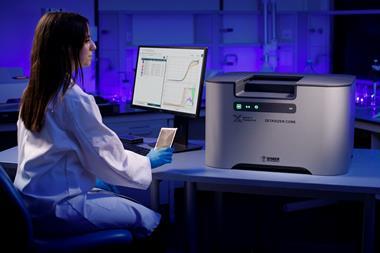
The Category 3 laboratory will enable scientists to work with high-consequence pathogens including salmonella and tuberculosis. Automated systems will allow researchers to study how these infections affect organoids and assess the potential effectiveness of new treatments in humans.
Claire Caygill, a post-doctoral research assistant involved in integrating robotics and biology at the facility, said: “The amount of data the robotics will be able to capture is way beyond what we would be capable of so this is going to be an exciting new challenge for us.
“We now have the capacity to work on high-consequence pathogens without needing a human interface, so it takes away the risk for lab workers while allowing us to do experiments at scale and at speed.”
The steel-clad facility is also designed to meet forthcoming changes to the Terrorism Act and is intended to become an important UK biosecurity asset.
Boost for Liverpool’s life sciences sector
The facility is due to open fully in 2027 and is expected to create well-paid jobs and generate £40 million in investment during its first three years.
Open to businesses of all sizes, the laboratory will support initial pilot research to allow companies to test new approaches using organoid experiments, with SMEs and start-ups developing new drugs and vaccines expected to benefit in particular.
Liverpool City Region Mayor Steve Rotheram said: “Liverpool has been leading the fight against infectious diseases for generations and this new facility will help keep us at the cutting edge.
“We’re bringing together AI, robotics and world-class research in one place, which means we can develop new drugs and vaccines faster, save lives and reduce the need for animal testing.
“This is exactly the kind of investment our Life Sciences Innovation Zone was designed to deliver, creating good jobs, attracting further investment and cementing our position as a global leader in infection innovation.”







No comments yet