

Charles River and Synthace announce partnership for assay development
Posted: 9 February 2026 | Drug Target Review | No comments yet
Announced at SLAS 2026 in Boston, Synthace have partnered with Charles River Laboratories to advance assay development, combining software, automation and experimental design.
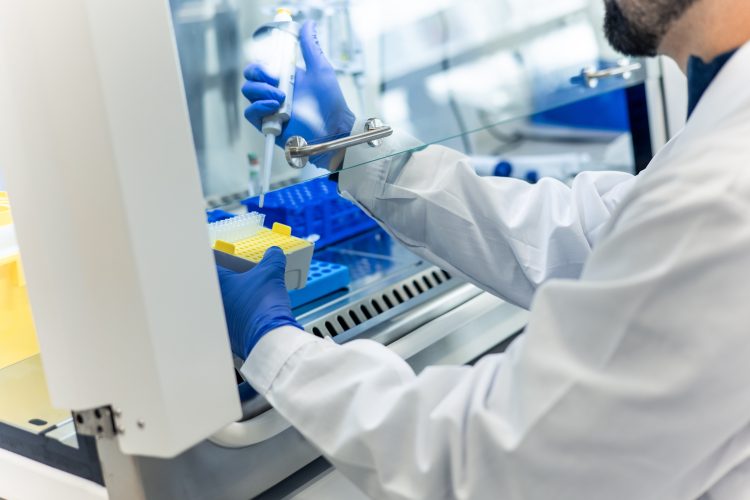
Synthace, a leading provider of software and services for assay development, has announced a collaboration with Charles River Laboratories International, Inc. (Charles River), a global provider of drug discovery, development, testing and manufacturing solutions. The partnership, announced at SLAS 2026 in Boston, will allow Charles River’s clients to access Synthace’s approach to developing, automating and transferring assays faster and more efficiently than traditional methods.
Proven success with complex assays
The collaboration follows a successful proof-of-concept project in which Charles River used Synthace’s software to rapidly develop a 1536-well assay and complete an assay transfer. The project implemented a design of over 700 experimental conditions across multiple laboratories and equipment, demonstrating the software’s ability to handle complex workflows.
Reproducibility is a long-term challenge in biological research, with 72 percent of researchers acknowledging a crisis in experimental reproducibility.1,2 The issue is estimated to cost the industry $100 billion annually in preclinical research alone. Streamlining assay development and transfer is expected to reduce delays, improve reproducibility and enhance efficiency in drug discovery.
Overcoming traditional bottlenecks
Assays provide critical insight into how molecules might become effective therapies but developing them is often a slow and resource-intensive process. Biological complexity, differences between laboratories and equipment, and the rising use of artificial intelligence (AI) for target identification all increase the workload for research teams. AI accelerates computational biology but still requires validation through wet lab experiments, adding to delays.
Assays provide critical insight into how molecules might become effective therapies.
Many R&D teams still use one-factor-at-a-time (OFAT) methods to develop assays, which are time consuming and limited in scope. Synthace helped Charles River derisk assay development and transfer by combining Design of Experiments (DoE), automation and software. While DoE has historically been considered complex and resource intensive, the integration of Synthace’s technology has made it accessible for broader laboratory use.
High-throughput experimentation
With Synthace integrated into Charles River’s lab automation, teams are able to run high-throughput DoE across multiple locations and users. This enables more robust and insightful experimentation, rapid generation of conclusive data and seamless transfer between laboratories and equipment.
“Computational biology has taken a significant leap forward with AI, but in doing so, the lab risks being left behind,” said Markus Gershater, CEO and Co-founder of Synthace. “Combining DoE, automation and software is the answer, as together they deliver a step-change in experimental power to unpick biological complexity. We call this High Dimensional Experimentation, and it will be the next generation of experiments for drug discovery.”
A step forwards for drug discovery
By combining software, automation and robust experimental design, Synthace and Charles River aim to change how assays are developed, validated and shared across laboratories. The collaboration promises to improve reproducibility, accelerating the pathway from discovery to drug development.
We’re dramatically reducing the amount of time we need to develop robust assays and ultimately speeding up this critical part of drug discovery.
“Synthace allows us to conduct more technically demanding experiments with greater scientific rigour. With this, we know that the assays we’re developing are more robust, allowing a greater degree of certainty in the results we’re seeing, while also improving their reproducibility,” said Dr Rob Howes, Senior Director of Small Molecule Discovery at Charles River. “In doing so, we’re dramatically reducing the amount of time we need to develop robust assays and ultimately speeding up this critical part of drug discovery.”
References:
- Baker M. 1,500 scientists lift the lid on reproducibility. Nature 533, 452–454 (2016). https://doi.org/10.1038/533452a
- Cobey KD, Ebrahimzadeh S, Page MJ, et al. Biomedical researchers’ perspectives on the reproducibility of research. PLoS biology, 22(11), e3002870 (2024). https://doi.org/10.1371/journal.pbio.3002870
Related topics
Assays, Cell-based assays, Drug Development, Drug Discovery, Drug Discovery Processes, High-Content Assays, Lab Automation, Research & Development
Related organisations
Charles River Laboratories International, Synthace
