



All Cancer articles – Page 5
-
 News
NewsBispecific EGFR/EphA2-targeting ADC shows promise in colorectal cancer
Promatix Biosciences Ltd has announced positive preclinical data for its first-in-class bispecific antibody–drug conjugate, PBS293-MMAE, demonstrating enhanced tumour selectivity, improved suppression and reduced toxicity in colorectal cancer models.
-
 News
NewsMessy lipid nanoparticles deliver RNA more effectively
New research shows that lipid nanoparticles used in mRNA vaccines may deliver RNA more effectively when their structure is disorganised.
-
 News
NewsCat cancer study reveals targets for human drugs
A major international study has discovered genetic similarities between cancers in cats and humans, potentially helping to inform future drugs that could benefit both species.
-
 News
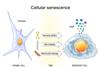
NewsTargeting senescent cells may reduce postpartum breast cancer risk
A study from the Institut Pasteur reveals how cellular senescence during mammary gland involution after pregnancy may both aid tissue repair and promote postpartum breast cancer.
-
 News
News$3.2m project targets aggressive MDM2 in breast cancer
A University of Houston scientist has joined a $3.2 million research collaboration to develop a new drug targeting one of the key drivers of triple-negative breast cancer.
-
 News
NewsInsilico and MSK partner on AI research for gastroesophageal cancer
A new research collaboration between Insilico Medicine and Memorial Sloan Kettering Cancer Center aims to harness generative AI technology to identify novel therapeutic targets for gastroesophageal cancers.
-
 News
NewsAMD3100 drug could boost immunotherapy in rare liver cancer
A rare liver cancer that primarily affects young people may soon have a new treatment option, after researchers found that an existing FDA-approved drug could enable immunotherapy to work effectively against tumours.
-
 Article
Engineering the next generation of T-cell engagers
T-cell engagers are a branch of immunotherapy that has undergone considerable change since their clinical inception. Andrew J Souers, VP, Oncology Discovery Research at AbbVie, elucidates the current understanding of their biology and expanding focus areas of application.
-
 News
NewsNew OC-PAM AI tool tracks cancer organoid drug response
Scientists have developed an AI-enhanced imaging platform that enables non-invasive, label-free and longitudinal monitoring of cancer organoids and spheroids.
-
 News
NewsSiglec-15 identified as key target in paediatric brain cancer
Scientists have identified a previously unknown lysosomal signalling pathway that drives growth in drug-resistant SHH medulloblastoma, which could lead to more precise and less harmful treatments for children with aggressive brain tumours.
-
 News
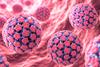
NewsHow vaccine structure shapes immune response to HPV tumours
Researchers have discovered that reorganising a single cancer-targeting peptide within a spherical nucleic acid vaccine dramatically boosts the immune system’s ability to attack HPV-driven tumours.
-
 News
NewsDrug Target Review’s women in STEM
For International Day of Women and Girls in Science, Drug Target Review highlights articles published over the past year that were authored by women, celebrating their contributions to research.
-
 News
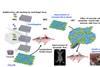
NewsCentrifuge technique creates functional bioengineered lymph nodes
Using a straightforward cell stacking method, researchers have regenerated functional lymph nodes, offering a potential long-lasting therapy for secondary lymphedema and creating new opportunities for immunology and oncology drug discovery.
-
 News
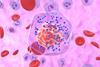
NewsNew dual CDK approach tackles drug-resistant breast cancer
A new preclinical study suggests that combining next-generation CDK2 inhibitors with existing CDK4/6 therapies could overcome drug resistance in breast cancer, delivering durable tumour control across multiple subtypes.
-
 News
NewsELRIG announces keynote speakers for Cell and Gene Therapy 2026 in Cambridge
ELRIG (European Laboratory Research & Innovation Group) has announced the keynote speakers for its inaugural Cell and Gene Therapy 2026 conference, taking place at Hinxton Hall in Cambridge from 9–10 March.
-
 News
NewsHIV drug Maraviroc could be used to slow glioblastoma growth
Researchers have discovered how seemingly supportive brain cells help glioblastoma thrive, whilst identifying an existing HIV drug, Maraviroc, that could be repurposed to slow tumour growth.
-
 Article
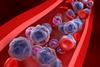
Targeting inflammatory cell death to tackle relapse in AML
Relapse in acute myeloid leukaemia is driven by malignant cells that resist standard treatment. A synthetic cytokine approach in development targets inflammatory cell death pathways to suppress leukaemic cells while preserving healthy haematopoiesis.
-
 News
NewsNew Alco5 platform could advance cancer antibody therapies
Biotech company, Tubulis, has published preclinical data on its Alco5 antibody-drug conjugate platform, demonstrating the ability to link antibodies with previously inaccessible hydroxy-containing drugs.
-
 News
NewsVirus-mimicking LENN nanoparticles deliver mRNA to bladder cancer cells
Researchers have developed virus-inspired LENN nanoparticles that deliver mRNA therapies directly to bladder cancer cells, remain stable after freeze-drying and avoid triggering immune responses.
-
 News
NewsNew TECHNO platform enables large-scale human gene integration in mice
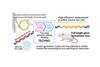
Japanese researchers have developed a new gene-editing platform, TECHNO, that allows entire human genes – including regulatory regions – to be inserted into mice, allowing for better disease modelling and drug testing.