



All Drug Discovery articles – Page 4
-
 Article
Women in STEM: resilience and leadership in rare disease research
Rare neurological diseases remain one of the most challenging areas in drug discovery, with many patients still lacking treatment options. Dr Nitza Thomasson discusses returning to Servier to lead its rare neurology therapeutic area and explains why resilience, curiosity and persistence are essential for those looking to build a meaningful career in STEM.
-
 News
NewsAI-designed viral vectors achieve 50-fold brain enrichment over AAV9
WhiteLab Genomics has presented preclinical data showing that viral vectors designed using artificial intelligence achieved approximately 50-fold higher DNA enrichment in the brain compared to AAV9, with no detectable liver signal following intravenous administration in mice.
-
 News
NewsNew RNA sequencing method reveals molecular structures at single-molecule resolution
A*STAR scientists have developed sm-PORE-cupine, a nanopore-based sequencing method that maps individual RNA structures at single-molecule resolution.
-
 News
NewsCAR T cell therapy eliminates glioblastoma tumours in preclinical study
A next-generation CAR T cell immunotherapy targeting the urokinase receptor has eliminated treatment-resistant glioblastoma tumours in preclinical models.
-
 News
NewsAI system transforms weak antibiotics into powerful treatments
University of Pennsylvania researchers have developed ApexGO, an AI system that refines imperfect antibiotic candidates through calculated modifications rather than database screening.
-
 News
NewsNew malaria drug T111 targets all parasite stages in single treatment
A novel compound developed over 15 years of research has demonstrated unprecedented activity against liver, blood and sexual stages of Plasmodium parasites, possibly positioning it as a potential cure for malaria.
-
 News
NewsAI system reduces animal testing in drug discovery by 50 percent
German researchers have developed genESOM, a generative AI system that could reduce animal numbers in preclinical drug testing by 30 to 50 percent.
-
 News
NewsMolecular switch discovery could lead to new bone disease treatments
A molecular switch that activates an alternative energy-burning pathway in brown fat has been identified by McGill University researchers, offering potential new approaches to treating bone disease and metabolic disorders through the TNAP enzyme’s glycerol pocket.
-
 Article
One sample. One shot. The pressure on sample preparation in drug discovery
In drug discovery, a failed sample run is not just a setback – it can mean months of lost work and significant cost. At Analytica 2026, three Eppendorf experts explain how the right tools, workflows and mindset are changing that.
-
 News
NewsProtein modifications control drug binding and efficacy in new study
New research reveals that subtle chemical changes to proteins after synthesis play a critical role in determining drug-protein interactions.
-
 Article
Turning CRISPR hits into confident drug discovery decisions
Functional genomics is central to modern drug discovery, yet high attrition rates persist. In this article, Dr Salman Tamaddon-Jahromi, a postdoctoral research associate at the University of Cambridge, discusses how end-to-end CRISPR screening strategies, iPSC-derived neuronal models and layered quality control can convert functional genomics signals into actionable therapeutic hypotheses.
-
 News
NewsOpenBind launches AI model to accelerate drug discovery
Diamond Light Source has launched OpenBind v1, an open-access AI model and dataset designed to address critical data shortages in drug discovery by providing standardised protein-drug binding measurements at atomic resolution.
-
 News
NewsNew framework evaluates AI reliability in immune system prediction
Researchers at the University of South Florida have developed a comprehensive framework to test how accurately AI systems can predict immune responses, addressing critical questions about the reliability of computational tools in drug discovery.
-
 News
NewsNovel enzyme inhibitors exploits key weakness in malaria parasite
Researchers from the Universities of Bath and Leeds have engineered a novel class of aminopeptidase P inhibitors with enhanced binding affinity and antiparasitic activity against Plasmodium falciparum.
-
 News
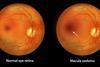
NewsBispecific antibody targets Wnt co-receptors for diabetic macular oedema treatment
Preclinical data presented at ARVO 2026 demonstrate therapeutic potential of targeting Gpr124 and Lrp6 Wnt co-receptors to restore blood-retina barrier integrity in diabetic macular oedema and wet age-related macular degeneration, with trispecific candidate NVQ501 advancing towards IND-enabling studies.
-
 Report
Organoids and Organ Chips: Improving Decision-Making in Early Drug Discovery
Traditional preclinical models do not always predict what will happen in patients. This report explores how organoids, organ-on-chip systems and advanced imaging are being used to generate more clinically relevant insights and support better decision-making earlier in drug discovery.
-
 News
NewsSafer diazo compound synthesis advances medicinal chemistry capabilities
Researchers at Tokyo University of Science have developed a safer synthetic route to β-heteroatom-substituted diazo esters, eliminating the need for toxic diazomethane. The azide-to-diazo conversion method uses mild conditions and readily available starting materials, potentially streamlining early-stage drug discovery and compound library synthesis.
-
 Article
The scale divide: competing strategies in AI drug discovery
Two approaches to AI in preclinical drug discovery are diverging, from multi-thousand GPU systems to models with only a handful of parameters, with early results raising questions about which will deliver.
-
 News
NewsNew SEE-CITE technology maps drug-protein interactions with targeted precision
A UCLA-led research team has developed SEE-CITE, an advanced photo-crosslinking technology that enables direct comparison of drug-protein binding interactions, potentially aiding the discovery of safer, more effective therapeutics across multiple disease areas.
-
 Article
When scale meets insight: reinventing SPR for the future of drug discovery
Carterra’s new 48-channel SPR platform reimagines throughput, automation and data quality for modern discovery workflows.