



All Drug Discovery articles – Page 6
-
 Article
AI builds dual-action cancer drug targeting PKMYT1
Research published in Nature Communications shows how generative AI can be used to design complex dual-action cancer drug candidates. Insilico Medicine has developed a PKMYT1 degrader that both eliminates the target protein and blocks its activity, demonstrating the growing role of AI in advanced drug discovery.
-
 News
News3D-printed drug carriers deliver chemotherapy directly to tumours
Novel FRESH 3D printing technology enables fabrication of nanoscale spanlastic carriers for localised anticancer drug delivery. Early in vitro studies have demonstrated enhanced cellular uptake and tumour cell killing whilst potentially minimising systemic toxicity associated with conventional chemotherapy administration.
-
 Article
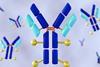
Improving selectivity in antibody–drug conjugates
Promatix Biosciences is developing a new generation of bispecific antibody–drug conjugates using proprietary membrane proteomics data to identify highly selective target pairings. CEO Dr Michael Hunter explains how the company’s TXPro database enables discovery of previously unexplored tumour biology to improve therapeutic index and reduce on-target/off-tumour toxicities in solid tumours.
-
 Article
Operational data: the hidden driver of faster drug discovery
The key to faster, smarter drug discovery lies in data that’s often overlooked. By exposing hidden delays and inefficiencies, this data enables teams to shorten discovery cycles and progress promising candidates faster.
-
 News
NewsSmall molecule SK-129 targets protein aggregation in Parkinson’s disease
International researchers have identified a small molecule capable of crossing the blood-brain barrier to prevent pathological protein aggregation in Parkinson’s disease, Lewy body dementia and multiple system atrophy.
-
 Article
From fragments to maps: scaling drug–target interaction data
Most drug–target data were never designed to be compared at scale. Pharmome mapping takes a different approach, building a shared dataset intended to support more predictable discovery.
-
 News
NewsDNA-based system delivers targeted cancer drugs via biomarker logic
Researchers at the University of Geneva have developed a DNA-based drug delivery platform that uses molecular logic gates to identify cancer cells through dual biomarker recognition. The system activates cytotoxic agents only when both tumour markers are present, offering enhanced specificity over current antibody–drug conjugates while enabling deeper tissue penetration and multi-drug combinations.
-
 News
NewsHuman antimicrobial peptide dermcidin shows antiviral activity against influenza
Researchers at Fisabio Foundation have discovered that dermcidin, an antimicrobial peptide naturally present in human sweat, exhibits antiviral activity against influenza by binding to viral haemagglutinin and preventing cell fusion, opening new possibilities for innate immunity-based therapeutics.
-
 News
NewsMirrored molecules target disordered proteins in Alzheimer’s disease
Researchers at Kobe University have developed a novel approach to Alzheimer’s disease treatment by engineering right-handed amino acid chains that bind to amyloid-beta proteins. The method, inspired by materials science principles of chirality, demonstrated effective inhibition of toxic protein aggregation in mouse brain cell cultures, maintaining cell viability where amyloid-beta alone reduced it by 50 percent.
-
 Report
CRISPR & Genomics: Turning Data into Confident Drug Discovery Decisions
Early drug discovery has no shortage of genomic data, but confidence remains scarce. This report examines how CRISPR, functional genomics and human-relevant models are being applied to determine which signals matter, how they influence disease biology and which targets and strategies are worth pursuing.
-
 News
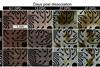
NewsScientists scale up neural organoid studies for drug testing
Researchers at King’s College London have developed a hybrid neural organoid approach that addresses longstanding limitations in scalability, reproducibility and longitudinal analysis. By dissociating 3D organoids and culturing pooled cells on microelectrode arrays, the team created 2D networks that retain cellular diversity whilst enabling consistent, long-term tracking of neural activity across parallel cultures.
-
 News
NewsImplantable ‘living pharmacy’ device produces multiple drugs inside the body
Scientists have developed an implantable device that acts as a ‘living pharmacy’, using engineered cells to continuously produce multiple therapeutic biologics inside the body. The wireless system, which generates its own oxygen supply, maintained stable drug levels for 30 days in preclinical studies.
-
 Interview
Physics-based modelling offers a new way to study drug targets
Australian start-up OmnigeniQ has demonstrated what it describes as the first deterministic, physics-based computation of a human protein in its native state.
-
 Interview
From scientist to bioinformatician: how AI coding tools dissolved the activation energy barrier
A biotech CEO with decades of scientific experience but sporadic coding practice gained practical bioinformatics capabilities in six weeks using AI coding assistants.
-
 News
NewsNew AI-designed T-cell engager LGTX-101 to be presented at AACR in San Diego
LabGenius Therapeutics will present preclinical data for LGTX-101, its AI-designed Nectin-4 x CD3 T-cell engager, at AACR 2026 in San Diego.
-
 News
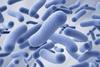
NewsProbiotic bacteria successfully attacks tumours in preclinical models
Engineered probiotic bacteria that can deliver cancer-fighting drugs directly to tumours have shown promising results in mice, offering a potential new approach to targeted cancer therapy.
-
 News
NewsELRIG announces keynote speakers for Advances in Cell-based Screening 2026 in Gothenburg
ELRIG has announced the keynote speakers for its 2026 Advances in Cell-based Screening conference in Gothenburg, where scientists will gather to explore how human-first models, advanced cell biology and AI are changing the future of drug discovery.
-
 Article
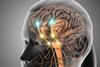
Why NMDA receptor modulation remains central to next-generation depression therapies
A key player in brain communication and mood regulation, the pharmaceutical industry views the NMDAR as the central pillar for next-generation therapies for depression. Dirk Beher from FundaMental Pharma reveals new strategies for targeting this important receptor.
-
 News
NewsLight-driven chemistry offers faster, greener drug design
Scientists at the University of Cambridge have developed a light-powered method to modify complex drug molecules without toxic chemicals, enabling faster, cleaner and more efficient drug development.
-
 News
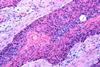
NewsScientists develop cream that triggers skin’s anti-cancer defence
A topical cream that activates the skin’s immune defences has been shown to suppress tumour growth in early models of cutaneous squamous cell carcinoma.