



All Drug Discovery articles – Page 3
-
 News
NewsELRIG announces keynote speakers for Drug Discovery 2026 conference in London
ELRIG has announced its keynote speaker programme for Drug Discovery 2026, with LifeArc’s Dr Sam Barrell CBE delivering the opening address.
-
 Article
From chemist to AI agent builder: inside the rise of agentic AI in drug discovery
Dr Raminderpal Singh speaks with Dr Srijit Seal about why specialised AI agents are outperforming general-purpose models in drug discovery and what a new consortium paper shows about their use in practice.
-
 News
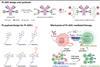
NewsPlatinum-antibody conjugates enhance immunotherapy while reducing chemotherapy toxicity
A novel platinum(IV)-antibody conjugate platform delivers low-dose chemotherapy directly to tumours, upregulating MHC-I expression and enhancing anti-PD-1 responses while minimising systemic exposure. The approach addresses immune evasion mechanisms that limit checkpoint inhibitor efficacy.
-
 News
NewsParse Biosciences and bit.bio map transcription factor-driven cell identity
Parse Biosciences and bit.bio have formed an alliance to map transcription factor-driven cell identity using single cell sequencing and causal transcriptomics.
-
 Article
Machine learning identifies biological signals linked to emotional hunger
Researchers at Phenomix Sciences are using machine learning and genetic risk scoring to investigate emotional hunger, an obesity phenotype linked to emotional and reward-driven eating behaviours. Dr Timothy O’Connor discusses how the approach could improve patient stratification, obesity research and treatment selection.
-
 News
NewsGinkgo Bioworks launches ADME-One platform for early-stage screening
Ginkgo Bioworks has launched ADME-One, an integrated platform combining high-throughput ADME testing with AI-powered human pharmacokinetic projections.
-
 News
NewsAI platform identifies novel gp130 inhibitor for colorectal cancer
An AI-assisted drug discovery platform using transfer learning has identified a promising gp130 inhibitor for colorectal cancer.
-
 News
NewsAI identifies 23 antiviral candidates for Bundibugyo Ebola strain
US researchers have deployed artificial intelligence and molecular docking software to identify 23 antiviral compounds with potential activity against Bundibugyo Ebolavirus, as the rare strain continues to spread in the Democratic Republic of Congo with a fatality rate approaching 40 percent.
-
 Article
Beyond tangles: why soluble intracellular tau should guide drug discovery
Tau tangles are a hallmark of Alzheimer’s disease and related disorders, but evidence suggests the real damage may come from rare, soluble tau species inside neurons. Targeting these hidden drivers of circuit dysfunction could be key to restoring memory and cognition.
-
 Article
Why AI models need patient data to deliver in drug discovery
Despite rapid advances in AI, many drug discovery models still struggle to translate computational predictions into clinical outcomes. Thomas Clozel explains how Owkin is training AI on large-scale patient-derived data while integrating experimental and clinical validation directly into model development.
-
 News
NewsCholesterol trafficking disruption targets TP53-mutant cancers
Scientists have identified a mechanism to starve aggressive cancers by blocking cholesterol transport within tumour cells, offering a targeted approach for malignancies carrying TP53 mutations, present in half of all cancers.
-
 Article
Turning GWAS signals into drug targets with scalable CRISPR
Genome-wide association studies have linked thousands of genetic variants to disease, yet most remain disconnected from drug-relevant biology. Neville Sanjana, Professor at New York University and Core Faculty Member at the New York Genome Center, explains how scalable CRISPR screens systematically link noncoding variants to causal genes and therapeutic targets.
-
 News
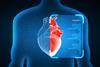
NewsPERM1 protein linked to heart recovery in LVAD patients
A newly identified protein may explain why some failing hearts recover function following mechanical support while others do not.
-
 Article
When antibiotics are not enough: the case for immune-engaging therapies
As antimicrobial resistance grows and patient populations become more complex, the limitations of antibiotics are becoming harder to ignore. Dr Helen Bright, CSO at Centauri Therapeutics, discusses a new approach that targets both the pathogen and the host.
-
 News
NewsC-Path launches coalition to advance human-relevant drug discovery
The New Approach Methodologies Developer Coalition brings together technology developers, pharmaceutical companies and regulators in a precompetitive initiative to establish qualification standards for complex in vitro models, microphysiological systems and related human-relevant technologies.
-
 News
NewsNew study indentifies Golgi apparatus proteins as cancer growth drivers
Researchers at the Harrington Discovery Institute have identified cellular mechanisms involving Golgi apparatus proteins that drive cancer progression by trafficking growth factor receptors to cell surfaces.
-
 News
NewsGut-targeted drug proves effective against polycystic ovary syndrome in mice
Fudan University researchers report that fexaramine, an intestine-specific farnesoid X receptor agonist, improved metabolic and reproductive parameters in mouse models of polycystic ovary syndrome, supporting the gut–ovary axis hypothesis.
-
 Article
AACR 2026 part one: AI design, precision biology and the next wave of oncology innovation
At AACR 2026, industry leaders discussed how oncology R&D is moving beyond isolated technological advances towards integrated discovery systems.
-
 News
NewsCircio’s circular RNA platform shows 40-fold gene expression boost
Circio Holding has presented preclinical data at ASGCT demonstrating that its circVec circular RNA platform achieved up to 40-fold greater gene expression in cardiac tissue and 50-fold in ocular tissue compared with conventional AAV gene therapy approaches, potentially enabling significant dose reductions and improved safety profiles.
-
 News
NewsOutSee wins Longitude Prize award for ALS target discovery
OutSee has secured a Discovery Award from the Longitude Prize on ALS, providing £100,000 in funding and access to genomic data from 9,000 patients. The company will deploy its AI-driven Nomaly platform to identify novel therapeutic targets for amyotrophic lateral sclerosis over a nine-month research programme.