Sartorius have published its second edition High-Throughput Screening (HTS) by Cytometry handbook.
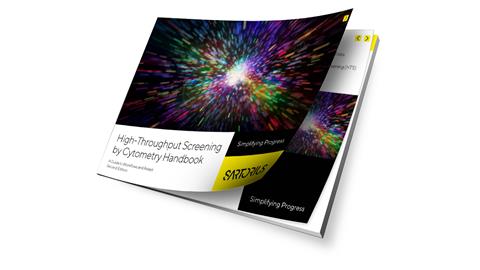
Sartorius, the leading international partner of life sciences research and biopharmaceutical manufacturing, has published its second edition High-Throughput Screening (HTS) by Cytometry handbook.
Designed to empower both new and seasoned flow cytometry users, the handbook will aid those who are curious about the unique capabilities of HTS cytometry. Those using traditional systems will discover how routine workflows can benefit from the speed, throughput, and ease of use offered by the iQue® HTS by Cytometry Platform.
Also, laboratories already knowledgeable about the iQue® Platform can depend on this regular publication to learn about novel reagents, assay kits, and software releases. Notably, the handbook includes the latest Sartorius publications, so readers can remain informed on the recent applications with HTS by cytometry.
Jonah Riddell, PhD, Product Manager for iQue® Platform at Sartorius, explained: “Research labs today face immense pressure to design more vast and complex screening approaches, often with limited samples, resources and expertise. The use of more complex cell models, such as stem cells, or patient specific materials, adds another layer of complexity, requiring more sophisticated analysis for meaningful data, and in less time.”
He added: “Workflows that provide these capabilities and empower scientists to make better decisions are crucial for being first-to-publish, or first-to-market. As the leading experts in HTS cytometry, we created this handbook to demonstrate how this powerful technology meets the unique demands of high-throughput screening campaigns.”
Flow cytometry technology is evolving to meet the requirements of laboratories developing new therapeutics. The iQue® HTS Cytometry Platform is designed to meet this growing demand for speed and efficiency. The handbook allows readers to clearly navigate topics of interest, including informative workflow illustrations, detailed application examples, and direct links to external resources for further learning. The topic chapters include Cell Health, Secreted Proteins, Biologics Discovery, Viability Assays, and Titer and Viability Determination. Furthermore, there are sections on Advanced Cell Models and Organoids.
An in-depth discussion of the integrated iQue Forecyt® software is also featured in this edition. The iQue Forecyt® software replaces the multiple data analysis packages normally required in other protocols. Its real-time data visualisation, smart gating, plate-level analytics, and other advanced tools are further illustrated throughout the handbook.
To find out more about the handbook, visit: www.sartorius.com/en/products/high-throughput-cytometry/high-throughput-cytometry-resources/high-throughput-cytometry-handbook