



Scientists at St Jude Children’s Research Hospital have shown that knocking out the immune regulatory gene Regnase-1 in CAR T cells produces a potent, durable anti-tumour response in preclinical osteosarcoma models.
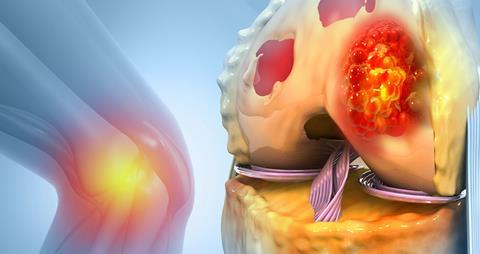
Scientists at St Jude Children’s Research Hospital have found that removing the Regnase-1 gene from engineered immune cells could improve CAR T-cell therapy for relapsed osteosarcoma.
The approach enabled modified CAR T cells to better control tumour growth and prevent the spread of osteosarcoma to the lungs in preclinical models. The findings, published in Cell Reports Medicine, support the development of an early-phase clinical trial.
There is a significant need for new treatments for children with relapsed osteosarcoma, where therapeutic options remain limited. CAR T-cell therapy has shown success against some childhood blood cancers but has been less effective against solid tumours such as osteosarcoma.
Removing an immune ‘brake’
CAR T-cell therapy involves reprogramming a patient’s immune cells to recognise and attack cancer cells. However, the tumour microenvironment can suppress immune activity and cause CAR T cells to become less effective.
Researchers sought to overcome this obstacle by removing Regnase-1, a gene that normally acts as a ’brake’ on immune function. The modified CAR T cells were then tested in mouse models of osteosarcoma.
“We saw that CAR T cells without Regnase-1 controlled tumours and prevented lung metastasis in models of osteosarcoma,” said Stephen Gottschalk, Chair of St Jude’s Department of Bone Marrow Transplantation & Cellular Therapy. “Those results are particularly promising, as the cancer spreading to the lungs is a primary cause of mortality from relapsed disease and has historically been difficult to address.”
The researchers found that the modified CAR T cells were able to produce a stronger anti-tumour response than conventional CAR T cells targeting the same cancer-associated protein, B7-H3.
Changing the tumour environment
The benefits of Regnase-1 deletion appeared to extend beyond the CAR T cells themselves. In preclinical models, the modified cells altered the tumour microenvironment in ways that could support a broader immune response.
“We found that our modified CAR T cells had a global impact on the tumor microenvironment,” said first author Dr Adeleye Adeshakin.“They not only kept themselves from being suppressed but also activated other immune cells to enter the tumour.”
The treatment increased immune cell numbers and raised levels of signals involved in immune activation. At the same time, it reduced immunosuppressive cells and signalling within the tumour environment.
The researchers also observed a striking survival benefit. Nearly all mice treated with human Regnase-1 knockout CAR T cells survived while untreated mice and those receiving conventional CAR T cells succumbed to disease.
Months after treatment, researchers reintroduced osteosarcoma cells into surviving mice. The animals continued to reject the cancer, suggesting the modified CAR T cells could produce a durable anti-tumour effect.
Moving towards clinical testing
The findings build on earlier work identifying Regnase-1 as an important regulator of T-cell function. Previous St Jude research found that removing the gene could improve the persistence and anti-tumour activity of T cells.
“We are extremely excited by these promising preclinical results for Regnase-1 knockout CAR T cells,” said Dr Hongbo Chi, Chair of St Jude’s Department of Immunology. “We have brought a fundamental research discovery into preclinical models that performed so well, and we are now developing it into a clinical trial.”
The St Jude team is now developing an early-phase clinical trial to assess the approach in patients.
“In the past, many of us, including myself, thought of cancer as one diseased organ that can simply be targeted and destroyed,” Gottschalk said. “Our study supports the notion that cancer is a systemic disease. Regnase-1 knockout CAR T cells remodel the entire immune system and lead to a much more effective anticancer response, demonstrating how we need to find systemic solutions to improve these immunotherapies for children facing these diseases.”







No comments yet