



All Drug Development articles – Page 5
-
 News
NewsOpenBind launches AI model to accelerate drug discovery
Diamond Light Source has launched OpenBind v1, an open-access AI model and dataset designed to address critical data shortages in drug discovery by providing standardised protein-drug binding measurements at atomic resolution.
-
 News
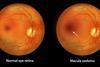
NewsBispecific antibody targets Wnt co-receptors for diabetic macular oedema treatment
Preclinical data presented at ARVO 2026 demonstrate therapeutic potential of targeting Gpr124 and Lrp6 Wnt co-receptors to restore blood-retina barrier integrity in diabetic macular oedema and wet age-related macular degeneration, with trispecific candidate NVQ501 advancing towards IND-enabling studies.
-
 Report
Organoids and Organ Chips: Improving Decision-Making in Early Drug Discovery
Traditional preclinical models do not always predict what will happen in patients. This report explores how organoids, organ-on-chip systems and advanced imaging are being used to generate more clinically relevant insights and support better decision-making earlier in drug discovery.
-
 News
NewsMetal microrobots deliver drugs and biopsies before dissolving
Swallowable metal microrobots that transform shape to deliver drugs and collect tissue samples before safely dissolving could replace invasive endoscopy procedures.
-
 News
NewsSafer diazo compound synthesis advances medicinal chemistry capabilities
Researchers at Tokyo University of Science have developed a safer synthetic route to β-heteroatom-substituted diazo esters, eliminating the need for toxic diazomethane. The azide-to-diazo conversion method uses mild conditions and readily available starting materials, potentially streamlining early-stage drug discovery and compound library synthesis.
-
 News
NewsNew dual-action drug candidate extends survival in pancreatic cancer models
Researchers have developed a dual-mechanism compound that significantly extended survival in preclinical pancreatic cancer models by simultaneously activating immune responses and blocking suppressive pathways.
-
 News
NewsHybrid molecule shows enhanced metabolic effects in obesity study
A novel hybrid molecule combining incretin therapy with targeted intracellular delivery of a PPAR agonist has demonstrated strong weight loss and glucose control compared to existing GLP-1/GIP therapies in preclinical studies.
-
 News
NewsAAX Biotech and evitria partner on antibody development
AAX Biotech has partnered with evitria AG to expand access to its Opti-mAb® platform, enabling earlier integration of stability-enhancing technology into antibody candidate design and multispecific format development.
-
 News
NewsRepurposed cancer drugs target root cause of Crohn’s Disease
Researchers at the University of Houston have identified epithelial stress signalling as a key driver of Crohn’s disease and demonstrated that two FDA-approved cancer drugs can interrupt the pathological cycle of cell death and inflammation.
-
 Article
From leaderboards to lab notebooks: AI designs reach preclinical testing
For years, AI drug discovery has been judged on benchmark performance. Now, a set of studies shows what happens when those designs are made and tested in preclinical settings.
-
 News
NewsNew strategy targets antibiotic resistance in cystic fibrosis
Researchers at the University of Texas at Austin have demonstrated that targeting a bacterial protein-folding pathway can disable antimicrobial resistance and cross-protection, restoring antibiotic susceptibility in preclinical models of cystic fibrosis infection.
-
 News
NewsCircio and Acuitas partner on circular RNA CAR T therapy
Norway-based biotechnology company Circio Holding ASA has partnered with Acuitas Therapeutics to evaluate its circVec circular RNA platform for in vivo CAR T cell therapy. The collaboration will combine Circio’s technology, which reportedly delivers gene expression lasting up to six months in lymphocytes, with Acuitas’ lipid nanoparticle delivery system targeting specific T cell populations for potential applications in oncology and autoimmune diseases.
-
 Article
Beyond serendipity: rational design and AI’s expansion of the undruggable target landscape
For decades, drugging the ‘undruggable’ was thought to require luck rather than logic. Today, AI is transforming serendipity into strategy by enabling rational, data-driven approaches to previously inaccessible targets.
-
 News
NewsAI platform models protein flexibility to accelerate drug design
A new artificial intelligence platform developed at the University of Virginia addresses a critical limitation in computational drug design by modelling protein flexibility during molecular interactions. The suite of tools uses diffusion models to generate drug candidates whilst accounting for induced fit dynamics, potentially improving success rates in early-stage development.
-
 News
NewsOntario invests $3.1M in next-generation cancer therapeutics
The Ontario Institute for Cancer Research has awarded $3.1 million to four provincial research teams developing novel cancer therapies designed to overcome drug resistance and reduce treatment-related toxicity.
-
 News
NewsChampions Oncology to present eight studies at AACR 2026
Champions Oncology will present eight studies at AACR 2026 spanning KRAS-mutant tumours, ovarian cancer, glioblastoma and emerging therapies including radiopharmaceuticals and CAR-T, using patient-derived models to improve early-stage decision-making in oncology drug development.
-
 News
NewsCombining antibodies with natural compounds may improve Alzheimer’s treatment
Researchers at the University of Waterloo have demonstrated that combining anti-amyloid antibodies with naturally derived small molecules, such as resveratrol and curcumin, may improve therapeutic outcomes in Alzheimer’s disease.
-
 News
NewsInsilico announces ISM6200 AI-designed drug candidate for ovarian cancer and cortisol disorders
Insilico Medicine has nominated ISM6200, a preclinical drug candidate designed using generative AI to target NR3C1, a receptor involved in cortisol regulation.
-
 News
NewsMassey Cancer Center funds drug discovery projects targeting Hsp27-CerS1 and ferroptosis pathways
The VCU Massey Comprehensive Cancer Center has awarded $50,000 each to two innovative drug discovery projects through its collaborative programme with Sanford Burnham Prebys Medical Discovery Institute.
-
 News
NewsLactylation emerges as key driver of lung cancer resistance
New research from Shanghai Pulmonary Hospital outlines how lactate-driven lactylation acts as a metabolic switch controlling epigenetic regulation in lung cancer. The findings reveal self-reinforcing feedback loops that sustain drug resistance and suggest novel therapeutic strategies targeting the enzymes and pathways that maintain this process.