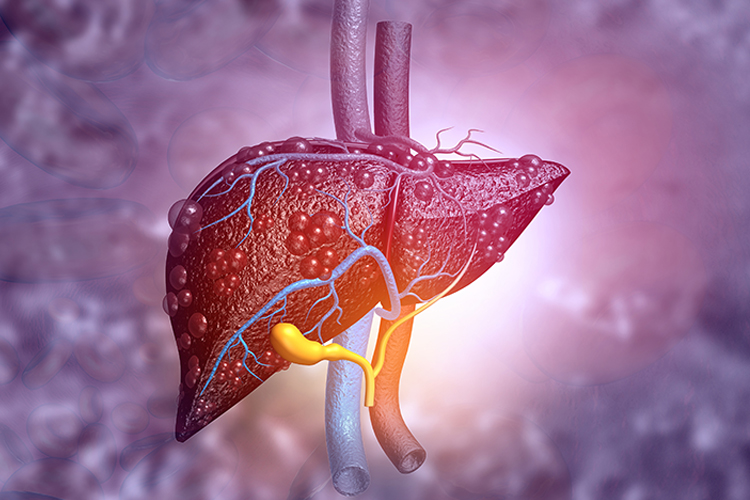

Fibulin-5 linked to early detection of liver fibrosis
Researchers in Japan have identified a promising blood-based marker that could enable faster, simpler and more accurate detection of liver fibrosis.
List view / Grid view
Researchers in Japan have identified a promising blood-based marker that could enable faster, simpler and more accurate detection of liver fibrosis.
Automation now plays a central role in discovery. From self-driving laboratories to real-time bioprocessing, this report explores how data-driven systems improve reproducibility, speed decisions and make scale achievable across research and development.
Measuring disease progression remains one of the biggest hurdles in CNS drug development. Eye movements, now trackable with just a laptop and webcam, are emerging as a sensitive and scalable biomarker that could transform how trials are designed and therapies reach patients.
Analysing complex biologics is one of drug discovery’s biggest challenges. At Genentech, Rachel Shi is developing MS workflows that deliver clearer answers, faster.
From gene therapy to Long Covid, better assays are helping researchers move promising drug candidates from early studies into clinical trials. Dr Alexandre Lucas explains the technologies, challenges and innovations driving this progress.
Researchers at the University of Birmingham have developed a single-cell technique to track boron inside live tumour cells – making Boron Neutron Capture Therapy more effective in treating head and neck cancers.
Researchers have developed the first high-throughput tool to rapidly profile RNA modifications – a breakthrough that could lead to more precise treatments for cancer and antibiotic-resistant infections.
By combining human tissue models with explainable AI, researchers can analyse complex patient data to identify which treatments work best for which patients. First applied to inflammatory bowel disease, this approach could improve clinical trial success rates across many diseases.
From precision proteomics to AI-powered immune profiling, next-generation laboratory technologies are changing how new therapies are discovered and developed. Here are four innovations set to shape the lab of the future - and the future of drug discovery.
What if familiar lab formats could be redesigned to remove the weak points in permeability and absorbance testing? This article explores how design choices in common consumables can improve both speed and reproducibility in early-stage research.
Developing robust potency assays for Antibody-Drug Conjugates (ADCs) is crucial for ensuring their clinical success, but designing assays that meet both technical and regulatory standards is challenging. Here, Abzena’s CSO Campbell Bunce explores the complexities of assay development and the importance of ensuring accuracy, consistency and regulatory alignment for ADCs…
Bispecific T-cell engagers are advancing fast - but complexity still slows development. This article explores how data-driven, platform-based strategies are helping overcome design and manufacturing hurdles to bring these next-gen therapies to patients faster.
Gene therapy’s progress depends on reliable supply chains and efficient manufacturing. In this episode, we explore the challenges and strategies involved in plasmid production - an essential component in advancing life-changing therapies.
Chief Scientific Officer at Solvias reveals how CROs are overcoming manufacturing challenges and harnessing AI to fast-track the development of groundbreaking cell and gene therapies.
Antibody-drug conjugates (ADCs) are transforming cancer therapy by enabling targeted drug delivery with minimised side effects, but their complex structure presents unique challenges in bioanalysis. This article explores cutting-edge strategies for optimising ADC evaluation, from quantifying drug-to-antibody ratios (DAR) to overcoming hurdles like payload interference and stability.