



All Monoclonal Antibodies articles
-
 News
NewsVPS34 inhibition boosts GD2 visibility to enhance neuroblastoma immunotherapy
Penn State researchers have shown that inhibiting the protein VPS34 increases GD2 display on neuroblastoma cell surfaces, making tumours more visible to anti-GD2 antibodies and improving outcomes in preclinical combination studies.
-
 Article
Faster, scalable biologics stability testing without sacrificing data quality
Stability problems can derail promising biologics late in development. Bringing high-throughput testing earlier into discovery could help researchers identify risks before they become costly failures.
-
 News
NewsAI consortium targets antibody developability prediction with 10,000-sequence dataset
A new industry consortium led by Ginkgo Datapoints and Apheris is assembling a 10,000-antibody dataset to train AI models that can flag developability problems earlier in the drug discovery pipeline.
-
 News
NewsThree-signal method converts blood B cells into germinal centre-like cells
Researchers at the University of Osaka have developed a streamlined laboratory method that uses just three sequentially delivered signals to convert naive B cells from human blood into cells closely resembling germinal centre B cells.
-
 Article
How disease exposes hidden epitopes that AI models may miss
A protein can look very different in disease without a single change to its sequence. Measuring these structural changes could reveal drug targets invisible to genomic and expression data alone.
-
 News
NewsWhy researchers are targeting Nav1.7 in the search for longer-lasting pain relief
Humanised antibodies targeting the voltage-gated sodium channel Nav1.7 have demonstrated prolonged suppression of neuropathic pain in a rat model.
-
 Article
Fast-tracking AI-designed binders with cell-free expression and SPR
AI can rapidly generate new protein binders, but wet-lab validation remains a major bottleneck. Combining cell-free protein synthesis with surface plasmon resonance (SPR) enables AI-designed antibody binders to be screened directly from crude extracts, bypassing lengthy cell culture and purification steps.
-
 News
NewsMulti-target screening refines ADC development for cervical cancer
A large-scale transcriptomic study has pinpointed distinct cell-surface targets for antibody-drug conjugate development across cervical cancer subtypes, revealing how tissue-of-origin comparisons and subpopulation analysis can uncover targets missed by conventional screening approaches.
-
 News
NewsWhat Oblenio’s Phase I trial means for autoimmune drug discovery
Oblenio Bio has dosed the first patients in a Phase 1a trial of LBL-051, a tri-specific T cell engager designed to simultaneously target CD19, BCMA and CD3 and eliminate both B cells and plasma cells in a bid to achieve durable immune reset in refractory autoimmune diseases.
-
 Article
Understanding the toxicology endpoints that matter in ADC development
Antibody-drug conjugates (ADCs) present unique toxicology challenges. Learn which endpoints matter most, how they inform development decisions and why they are essential for building a robust nonclinical safety strategy.
-
 Article
How spatial biology is tracking antibody drugs inside tumours
Many antibody therapies fail to reach all cancer cells within solid tumours. Researchers have developed a spatial biology technique that maps antibody distribution alongside the tumour microenvironment to investigate why.
-
 News
NewsNew bispecific T cell engager platform targets ovarian cancer in preclinical studies
Scientists at The Wistar Institute have engineered a DNA-delivered bispecific T cell engager using a ‘knob-into-hole’ antibody platform, demonstrating improved persistence and dual-antigen targeting in preclinical ovarian cancer models.
-
 Webinar
Building better therapeutic antibodies: the science, progress and problems to solve
As therapeutic antibodies become more complex, where is the field making real progress and which problems are proving hardest to solve? Hear leading experts share their perspectives.
-
 News
NewsExperimental HIV vaccine generates broadly neutralising antibodies in primates
A collaborative research team from LJI, Scripps Research and IAVI has developed an experimental HIV vaccine that successfully generated broadly neutralising antibodies in rhesus macaques, marking a pivotal advance in the 14-year effort to design an effective HIV vaccine.
-
 News
NewsDual antibody cocktail offers complete Nipah virus protection
Researchers at Mount Sinai have developed the first fully human monoclonal antibody cocktail to provide complete protection against Nipah and Hendra viruses in preclinical models, offering a potential blueprint for treating high-consequence zoonotic pathogens with no approved therapies.
-
 Article
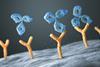
Antibody recycling, FcRn and the next generation of biologics
One receptor can protect antibodies from degradation, extend their half-life and become a drug target itself. Explore the science behind FcRn and how researchers measure its function.
-
 News
NewsLabGenius and LG Chem partner on AI-driven cancer antibodies
LabGenius Therapeutics has partnered with LG Chem to develop next-generation multispecific antibodies targeting solid tumours. The collaboration combines AI-driven drug discovery with oncology development expertise to identify therapeutics with improved selectivity and reduced toxicity.
-
 Article
Why targeted therapies are exposing the limits of animal models – and what comes next
Traditional preclinical models are struggling to keep pace with a new generation of targeted therapies. As regulators embrace new approach methodologies (NAMs), vascularised tissue platforms are offering a more human-relevant approach to predicting drug efficacy and safety.
-
 Article
AACR 2026 part one: AI design, precision biology and the next wave of oncology innovation
At AACR 2026, industry leaders discussed how oncology R&D is moving beyond isolated technological advances towards integrated discovery systems.
-
 News
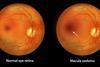
NewsBispecific antibody targets Wnt co-receptors for diabetic macular oedema treatment
Preclinical data presented at ARVO 2026 demonstrate therapeutic potential of targeting Gpr124 and Lrp6 Wnt co-receptors to restore blood-retina barrier integrity in diabetic macular oedema and wet age-related macular degeneration, with trispecific candidate NVQ501 advancing towards IND-enabling studies.