



All Drug Targets articles
-
 News
NewsNew TRPV1 study could change how painkillers are designed
Researchers have found that the TRPV1 pain receptor responds differently to individual stimuli, revealing functional differences that could help inform the development of more selective pain medicines.
-
 Article
Earlier MSA detection could guide alpha-synuclein drug discovery
MSA and Parkinson’s share the same protein pathology, yet MSA progresses far faster. Could earlier detection reveal why and help researchers identify more effective targets for drug discovery?
-
 News
NewsDisrupting cell-wall transport could expose weakness in resistant bacteria
Researchers have identified a weakness in antibiotic-resistant bacteria that could help restore susceptibility to existing treatments by disrupting a lipid carrier essential for bacterial cell-wall synthesis.
-
 News
NewsResearchers solve 30-year mystery of key inflammatory enzyme gene
A gene responsible for producing a critical enzyme in inflammatory signalling has been identified after more than 30 years, with findings suggesting the pathway acts as both an immune alarm and a cellular shield with implications for cancer, IBD and asthma.
-
 News
NewsBCAT1 enzyme identified as fibrosis target after heart attack
Researchers at Nagoya University have identified BCAT1, an enzyme involved in proline supply for collagen synthesis, as a potential target for reducing cardiac fibrosis following myocardial infarction.
-
 Article
Finding drug targets through the noise of complex disease
The strongest disease signal may not point to the best drug target. AI could help researchers identify what matters within complex biological networks.
-
 News
NewsVPS34 inhibition boosts GD2 visibility to enhance neuroblastoma immunotherapy
Penn State researchers have shown that inhibiting the protein VPS34 increases GD2 display on neuroblastoma cell surfaces, making tumours more visible to anti-GD2 antibodies and improving outcomes in preclinical combination studies.
-
 News
NewsKRAS inhibition and CTLA-4 blockade could overcome gastric cancer immunotherapy resistance
Researchers have identified oncogenic KRAS as a key driver of immunosuppression in gastric adenocarcinoma.
-
 News
NewsExisting drug could target neuroinflammation across multiple brain disorders
Researchers at the University of Birmingham have identified the P2X7 receptor as a key driver of neuroinflammation in human brain tissue, raising the prospect of repurposing existing therapies to treat various brain conditions.
-
 News
NewsSynthetic protein targets TLR4 within membrane to curb inflammation
Scientists at Scripps Research have engineered a synthetic protein capable of binding to Toll-like receptor 4 within the cell membrane, reducing inflammatory signalling.
-
 Article
Drug discovery in Q3 2026 – what changed and why it matters
Agentic AI, ultralarge virtual screening, molecular glues and human-relevant models were among the key developments in early drug discovery during Q3 2026. Drug Target Review examines what changed, why it matters and what to watch heading into Q4.
-
 Article
Induced proximity drugs – why complex formation is not enough
A drug can form exactly the complex it was designed to make and still fail to work. Two recently approved induced proximity drugs show why what happens after complex formation – not formation alone – can decide the outcome.
-
 News
NewsNew P. vivax vulnerability could prevent liver-stage malaria infection
A newly identified epitope on the circumsporozoite protein of Plasmodium vivax could offer a route to vaccines that prevent liver-stage infection and curb the relapse-driven transmission cycle.
-
 News
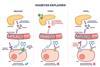
NewsMenin inhibitor KO-7246 shows β-cell regeneration in preclinical diabetes models
New preclinical data suggests that menin inhibitor KO-7246 can regenerate functional pancreatic β-cells and sustain improvements in blood glucose control across both Type 1 and Type 2 diabetes models.
-
 News
NewsBrain circuit linking cold exposure to metabolism identified in hypothalamus
Researchers at USF Health have identified a previously unknown brain circuit in the hypothalamus that coordinates eating behaviour, heat production and energy expenditure in response to cold, with implications for obesity and metabolic disease drug discovery.
-
 News
NewsMathematical model probes metals’ role in Alzheimer’s plaque formation
A mathematical framework simulates how metals such as copper and zinc interact with amyloid-beta, offering a new computational tool to explore plaque formation and potential therapeutic interventions in Alzheimer’s disease.
-
 Article
AI agents vs scientists: what should we automate in drug discovery?
AI agents can search, analyse and plan across drug discovery workflows, but where should scientists hand over control? We examine what to automate, what to check and where human judgement matters most.
-
 News
NewsHyperreactive astrocytes identified as key drivers of TSC epilepsy
Researchers at UC Berkeley have used long-term human brain organoids to show that hyperreactive astrocytes may drive the inflammation and seizures associated with tuberous sclerosis complex.
-
 Article
How disease exposes hidden epitopes that AI models may miss
A protein can look very different in disease without a single change to its sequence. Measuring these structural changes could reveal drug targets invisible to genomic and expression data alone.
-
 News
NewsMayo Clinic strategy restores CAR T targets on aggressive thyroid tumours
Mayo Clinic researchers have shown that approved thyroid cancer drugs can restore a key antigen on aggressive tumour cells, making them visible once more to CAR T cells and improving treatment outcomes in preclinical models.