




Agentic AI, ultralarge virtual screening, molecular glues and human-relevant models were among the key developments in early drug discovery during Q3 2026. Drug Target Review examines what changed, why it matters and what to watch heading into Q4.
Early drug discovery continued to advance across a range of areas during the third quarter of 2026. AI systems took on more complex research tasks, virtual screening reached chemical spaces containing well over 100 billion compounds and new molecular glue research showed different ways to tackle challenging targets. The FDA also broadened the terminology used for nonclinical testing to recognise non-animal methods.
Yet greater scale and capability do not necessarily lead to better drug discovery. For researchers and discovery leaders, the challenge is deciding which technologies generate evidence strong enough to influence decisions about targets, experiments and programmes.
For this quarterly review, Drug Target Review has selected four developments published between July and September that could have implications for early drug discovery. Here, we look at the evidence behind them and the questions they raise for researchers heading into Q4.
AI takes on more of the discovery process
During Q3, attention in AI drug discovery turned towards systems that coordinate multiple research tasks. As these systems take on more of the discovery process, an important question is how their value should be measured.
In August, a study in Nature Reviews Drug Discovery explored how far progress in AI has translated into clinically relevant impact.1 Despite a wide range of AI methods being developed, applied and benchmarked, the authors concluded that evidence of such impact remains limited. They argued that AI should be assessed not only by how well the technology performs, but by whether it improves decisions during drug discovery.
This is particularly relevant in target identification. AI can bring together evidence from genetics, omics, scientific literature and biological networks to identify potential drug targets, but identifying an association between a target and a disease is not enough. Researchers must still establish whether altering that target produces the intended biological effect and has the potential to benefit patients.
A separate Nature Chemical Biology article examined agentic AI and its potential integration with laboratory automation.2 The authors described how AI agents could operate across the design–make–test–analyse (DMTA) cycle, from designing potential compounds and supporting their synthesis to testing their activity and analysing the results to guide the next experiment.
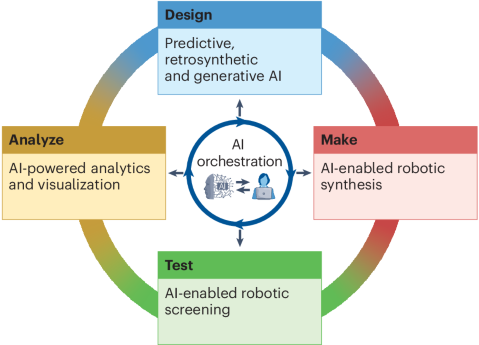
In September, researchers reported the Virtual Biotech, a multi-agent AI framework designed to coordinate specialised agents across different stages of drug discovery and development.3
In one demonstration, more than 37,000 AI agents analysed outcomes from 55,984 clinical trials. The analysis found that targeting cell-type-specific genes was associated with a 48 percent higher likelihood of reaching the market and 32 percent fewer adverse events.
The Virtual Biotech was also used to investigate CD276, also known as B7-H3, as a potential therapeutic target in lung cancer. It integrated different sources of biological evidence and proposed targeting CD276 with an antibody–drug conjugate.3 This remains a computational hypothesis and requires further experimental validation.
The example shows how agentic systems could be used to bring together evidence around a target and propose a therapeutic strategy for researchers to investigate further.
Virtual screening pushes further into ultralarge chemical space
Research published during Q3 showed virtual screening being applied to chemical spaces of tens and even more than a hundred billion compounds, alongside new methods designed to make searching them computationally practical.
In July, researchers reported V-SYNTHES2, a structure-based virtual screening workflow designed to search libraries containing billions of potential compounds.4 Instead of assessing every compound individually, the system docks small fragments first and builds up only the most promising candidates. Applied to Enamine REAL Space, a collection of make-to-order compounds, it screened a space of 36 billion compounds while requiring the docking of roughly 3.8 million molecules and fragments. The authors estimate that this reduced the computational resources required by more than 10,000-fold.
In September, Nature Biotechnology reported AdaptiveFlow, an open-source platform built to make ultralarge virtual screening more accessible, scalable and efficient. It provides a screening-ready version of Enamine REAL Space containing 69 billion prepared molecules and supports more than 1,500 docking protocols. The platform organises compounds according to their molecular properties, allowing docking to focus on more promising regions of chemical space. Optional active learning can further guide the screening process and the authors report cost reductions of up to 1,000-fold compared with exhaustive screening.5
The scale increased further in another study published that month. Researchers applied V-SYNTHES2 to the 173-billion-compound Enamine xREAL Space and tested it in two blinded CACHE (Critical Assessment of Computational Hit-finding Experiments) challenges, which compare how well computational methods can identify potential compounds for difficult drug targets.6
For the SARS-CoV-2 protein NSP13, six of the 77 compounds selected by V-SYNTHES2 were found experimentally to bind to the target. This gave an 8 percent hit rate, compared with an average of 2.3 percent across the challenge. For the second target, CBLB, one compound met the criteria for a hit.6
These studies show that chemical spaces once considered impractical to screen computationally are becoming more accessible. Larger searchable libraries could increase the chances of finding new chemical starting points, particularly for targets where conventional screening collections have produced few useful hits.
Molecular glues open another route to challenging targets
Molecular glues gained further attention during Q3 as researchers demonstrated both what these compounds can achieve and new ways of finding them.
Unlike conventional drugs, which typically bind a protein and directly alter its activity, molecular glues work by bringing two proteins together. In targeted protein degradation, this can bring a disease-related protein into contact with an E3 ubiquitin ligase, part of the cell’s machinery for marking proteins for destruction, so that the unwanted protein is broken down.
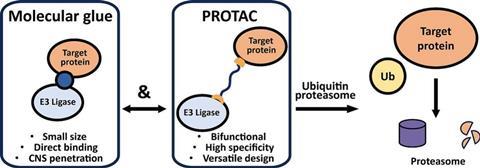
In August, researchers developed a screening method designed to detect interactions created between proteins by small molecules. They screened 5,000 compounds against seven E3 ligases and identified M12, a prodrug that is converted into its active form through glutathionylation. The activated compound brings the E3 ligase DCAF11 together with DDX18, a protein involved in RNA processing, causing DDX18 to be broken down by the cell.7
In September, another study demonstrated the therapeutic potential of the strategy with TRI-611, a molecular glue degrader targeting ALK, a protein that can drive tumour growth when altered in certain cancers. TRI-611 brings ALK into contact with the E3 ligase cereblon, triggering its degradation. The compound degraded ALK fusion proteins, including wild-type and TKI-resistant forms, with activity also demonstrated in preclinical models.8
TRI-611 was also able to enter the brain and showed activity in intracranial tumour models. This is important because achieving sufficient brain exposure remains a major challenge in developing targeted protein degraders. TRI-611 is already being evaluated in a Phase I/II trial in patients with ALK-positive non-small cell lung cancer, with the first patient dosed in March 2026. The compound has also received FDA Fast Track designation.9
These studies show how molecular glues could expand the range of proteins that can be targeted. Conventional small-molecule drugs usually depend on a suitable binding site, leaving proteins without one difficult to address. Glues can alter a target without directly blocking or activating it, so proteins once considered difficult to drug may become viable candidates.
FDA broadens nonclinical testing terminology
During Q3, the US Food and Drug Administration issued a rule to broaden the terminology used for nonclinical testing.
On 21 September, the FDA issued a direct final rule clarifying that nonclinical testing can include non-animal methods, rather than referring only to animal studies in the affected regulations. The rule is scheduled to take effect on 4 February 2027, provided it is not withdrawn following significant adverse comments.10
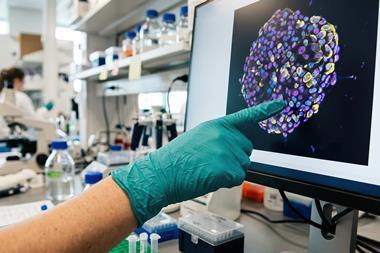
The change recognises new approach methodologies (NAMs), including cell-based assays, organs-on-chips and computer models, alongside nonhuman in vivo testing.11,12 These methods can be used to answer different questions about a potential drug. An organ-on-chip, for example, uses living cells to recreate aspects of the structure and function of a human organ, while computational models can simulate or predict biological responses.
The change forms part of a wider FDA effort to reduce, refine or replace animal testing where scientifically appropriate. The agency defines NAMs as including human-based laboratory systems, in silico modelling and other methods that can contribute to assessments of toxicity, immune responses and pharmacodynamics.
The rule does not remove animal studies from drug development or require developers to use a particular alternative method. It also does not change the FDA’s evidentiary standards. Instead, it formally recognises a broader range of methods within nonclinical testing.
For early discovery teams, that could mean using a human-relevant model to strengthen evidence around a target, identify a safety concern or distinguish between compounds before committing further time and resources. In other cases, a simpler model may provide all the information needed.
These developments show what is becoming technically possible in early drug discovery, from searching billions of compounds to coordinating multiple research tasks with AI. The more important question is whether these capabilities generate stronger experimental evidence and lead to better decisions about which targets, compounds and programmes to pursue.
Q4 watchlist
Four developments to watch as we head into Q4:
-
Agentic AI moving into experimental workflows. Look for examples where multi-agent systems are used prospectively in active discovery programmes rather than evaluated retrospectively against existing data.
-
Experimental follow-up from ultralarge screens. The important results will be what happens after virtual hits are selected: confirmation rates, selectivity, chemical diversity and progression into optimisation.
-
New molecular glue targets and E3 ligases. Further studies will show whether molecular glues can be developed for a wider range of protein targets, E3 ligases and disease settings.
-
Early use of NAMs following the FDA rule change. Watch for examples of how developers use human-relevant methods within nonclinical packages and how regulators assess the resulting evidence.
References
1. Bender A, Thomas MC, Scannell JW, Shaywitz DA, Ghiandoni GM, Greener JG, et al. Artificial intelligence in drug discovery – what it is, where we stand and the path forward. Nat Rev Drug Discov. 2026 Aug 7. doi:10.1038/s41573-026-01496-2. Nature
2. Vijayan RSK, Cross JB, Poongavanam V. Entering the agentic era of AI in drug discovery. Nat Chem Biol. 2026 Aug 19. doi:10.1038/s41589-026-02295-x. PubMed
3. Zhang HG, Eckmann P, Miao J, Mahon AB, Zou J. The Virtual Biotech: a multi-agent AI framework for therapeutic discovery and development. Science. 2026 Sep 17:eaeg6779. doi:10.1126/science.aeg6779. PubMed
4. Nazarova AL, Sadybekov AV, Sadybekov AA, Protopopov M, Radchenko DS, Moroz YS, et al. V-SYNTHES2 – the next generation tool for structure-based virtual screening of giga-scale chemical spaces. NPJ Drug Discov. 2026;3(1):21. doi:10.1038/s44386-026-00053-6. PubMed
5. Cecchini D, Nigam A, Tang M, Reis J, Koop M, Gottinger A, et al. AI-enhanced adaptive virtual screening of large libraries for ligand discovery. Nat Biotechnol. 2026 Sep 1. doi:10.1038/s41587-026-03217-x. PubMed
6. Protopopov M, Semenenko O, Vasylchuk M, Sadybekov AV, Sadybekov AA, Horbatok K, et al. Pushing the boundaries of virtual screening scale of combinatorial spaces with the V-SYNTHES approach. NPJ Drug Discov. 2026;3(1):34. doi:10.1038/s44386-026-00067-0. PubMed
7. Yoon H, Wachter F, Barrett KA, Jin C, Rodríguez-Pöhnlein A, Rutter JC, et al. DCAF11-dependent molecular glue degrader activated by glutathionylation. Nature. 2026;657(8133):1045–1052. doi:10.1038/s41586-026-10873-1. Nature
8. Conery AR, La DS, Alekseyenko AA, Marcoux D, Bart AG, Harlow ML, et al. TRI-611, a selective, brain-penetrant molecular glue degrader of ALK. Nature. 2026 Sep 9. doi:10.1038/s41586-026-10998-3. Nature
9. Triana Biomedicines. FDA grants Fast Track designation to TRI-611 for the treatment of ALK-positive non-small cell lung cancer [Internet]. 2026 Mar 25. Available from: https://trianabio.com/press-release-032526-01
10. US Food and Drug Administration. Nonclinical Testing Terminology. Direct final rule. 21 CFR Parts 312, 314, 315, 361, and 601. 2026. Available from: https://public-inspection.federalregister.gov/2026-19350.pdf
11. US Food and Drug Administration. FDA updates regulations to advance innovative alternatives to animal testing [Internet]. Silver Spring (MD): US Food and Drug Administration; 2026 Sep 21 [cited 2026 Sep 29]. Available from: https://www.fda.gov/news-events/press-announcements/fda-updates-regulations-advance-innovative-alternatives-animal-testing
12. US Food and Drug Administration. New Approach Methodologies (NAMs) [Internet]. Silver Spring (MD): US Food and Drug Administration; 2026 [cited 2026 Sep 29]. Available from: https://www.fda.gov/science-research/science-and-research-special-topics/new-approach-methodologies-nams









No comments yet