



The editing machinery gets much of the attention in genome editing, but it’s the donor DNA template that can determine whether an edit works. Long synthetic ssDNA could offer researchers another option.
Genomic medicine has been making headlines. Yet while acquisitions and approvals may get news coverage, the less visible story is whether the field’s tools are ready to support the precision required in research, discovery and early development.
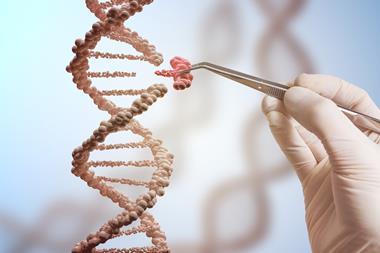
Most excitement around genome editing has been centred on the editing machinery, such as new Cas variants, base editors and prime editors that expand the scope of what can be changed – and with what degree of precision. Far less attention has been given to a crucial component: the donor DNA template.
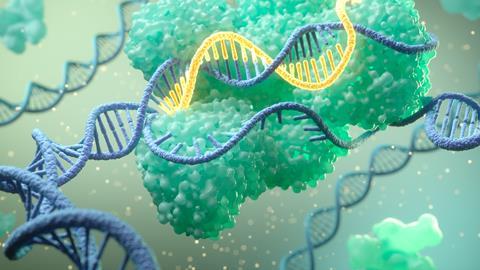
The donor can determine not only whether an edit works, but whether it performs correctly in the patient-relevant cells that matter for development. That makes the template itself an increasingly important source of innovation, with long synthetic single-stranded DNA (ssDNA) offering a stronger option for precise edits that conventional plasmid donor formats can struggle to support.
To understand its potential, it helps to look first at why plasmid DNA became the default – and where its limitations begin to emerge.
Why the default donor is reaching its limits
For years, plasmid DNA has been the default donor format for many genome engineering workflows. It is familiar, straightforward to produce at scale and capable of carrying relatively large DNA sequences. For many applications, those are still compelling advantages.
However, these same properties can create friction in precise editing and expose its limitations. Plasmids contain bacterial backbone sequences, origins of replication and antibiotic-resistance genes that could potentially randomly integrate into the recipient genome. Furthermore, producing and delivering a large circular molecule efficiently into hard-to-transfect primary cells often demands doses that can increase toxicity.
Plasmids contain bacterial backbone sequences, origins of replication and antibiotic-resistance genes that could potentially randomly integrate into the recipient genome.
While linear, PCR-derived double-stranded donors can avoid the issue with the bacterial backbone, they still face the challenge of their exposed ends being a route to rapid degradation. Still, for many applications plasmids or PCR remain practical choices due to ease of manufacturing and scalability, but the technology leaves a gap for edits that are needed to re-write a gene in primary cells, haematopoietic cells or even in vivo. Consequently, donor template selection has become less of a laboratory capability and more of an important early development decision.
The impact of synthetic ssDNA donor templates in precise gene editing
As the field moves from disruption towards correction and insertion, the donor becomes an increasingly important part of the editing strategy. Its design can influence how efficient an edit is and whether the intended sequence is inserted at the intended site.
Short synthetic single-stranded oligodeoxynucleotides (ssODNs) have been the gold standard for small edits such as point mutation corrections or short tag insertions, as they are usually 50 – 200 nucleotides in length. Researchers have successfully shown that optimising the donor template itself can improve editing outcomes across a range of systems. Yet there is no single optimal design: strand orientation and homology-arm configuration still depend on the nuclease, target locus, intended edit and cell type.
The challenge becomes more pronounced as the desired edit gets larger – ie, sequences above a few hundred nucleotides. Once donor requirements extend beyond this range, conventional chemical synthesis will struggle and researchers often turn to plasmid DNA or linear PCR-derived double-stranded donors. While these formats can accommodate larger payloads, they also introduce different trade-offs.
The challenge becomes more pronounced as the desired edit gets larger – ie, sequences above a few hundred nucleotides.
Enzymatic production methods can help mitigate these issues and serve as an alternative next step to chemical synthesis. This allows researchers to generate long synthetic ssDNA with protected ends, providing a more defined format for investigating variables such as strand polarity, homology-arm design, payload composition, purity and delivery conditions. It also lowers the burden on cytosolic DNA-sensing responses compared to double-stranded DNA formats and enhances stability and resistance to intracellular nucleases.
However, this does not mean that ssDNA is inherently superior to double-stranded formats. Some comparisons have found double-stranded donors matching or outperforming long ssDNA on knock-in efficiency and precision, particularly with short homology arms.
The value of long synthetic ssDNA lies in giving researchers greater control over donor design and a practical way to test different configurations in sensitive cell types and models. The absence of process or host scars, such as bacterial backbone or non-relevant features, makes it the safest alternative to current template DNA donors, especially in light of the recent FDA draft guidance on gene editing.
Applications in research and discovery
The earliest impact of long ssDNA may be felt in research and discovery, where it can allow teams to ask better biological questions before committing to a therapeutic programme.
Researchers can use gene editing techniques to introduce or correct disease-associated variants in cell lines and animal models while preserving the wider genetic background. The same applies to endogenous tagging, where a reporter or affinity tag or an entire gene is inserted directly into a native locus and remains under its natural regulatory control. This avoids some of the artefacts associated with transgene overexpression, whether performed by transient expression or random integration.
Together, these applications extend the value of the template beyond genetic medicines and into target validation and conventional drug discovery.
A better designed model is powerful. It can help researchers determine whether a target is truly involved in disease, whether a drug reaches that target and whether the resulting biological effect is worth pursuing.
These applications extend the value of the template beyond genetic medicines and into target validation and conventional drug discovery.
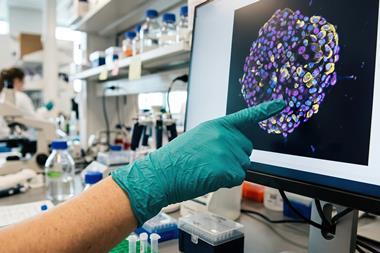
The same precision can be carried into early therapeutic development, particularly in primary cells that remain challenging to edit. Linear double-stranded donors can reduce viability in primary T-cell and haematopoietic stem and progenitor cell (HSPC) workflows, especially at concentrations needed for larger knock-ins. Switching to a long synthetic ssDNA template, paired or not with small-molecule repair enhancers, has improved cell recovery and knock-in efficiency in several T-cell systems.
Taken together, these results point to where the format could go next.
Where the next breakthrough begins
If long synthetic ssDNA can be manufactured at scale with consistent full-length integrity – across increasingly complex sequences, while minimising immune recognition and maintaining stability over nuclease degradation – the donor template could become the driving component of genome editing rather than a supporting one.
This would enable researchers to explore larger payloads and more complex designs, compare candidates side by side and carry the same molecule from discovery through to early development. The result would not simply be broader access to the technology, but a broader design space for precise genetic medicine, allowing researchers to determine which genetic changes are worth pursuing.
The next gene-editing breakthrough may be remembered for the disease it treats or the editor that made it possible. But the breakthrough itself could begin with the template.










No comments yet