


MYC inhibitor Omomyc boosts PARP drug response in breast cancer
Posted: 5 December 2025 | Drug Target Review | No comments yet
A preclinical study led by VHIO reveals that the MYC inhibitor Omomyc enhances the effectiveness of PARP inhibitors, offering a potential new treatment strategy for patients with drug-resistant triple-negative breast cancer.
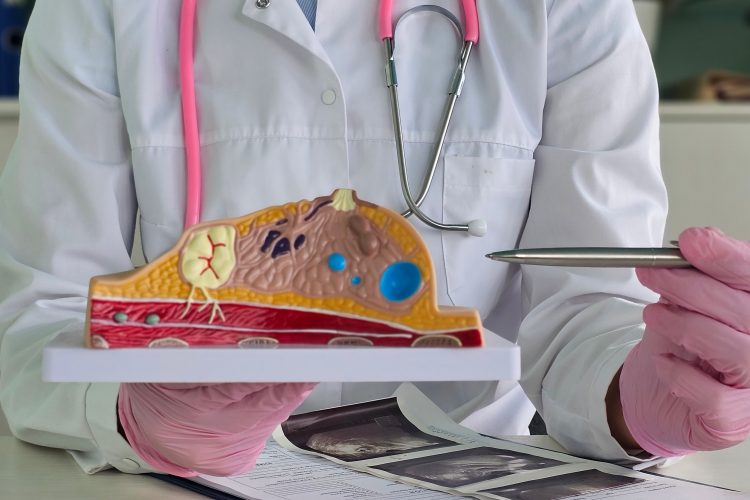
A preclinical study led by the Vall d’Hebron Institute of Oncology (VHIO) has shown that Omomyc – the first and only direct MYC inhibitor to complete a phase I clinical trial – induces DNA damage in cancer cells and works together with poly (ADP-ribose) polymerase inhibitors (PARPi).
The findings present a promising new strategy for overcoming resistance to PARPi therapies, which affects a significant proportion of patients with triple-negative breast cancer (TNBC).
A breakthrough in targeting MYC
MYC is a transcription factor essential for regulating orderly cell division. When deregulated – a feature seen in up to 70 percent of human cancers – it fuels uncontrolled cellular growth, metastasis and treatment resistance. This has made MYC one of oncology’s most pursued but elusive targets.
Automation now plays a central role in discovery. From self-driving laboratories to real-time bioprocessing
This report explores how data-driven systems improve reproducibility, speed decisions and make scale achievable across research and development.
Inside the report:
- Advance discovery through miniaturised, high-throughput and animal-free systems
- Integrate AI, robotics and analytics to speed decision-making
- Streamline cell therapy and bioprocess QC for scale and compliance
- And more!
This report unlocks perspectives that show how automation is changing the scale and quality of discovery. The result is faster insight, stronger data and better science – access your free copy today
MYC is a transcription factor essential for regulating orderly cell division.
The study is the result of more than two decades of research led by Laura Soucek, Director of VHIO’s Models of Cancer Therapies Group, ICREA Research Professor, and co-founder and CSO of the VHIO and ICREA spin-off Peptomyc S.L. Her team developed the Omomyc mini-protein (also known as OMO-103), a disruptive MYC inhibitor now advancing through clinical trials.
Having shown a manageable safety profile and early signs of anti-tumour activity in a phase I trial involving patients with advanced solid tumours, OMO-103 is currently being tested in a phase Ib trial for metastatic pancreatic cancer and a phase II study in advanced osteosarcoma.
Understanding MYC’s complex role in DNA repair
The study provides new insight into MYC’s dual involvement in DNA damage and repair.
“The oncogenic capabilities of MYC have been well known for decades. More controversial, however, is its role in DNA damage and repair, where MYC has a dual role,” said Fabio Giuntini, a postdoctoral researcher and first author of the study. “On the one hand, it promotes genomic instability through replication stress, and on the other hand, it enhances certain DNA repair mechanisms. These opposing functions create a delicate balance that enables cancer cells to maintain elevated levels of genomic stress without compromising survival.”
Combining Omomyc with PARP inhibitors
TNBC represents 15-20 percent of breast cancer cases and is characterised by aggressive behaviour and limited treatment options. PARP inhibitors are used in patients with BRCA1/2 mutations – around 10-15 percent of those with TNBC – but resistance often develops.
TNBC represents 15-20 percent of breast cancer cases and is characterised by aggressive behaviour and limited treatment options.
Using PARPi-resistant cell lines and both cell-derived and patient-derived xenograft models, researchers found that Omomyc alone decreased the expression of DNA damage repair genes while increasing DNA damage within cancer cells.
“This observation encouraged us to combine Omomyc and PARPi, revealing a powerful cooperative effect both in vitro and in vivo, resulting in anti-tumour response, increased DNA damage and apoptosis,” said Laura Soucek. “Strikingly, the combination in vivo in cell line-derived and patient-derived xenografts created a synergistic therapeutic effect, achieving a superior disease control rate than with either monotherapy alone.”
The team also observed that PARPi-resistant tumour models exhibited significantly higher MYC activity, and that Omomyc successfully overcame this resistance. Additionally, MYC-related gene expression in pre-treatment tumour samples predicted which patients were more likely to respond to PARPi therapy.
A potential new route to resensitising resistant tumours
“Our results unveil the role of MYC as a driver of PARPi resistance, and we propose Omomyc as a novel DNA-damaging agent, capable of cooperating with PARPi and resensitising PARPi-resistant triple-negative breast cancer to this type of targeted therapy,” said Soucek.
The findings provide a strong basis for the future clinical development of Omomyc-PARPi combinations, providing patients with one of the most challenging breast cancer subtypes new options for treatment.
Related topics
Biomarkers, Cell Cultures, DNA, Drug Discovery Processes, In Vitro, In Vivo, Molecular Targets, Oncology, Precision Medicine, Therapeutics, Translational Science
Related conditions
triple negative breast cancer (TNBC)
Related organisations
the Vall d’Hebron Institute of Oncology (VHIO)
