



All Drug Discovery articles
-
 News
NewsNew insulin assay speeds up GLP-1 drug candidate testing
A newly developed insulin assay reduced testing time from four hours to around one hour in an evaluation of GLP-1 receptor agonist candidates, delivering comparable results to an established method.
-
 Article
Scientists are already using AI agents. Most of what they learn goes unpublished.
Dr Raminderpal Singh speaks to Dr Srijit Seal about how AI agents are changing computational drug discovery, the impact on scientists’ daily work and why valuable findings remain unpublished.
-
 News
NewsNew antifungal compound targets resistant fungi without kidney toxicity
Researchers have designed an antifungal compound that targets a molecular feature unique to fungi, showing activity against drug-resistant pathogens while avoiding kidney injury in preclinical studies.
-
 Article
What will it take to trust human-relevant models in drug discovery?
Could organ-on-a-chip technology help identify drug failures before clinical trials? Jim Corbett of Emulate discusses the evidence needed to make human-relevant models reliable tools in drug discovery.
-
 News
News3D Cell Painting reveals cancer drug differences missed in 2D
Two cancer drugs appeared almost identical in conventional screening, but a new 3D Cell Painting method exposed striking differences in their effects, raising questions about what 2D models might miss.
-
 News
NewsNew TRPV1 study could change how painkillers are designed
Researchers have found that the TRPV1 pain receptor responds differently to individual stimuli, revealing functional differences that could help inform the development of more selective pain medicines.
-
 Article
Earlier MSA detection could guide alpha-synuclein drug discovery
MSA and Parkinson’s share the same protein pathology, yet MSA progresses far faster. Could earlier detection reveal why and help researchers identify more effective targets for drug discovery?
-
 News
NewsMLY2 and MLY8 compounds show promise as ulcerative colitis treatment candidates
Two experimental compounds derived from a phase II metabolite have demonstrated improved anti-inflammatory activity in preclinical models of ulcerative colitis.
-
 News
NewsDisrupting cell-wall transport could expose weakness in resistant bacteria
Researchers have identified a weakness in antibiotic-resistant bacteria that could help restore susceptibility to existing treatments by disrupting a lipid carrier essential for bacterial cell-wall synthesis.
-
 News
NewsResearchers solve 30-year mystery of key inflammatory enzyme gene
A gene responsible for producing a critical enzyme in inflammatory signalling has been identified after more than 30 years, with findings suggesting the pathway acts as both an immune alarm and a cellular shield with implications for cancer, IBD and asthma.
-
 News
NewsSelf-driving labs and advanced cell models feature at ELRIG 2026
From self-driving laboratories to advanced cellular models, ELRIG Drug Discovery 2026 showcases technologies helping researchers generate better data, evaluate drug candidates and improve early discovery.
-
 News
NewsBCAT1 enzyme identified as fibrosis target after heart attack
Researchers at Nagoya University have identified BCAT1, an enzyme involved in proline supply for collagen synthesis, as a potential target for reducing cardiac fibrosis following myocardial infarction.
-
 News
Newsbit.bio launches refined human astrocyte model for neurotoxicity assessment
Cambridge biotech bit.bio has released ioAstrocytes 2.0, a genetically matched human astrocyte model designed to support functional neuroscience research and earlier assessment of seizure liability and neurotoxicity in drug development.
-
 News
NewsPacBio and TychoBio partner to advance AI-driven RNA therapies
PacBio and AI drug discovery company TychoBio are generating full-length RNA datasets from more than 10,000 samples to train AI models and accelerate the development of RNA therapies for rare diseases.
-
 Article
Finding drug targets through the noise of complex disease
The strongest disease signal may not point to the best drug target. AI could help researchers identify what matters within complex biological networks.
-
 News
NewsSpeakers announced for Protein Sciences in Drug Discovery 2026 in Stevenage
Three leading scientists in protein science, structural biology and AI will headline the Protein Sciences in Drug Discovery conference at GSK Stevenage in November 2026, exploring advances in AI-driven drug design, native mass spectrometry and membrane protein folding.
-
 News
NewsTazbentetol shows retinal neuroprotection potential in diabetic mouse model
Experimental synaptic restoration compound tazbentetol has demonstrated neuroprotective effects in the retinas of diabetic mice, offering a potential new therapeutic avenue for diabetic retinal neuropathy ahead of detectable vascular damage.
-
 News
NewsVPS34 inhibition boosts GD2 visibility to enhance neuroblastoma immunotherapy
Penn State researchers have shown that inhibiting the protein VPS34 increases GD2 display on neuroblastoma cell surfaces, making tumours more visible to anti-GD2 antibodies and improving outcomes in preclinical combination studies.
-
 News
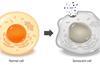
NewsCMA restoration may clear senescent cells in ageing tissues
Researchers at Albert Einstein College of Medicine have identified a cellular recycling pathway whose age-related decline allows senescent ‘zombie’ cells to evade immune clearance.
-
 News
NewsELRIG Drug Discovery 2026 celebrates 20th anniversary at ExCeL London
ELRIG Drug Discovery 2026 returns to ExCeL London for its 20th year, with AI, automation and advanced cell models among the technologies set to feature across the two-day programme.