


RVX-001: a universal vaccine to tackle antimicrobial resistance
Posted: 18 November 2025 | Drug Target Review | No comments yet
Drug-resistant infections are on the rise, endangering global health. Neil Murray from ReNewVax explains how the company’s universal pneumococcal vaccine, RVX-001, could reduce antibiotic use and help curb antimicrobial resistance.
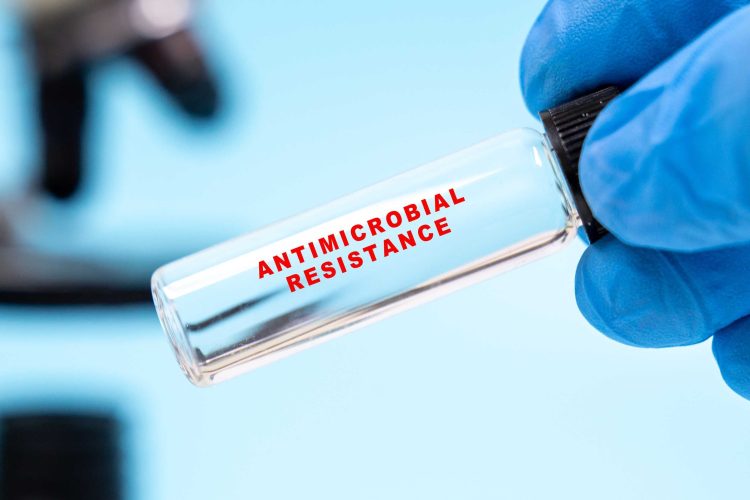
Antimicrobial resistance (AMR) is now one of the deadliest health challenges of modern times, directly causing an estimated 1.2 million deaths each year. As bacteria continue to outpace existing antibiotics, the foundations of modern medicine are at risk. Neil Murray, CEO of ReNewVax, warns that, “we risk a near 100-year regression in medicine and healthcare, going back to a pre-antibiotic era when even simple surgery could result in life-threatening infection.”
In 2019, bacterial AMR was directly responsible for an estimated 1.27 million deaths and associated with nearly 5 million deaths worldwide. ¹ Among the many contributors, Streptococcus pneumoniae – the bacterium responsible for pneumococcal disease – remains a major threat. Despite vaccines being available since the 1980s, S. pneumoniae remains the third leading cause of infectious disease deaths globally and the fourth leading cause of AMR-associated deaths. ¹
Why pneumococcal disease remains so hard to control
Murray explains that Streptococcus pneumoniae presents a unique scientific challenge. The bacterium exists in roughly 100 different variants, or serotypes, yet current vaccines cover less than 25 percent of them. Current pneumococcal conjugate vaccines (PCVs) target the most clinically relevant strains, but this selective pressure has driven what he describes as ‘serotype replacement’.
By knocking out the variants that vaccines do cover, it allows other serotypes to become more prominent and take their place.
“By knocking out the variants that vaccines do cover, it allows other serotypes to become more prominent and take their place,” he says – a trend confirmed by multiple studies showing increases in non-vaccine serotypes, some of which display higher resistance rates. 2,3,4
Another key issue is cost. Murray points out that “the newest high-valency adult PCV lists at more than $300 per dose,” ⁵ which has largely restricted its use to high-income countries, leaving lower-income nations unable to afford widespread immunisation.
Although numerous attempts have been made to create a ‘universal’ pneumococcal vaccine that protects against all serotypes, these efforts have so far failed – largely because the chosen targets have not held up in clinical trials.
ReNewVax and the promise of a universal vaccine
ReNewVax believes it may now finally have the answer. The company’s scientific approach differs from traditional vaccine development, which is typically hypothesis-driven – identifying a likely target and testing it in clinical studies.
Using genomics and bioinformatics, ReNewVax analysed over 26,000 clinical S. pneumoniae samples from 36 countries, covering patients of all ages. This comprehensive analysis identified three highly conserved antigens present across all known serotypes. These form the basis of RVX-001, the company’s candidate for a truly universal pneumococcal vaccine.
Using genomics and bioinformatics, ReNewVax analysed over 26,000 clinical S. pneumoniae samples from 36 countries, covering patients of all ages.
“RVX-001 has shown an excellent profile of activity in preclinical models as well as derisking ex vivo human models,” said Murray. “Including three antigens in RVX-001 future proofs the vaccine as any new serotypes that arise are likely to express at least one of those antigen targets.”
Crucially, the vaccine is far cheaper to produce than existing options. “RVX-001 uses just three recombinant protein antigens expressed in E. coli, avoiding the complex conjugation steps that drive costs in current PCVs,” Murray explains. “That will make RVX-001 more accessible for low- and middle-income countries, improving global health outcomes.”
By preventing invasive pneumococcal disease, the vaccine could also dramatically reduce the need for antibiotics, thereby slowing the development of AMR.
A broken market for antibiotics
One of the biggest barriers to AMR progress has been economic. As new antibiotics were developed, regulators restricted their use to preserve efficacy. While this was necessary for stewardship, it also meant that because companies are rewarded based on the volume of prescriptions issued, the limited use of new antibiotics inevitably leads to very little return on investment. Consequently, many pharmaceutical companies shifted their R&D efforts towards more profitable areas, such as oncology and cardiovascular disease.
“The World Health Organization (WHO) reported in 2025 that there were just 90 antibacterials in clinical development worldwide – down from 97 two years earlier,” said Murray. “A clear sign of market failure at a time when antibiotic resistance is accelerating.” 6
An uneven R&D landscape
Compared with the thousands of oncology projects in development, antibiotics have been left far behind. WHO’s 2025 review recorded just 322 active antibiotic programmes globally, while industry data identified 9,019 active cancer programmes.6,7 This stark imbalance shows how dramatically bacterial research has declined.
The dwindling pipeline has also led to a “loss of experience and expertise in the sector,” says Murray. “At a time when we need the best, most experienced brains working to crack the problem, the number of scientists in the field has been significantly diminished and their expertise lost.”
The role of vaccines in combating AMR
Vaccines play a vital role in reducing the spread of infections and the need for antibiotics.
Vaccines play a vital role in reducing the spread of infections and the need for antibiotics.
“There is a significant role for vaccines in the fight against AMR – even if only by slowing the growth of the problem,” Murray says. “High vaccine coverage is known to reduce antibiotic use and resistance, particularly for pathogens that disproportionally affect paediatric populations such as pneumococcus.” 6
Vaccinating everyone against every possible infection isn’t practical – or even necessary. But for diseases where vaccines work well, large-scale immunisation can make a huge difference to global health.
What governments must do next
Progress on AMR has been made, even if uneven. Following the O’Neill Review in 2016,⁸ several nations introduced incentives to support antibiotic innovation, yet there is still more work to do.
“From a market perspective, despite their inconsistent application around the world, so-called ‘push and pull incentives’ are an important step forward in restoring value to the sector,” said Murray. “However, much more needs to be done if we are to avoid a post-antibiotic era.”
From a market perspective, despite their inconsistent application around the world, so-called ‘push and pull incentives’ are an important step forward in restoring value to the sector.
WHO’s latest data show the number of antibiotic candidates continues to fall, while key funding initiatives – such as the UK’s Fleming Fund – have recently been closed.
“Governments need to stop merely paying lip service to the problem of AMR,” Murray warns. “Signing joint communiqués at the G7 or UNGA that are little more than a collective wringing of hands does nothing to address the fundamental issues.”
Public engagement, he insists, will be crucial step in turning the tide. “Their widespread ignorance of the threat of AMR is one of the biggest challenges that we face. Once voters are engaged, governments will listen and, eventually, act.”
Looking ahead: a call to action
Despite the daunting scale of the AMR challenge, Murray remains optimistic. “The industry showed with COVID its true capability for innovation and problem solving in overcoming a generational threat to global health,” he says. “That alone gives me hope that the challenge of AMR can be successfully addressed.”
Despite the many hurdles involved, there are many talented people at the forefront of the fight against AMR and there are signs of progress.
However, Murray warns that time is of the essence. “We need action now – we can’t wait. This is not tomorrow’s problem; it’s today’s.”
Meet the expert

Dr Neil Murray, CEO ReNewVax Ltd.
Dr Neil Murray is a seasoned pharmaceutical industry chief executive, with experience of therapeutic development, business growth and general management.
He is the CEO of ReNewVax, a next-generation vaccine company dedicated to addressing the world’s most pressing bacterial disease challenges by developing vaccines that are not only highly effective but also affordable.
Neil’s role draws upon his extensive experience in the application of platform technologies in drug research and development; overall drug development strategy, planning and management; portfolio development; and corporate and business development across multiple therapeutic modalities and markets.
Dr Murray was previously the founding CEO of Redx Pharma, leading the company through its rapid growth and listing on the London Stock Exchange.
Having gained a PhD in Synthetic Organic Chemistry from the University of Dundee in 1987, Dr. Murray’s career has included senior positions with high profile companies in the industry, including Glaxo-Wellcome, Vernalis (formerly Vanguard Medica), Solutia Inc. and Sigma-Aldrich Inc. He is also a founding director of Impact Data Metrics, an economic development data insights business.
References
- Murray, C. et al. (2022). Global burden of bacterial antimicrobial resistance in 2019: a systematic analysis. The Lancet, 399(10325), 629–655.
- Weinberger, D.M., Malley, R. & Lipsitch, M. (2011). Serotype replacement in disease after pneumococcal vaccination. The Lancet, 378(9807), 1962–1973.
- Ladhani, S.N. et al. (2018). Rapid increase in non-vaccine serotypes causing invasive pneumococcal disease in England and Wales. The Lancet Infect Dis., 18(4), 441–445.
- Hanage, W.P. et al. (2010). Evidence that pneumococcal serotype replacement in Massachusetts following conjugate vaccination is now complete. Epidemics, 2(2), 80–84.
- Centres for Disease Control and Prevention (CDC). (2025). Current CDC Vaccine Price List | VFC Programme. [online] Available at: https://www.cdc.gov/vaccines-for-children/php/awardees/archives-cdc-vaccine-price-list.html [Accessed 12 Nov. 2025].
- World Health Organization. (2025). Analysis of antibacterial agents in clinical and preclinical development: overview and analysis 2025. [online] Available at: https://iris.who.int/server/api/core/bitstreams/b2e9ae1b-2e5f-425d-902a-4f9d4f3a33db/content [Accessed 12 Nov. 2025].
- Lloyd, I. (2025). Pharma R&D Annual Review 2025. Citeline. [online] Available at: https://www.citeline.com/en/rd25 [Accessed 12 Nov. 2025].
- Price, R. (2016). O’Neill report on Antimicrobial Resistance: Funding for antimicrobial specialists should be improved. European Journal of Hospital Pharmacy: Science and Practice. [online] Available at: https://pmc.ncbi.nlm.nih.gov/articles/PMC6451500/ [Accessed 12 Nov. 2025].
Related topics
Antibiotics, Antimicrobials, Bioinformatics, Disease Research, Funding, Genomics, Government, Microbiology, Vaccine, Vaccine development
Related conditions
Antimicrobial resistance (AMR)
Related organisations
ReNewVax
Related people
Neil Murry (CEO of ReNewVax)