

High-throughput screening reveals compounds that inhibit SARS-CoV-2 replication
Posted: 22 September 2022 | Victoria Rees (Drug Target Review) | No comments yet
Researchers have used a high-throughput assay to screen for potential small molecule SARS-CoV-2 replication inhibitors.
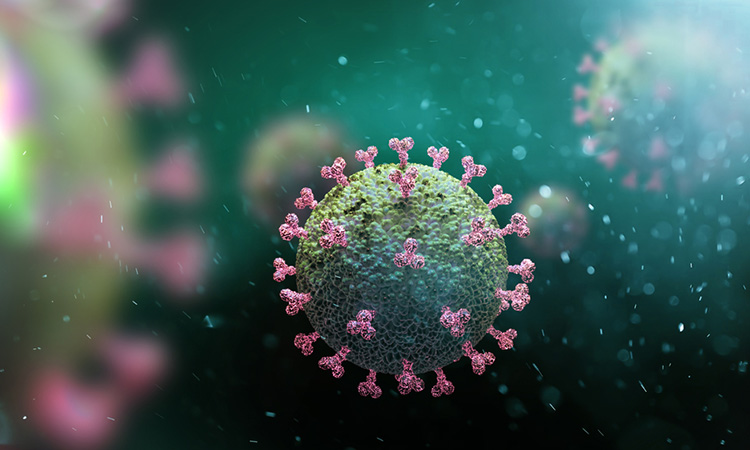
Researchers from the University of Kansas and John Hopkins University, both US, have used a luminescent-based high-throughput assay to screen small molecules, identifying five compounds that could be used to inhibit SARS-CoV-2, the virus that causes COVID-19.
The researchers focused on the SARS-CoV-2 conserved macrodomain (Mac1), a small domain of non-structural protein 3 (nsp3). Mac1 is an ADP-ribosylhydrolase that cleaves mono-ADP-ribose (MAR) from target proteins, protects the virus from the antiviral effects of host ADP-ribosyltransferases and is critical for the replication and pathogenesis of coronaviruses.
The team investigated around 38,000 molecules and found several compounds among three chemotypes that can inhibit the SARS-CoV-2 Mac1-ADP-ribose binding in multiple assays with IC50 values less than 100 μM, inhibit ADP-ribosylhydrolase activity and have evidence of direct Mac1 binding. According to the team, these chemotypes are strong candidates for further derivatisation into highly effective Mac1 inhibitors.
“These inhibitors could be used both to better understand the molecular function of the macrodomain during infection and ultimately tested as a novel therapy for COVID-19 or other emerging coronaviruses,” the authors of the paper, published in Antiviral Research, write. The scientists further highlight that developing a diverse drug portfolio will be critical to enable countries around the world to rapidly respond to novel coronaviruses and other viruses with pandemic potential.
NEWS: Researchers screened biologically active small molecules, finding several compounds with the ability to induce training effects on macrophages…
Related topics
Assays, Drug Discovery, High-Throughput Screening (HTS), Screening
Related conditions
Covid-19
Related organisations
John Hopkins University, University of Kansas