



All Drug Development articles
-
 News
NewsPacBio and TychoBio partner to advance AI-driven RNA therapies
PacBio and AI drug discovery company TychoBio are generating full-length RNA datasets from more than 10,000 samples to train AI models and accelerate the development of RNA therapies for rare diseases.
-
 News
NewsVPS34 inhibition boosts GD2 visibility to enhance neuroblastoma immunotherapy
Penn State researchers have shown that inhibiting the protein VPS34 increases GD2 display on neuroblastoma cell surfaces, making tumours more visible to anti-GD2 antibodies and improving outcomes in preclinical combination studies.
-
 Article
Faster, scalable biologics stability testing without sacrificing data quality
Stability problems can derail promising biologics late in development. Bringing high-throughput testing earlier into discovery could help researchers identify risks before they become costly failures.
-
 News
NewsAI consortium targets antibody developability prediction with 10,000-sequence dataset
A new industry consortium led by Ginkgo Datapoints and Apheris is assembling a 10,000-antibody dataset to train AI models that can flag developability problems earlier in the drug discovery pipeline.
-
 News
NewsExperimental drug reverses paralysis and vision loss in MS mice
A novel inflammasome inhibitor derived from HIV antivirals has reversed established neurological deficits in a preclinical MS model, raising hopes for a restorative approach to a disease where current therapies focus primarily on relapse prevention.
-
 News
NewsBig Picture Bio raises £2.2m to develop AI cancer combination therapies
UK-based cancer drug discovery company Big Picture Bio has closed £2.2 million in funding to advance AI-designed combination therapies into laboratory validation, using a generative world model to map complex tumour biology across disease sites and patient subgroups.
-
 Article
Turning CNS biomarkers into better drug development decisions
Why do promising CNS therapies struggle to translate into patients? Three experts explore how biomarkers can track therapeutic effects, improve patient selection and guide development decisions.
-
 News
NewsBioLife patents effervescent oral peptide delivery platform targeting GLP-1 therapies
BioLife has been granted a US patent for its effervescent OralMatrix oral peptide delivery platform, with preclinical data showing measurable systemic semaglutide exposure and patent claims extending across six GLP-1 medicines.
-
 News
NewsWhole-genome sequencing delivers actionable biomarkers in 73 percent of cancer patients
A large real-world study demonstrates that whole-genome sequencing can identify actionable biomarkers in nearly three-quarters of solid cancer patients.
-
 News
NewsExperimental RNA drug reverses scleroderma signs in preclinical study
An experimental synthetic non-coding RNA drug has reversed signs of systemic sclerosis in patient-derived immune cells and mouse models, with researchers now preparing an IND application to the FDA.
-
 Article
Why more ribosomes can mean less protein in mRNA therapeutics
What happens when the cellular machinery making therapeutic proteins slows down? New research in Nature shows why translation speed could matter for the design of mRNA medicines.
-
 News
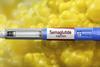
NewsGLP-1 drug semaglutide extends lifespan and slows ageing in older mice
A new NIH-funded study suggests the GLP-1 receptor agonist semaglutide may slow biological ageing and extend lifespan in older mice, raising the prospect that GLP-1 drugs could one day be developed as broad longevity-enhancing interventions.
-
 News
NewsOligonucleotide CDMO market set to triple to $11.14bn by 2031
The global oligonucleotide CDMO market is projected to nearly triple in value to USD 11.14 billion by 2031, driven by rising outsourcing demand as ASO and siRNA programmes advance through clinical and commercial development stages.
-
 News
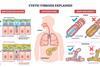
NewsEngineered tRNAs and lipid nanoparticles target nonsense mutation cystic fibrosis
A preclinical study combining chemically modified suppressor tRNAs with inhaled lipid nanoparticles has restored functional CFTR protein production across bronchial epithelial cells, mouse models and patient-derived organoids, offering a potential new therapeutic strategy for nonsense mutation-driven cystic fibrosis.
-
 News
NewsNew LOX target discovery could help overcome chemotherapy-resistant breast cancer
A preclinical study has identified lysyl oxidase as an intracellular survival factor in triple-negative breast cancer, with researchers demonstrating that sequentially blocking LOX and a compensatory ferroptosis defence pathway significantly suppresses tumour growth without chemotherapy.
-
 Article
Six assay requirements every researcher using NAMs should know
As NAMs become more widely used in drug discovery, assays must meet the demands of more complex models. Discover six requirements for reliable, reproducible and biologically meaningful data.
-
 News
NewsReview challenges one-size-fits-all approach to OSCC drug delivery
A new review published in the European Journal of Pharmaceutics and Biopharmaceutics argues that no single local drug-delivery formulation will suit every oral squamous cell carcinoma tumour, urging researchers to anchor development in clinical and biological context from the outset.
-
 News
NewsFirst-in-class drug targets ‘undruggable’ MYC in blood cancers
A first-in-class experimental drug has demonstrated preclinical activity against treatment-resistant blood cancers by exploiting a newly identified vulnerability between MYC and GSPT1, offering a potential route to one of oncology’s most elusive targets.
-
 Article
How AI-driven systems biology will reset the starting line for drug development
AI is making drug discovery faster, but can it make it more successful? Discover why combining AI with systems biology could help researchers tackle the biological complexity behind drug failure.
-
 Article
Why researchers are revisiting bisantrene decades after it was abandoned
An oncology drug abandoned decades ago is getting a second look, with new research uncovering a mechanism that could offer an alternative route to targeting MYC, one of cancer’s toughest targets.