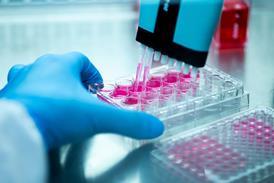

Kobe University researchers have developed a new way of freeze induced pluripotent stem cells (iPS cells) directly in their culture dishes without losing viability or pluripotency.
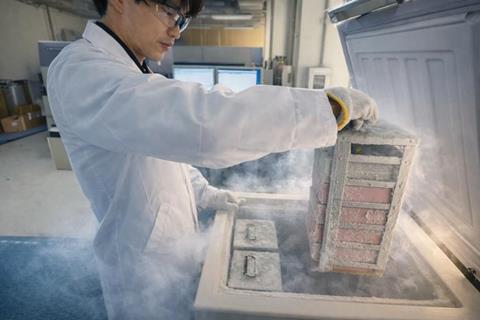
Researchers at Kobe University have developed a novel method that allows induced pluripotent stem cells (iPS cells) to be frozen directly in their culture dishes without losing their undifferentiated state after thawing. This development is a significant milestone for research automation, personalised medicine and drug discovery.
iPS cells can be derived from any tissue in the human body and can differentiate into a wide range of tissues. This versatility makes them essential tools in regenerative medicine and drug research. However, their handling and storage have traditionally required advanced technical expertise and expensive resources.
Until now, one of the major obstacles has been the lack of a method to cryopreserve cells directly in the two-dimensional (2D) sheet cultures in which they are grown.
Discovering the role of D-Proline
The study began with prior research into the cryopreservation of 2D cancer cell cultures. “We previously investigated the cryopreservation of 2D cancer cells cultures and discovered that the amino acid ‘D-proline’ showed remarkable efficacy as a cryoprotectant,” said Kobe University biochemical engineer, Maruyama Tatsuo “When we talked about this with a researcher at the medical school, we learned that if we could apply this to cryopreserving iPS cells, this would be useful for regenerative medicine.”
The breakthrough began with prior research into the cryopreservation of 2D cancer cell cultures.
While animal-derived substances have historically been used as cryoprotectants for mammalian cells, they are unsuitable for stem cell cultures. Such substances can trigger unwanted differentiation, causing stem cells to lose their pluripotency, and may introduce contamination risks for downstream applications.
 Induced pluripotent stem cells (iPS cells) can be created from any tissue in the human body and possess the ability to transform into a wide range of tissues. Kobe University Maruyama Tatsuo and his team now published that they found a cryopreservation method for iPS cell sheet cultures. Credit: UCHIDA Satoru.[/caption]
 A simple but effective protocol
With the new development, Maruyama and his team outlined a cryopreservation method specifically for iPS cell sheet cultures. Their approach preserves cell viability almost perfectly even after three months of frozen storage while maintaining pluripotency.
We succeeded using D-proline, an inexpensive amino acid, as the primary cryoprotectant.
“We succeeded using D-proline, an inexpensive amino acid, as the primary cryoprotectant. We showed that it is just as effective for traditional, suspended iPS cell cultures as conventional cryoprotectants, but we are the first to publish a solution for 2D sheet cultures in their culture dishes,” said the study’s first author, Morita Kenta.
A key step involved briefly weakening cell-cell adhesion through an enzymatic reaction prior to freezing. This allowed the cryoprotectant to penetrate cells more effectively and reduce physical stress, minimising freeze-induced damage.
“The method we developed here is straightforward and will make it easy to automate the cryopreservation of iPS cells,” said Morita
Implications for medicine and research
iPS cells are used to create heart, nerve, blood, muscle and other tissues, which are critical for studying drug efficacy, tissue replacement and potential future therapies.
If our technology enables the direct cryopreservation of iPS cell sheets, maintaining them will become much easier than it is today.
“If our technology enables the direct cryopreservation of iPS cell sheets, maintaining them will become much easier than it is today,” said Maruyama. “Automating cryopreservation and thawing using robots, along with the ability to use them immediately after thawing for research or treatment, will accelerate personalised medicine for individual patients and drug discovery research.”
With this development, the potential for mass production and automation of stem cell research is now closer to being realised, promising faster, safer and cheaper applications in regenerative medicine.
Topics
- 3D Cell Cultures
- Artificial Intelligence & Computational Tools
- Biotechnology & Bioengineering
- blood disorders
- Cell & Gene Therapy
- Drug Development
- Drug Discovery
- Drug Discovery Processes
- In Vitro Testing
- Kobe University
- Lab Tools & Automation
- Maruyama Tatsuo (biochemical engineer at Kobe University)
- Morita Kenta (researcher at Kobe University)
- Muscle degeneration
- Neurological disorders
- Personalised Medicine
- Regenerative Medicine
- Regenerative Medicine dupe
- Robotics
- Stem Cells
- Technology
- Tissue Damage
- Translational Science