
Drugs and therapies
Discover the latest developments in drugs and therapies, covering drug discovery, biologics, vaccines, immunotherapies, gene and cell therapies, drug delivery technologies and novel therapeutic modalities advancing treatment options across a wide range of diseases.
Webinars and whitepapers
- Previous
- Next











Drugs and therapies
 Article
How dormant cancer cells protect pancreatic tumours from CAR T therapy
Researchers have discovered how dormant pancreatic cancer cells manipulate their surroundings to evade CAR T-cell therapy, identifying a potential therapeutic target for overcoming treatment resistance.
 Article
What a protein damage score can, and can’t, tell drug developers
Protein damage could provide a valuable readout for evaluating potential anti-ageing therapies, but reducing complex biological responses to a single score raises important questions about interpretation and validation.
 Article
Searching for Alzheimer’s drug targets, one cell at a time
The PsychAD Consortium is using human genetics, single-cell genomics and automated screening to pinpoint potential drug targets for Alzheimer’s disease and investigate their therapeutic potential.
 Article
Why better technology does not always lead to better R&D decisions
Making better decisions in drug discovery is not down to implementing more tools. Here, Dr Harsh Shah reveals why teams must start by defining the scientific question.
Join now
Unlock exclusive industry insights
- Bookmark articles and resources to access anytime
- Enjoy free access to industry leading resources, webinars and insights
- Stay informed with the latest news and breakthroughs
- Receive updates and recommendations tailored to your research interests
 Article
How asymmetric binding affinity enables reversible IL-12 switches
Stronger binding isn’t always better. Dr Teresa Barata of FairJourney Bio explains how researchers engineered a dual-specificity antibody switch designed to control IL-12 activity in tumours.
 Article
What tissue accumulation can reveal about oligonucleotide safety
Oligonucleotides can remain in tissues long after disappearing from circulation, but does accumulation necessarily indicate toxicity? Dr Tina Rogers examines the evidence needed to interpret preclinical safety findings.
 Article
Strong binding isn’t enough – why cellular target engagement matters
Promising compounds don’t always engage their targets in living cells. At ELRIG Drug Discovery 2026, Dr Joshua Sopp of Promega discusses why earlier cellular testing matters and how BRETSA could help researchers investigate new drug targets.
 Report
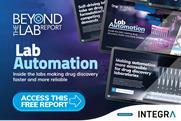
Lab Automation 2026: Improving screening reliability and reproducibility in drug discovery
Laboratory automation in drug discovery can increase the number of compounds teams screen. But how do researchers decide which results are worth following up? In Lab Automation 2026, six researchers and industry specialists share practical lessons on validating screening hits, improving reproducibility in complex cell assays and deciding where automation can make the greatest difference.
 Article
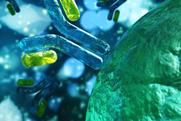
How AI is changing the way therapeutic antibodies are designed
What if researchers could design therapeutic antibodies instead of relying on screening millions of candidates? Generative AI is making this increasingly possible, offering new ways to tackle challenging targets.
 Article
Virtual cells vs experimental models: which can you trust?
How reliable are AI virtual cells compared with experimental models? We examine what each can predict or measure, the evidence behind their reliability and their role in early drug discovery.
 Article
Why reagent selection belongs inside assay design
High affinity is often a priority when selecting reagents, but does it guarantee better assay performance? Discover why binding kinetics and matrix selectivity matter when developing custom reagents for challenging targets.
 Interview
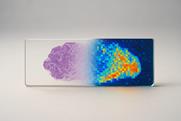
How multiomics can strengthen drug target discovery
How can multiomics help researchers identify more promising drug targets? Dr Shi-qi An explores how combining molecular data can reveal therapeutic vulnerabilities and mechanisms of drug resistance.
 Article
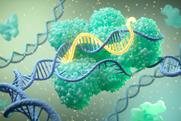
The next gene-editing breakthrough may start with the donor template
The editing machinery gets much of the attention in genome editing, but it’s the donor DNA template that can determine whether an edit works. Long synthetic ssDNA could offer researchers another option.
 Article
Scientists are already using AI agents. Most of what they learn goes unpublished.
Dr Raminderpal Singh speaks to Dr Srijit Seal about how AI agents are changing computational drug discovery, the impact on scientists’ daily work and why valuable findings remain unpublished.
 Article
What will it take to trust human-relevant models in drug discovery?
Could organ-on-a-chip technology help identify drug failures before clinical trials? Jim Corbett of Emulate discusses the evidence needed to make human-relevant models reliable tools in drug discovery.
 Article
Earlier MSA detection could guide alpha-synuclein drug discovery
MSA and Parkinson’s share the same protein pathology, yet MSA progresses far faster. Could earlier detection reveal why and help researchers identify more effective targets for drug discovery?
 Article
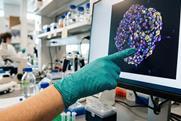
Reproducible organoids start with reliable cytokines
The right signals can make or break an organoid model. From growth and differentiation to downstream drug testing, cytokines and growth factors are critical to creating cultures researchers can rely on.
 Article
Finding drug targets through the noise of complex disease
The strongest disease signal may not point to the best drug target. AI could help researchers identify what matters within complex biological networks.
 Article
Faster, scalable biologics stability testing without sacrificing data quality
Stability problems can derail promising biologics late in development. Bringing high-throughput testing earlier into discovery could help researchers identify risks before they become costly failures.
 Interview
A sceptical guide to AI agents in drug discovery
AI agents promise to transform drug discovery, but where do they really add value? Dr Eric Ma examines search, model choice, vendor lock-in and why scientific expertise matters more than ever.